Vietnam to diversify markets for agricultural products amid global trade shifts

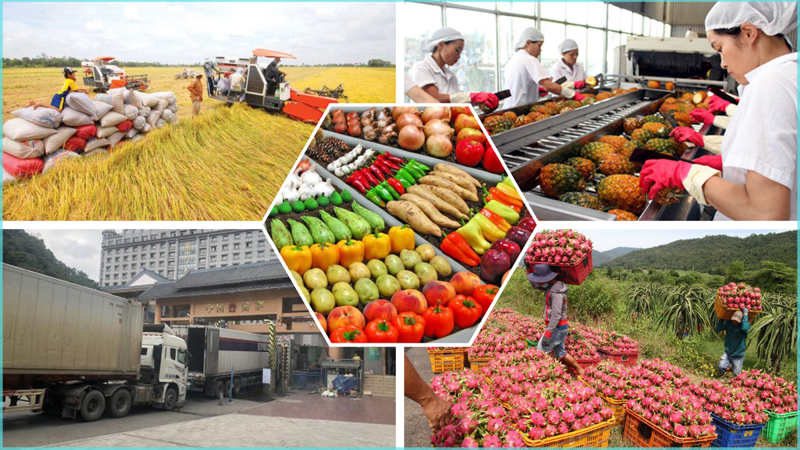
According to the Ministry of Agriculture and Environment (MAE), Vietnam’s agricultural product exports are inevitably affected by disruptions in global supply chains and the imposition of unilateral, stringent tariff policies by major economies. Nonetheless, these challenges also present an opportunity for Vietnam to adjust its export strategy and focus more intently on emerging and high-potential markets.

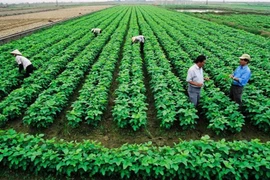
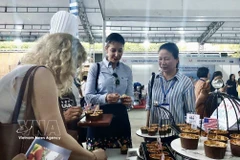
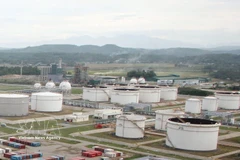
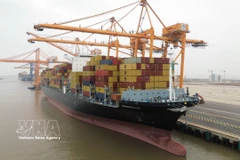
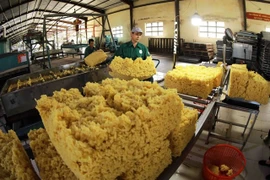
Vietnam to diversify markets for agricultural products amid global trade shifts. (Photo: VNA)

Hanoi (VNA) - In the face of escalating trade tensions and rising protectionism, the Ministry of Industry and Trade, and the Ministry of Agriculture and Environment have identified the diversification of export markets for Vietnam’s agro-forestry-aquatic products as a strategic priority. The long-term objective is to enhance product quality to unlock access to new and promising markets.

Diversification and reorientation

According to the Ministry of Agriculture and Environment (MAE), Vietnam’s agricultural product exports are inevitably affected by disruptions in global supply chains and the imposition of unilateral, stringent tariff policies by major economies. Nonetheless, these challenges also present an opportunity for Vietnam to adjust its export strategy and focus more intently on emerging and high-potential markets.

Southeast Asia remains a key export destination for Vietnamese agricultural products. In 2024, the Philippines was Vietnam’s largest rice importer, purchasing approximately 3.6 million tonnes, equivalent to 40% of the country's total rice exports. Meanwhile, the EU has emerged as Vietnam’s third-largest export market since the EU-Vietnam Free Trade Agreement (EVFTA) came into effect in August 2020. Vietnamese products such as rice, coffee, and seafood have benefitted from preferential tariffs under the agreement, paving the way for stronger market penetration. In 2024, Vietnam’s total export turnover to the EU was estimated at 51.7 billion USD, an increase of 18.5% compared to 2023.

Japan and the Republic of Korea also continue to favour Vietnamese agricultural products, including rice, coffee, tropical fruits, and pepper, thanks to their high quality and alignment with consumer preferences in these countries.

Deputy Minister of Agriculture and Environment Phung Duc Tien said the ministry has been actively guiding businesses on the importance of expanding into the Middle East and Islamic markets. These regions represent strategic growth areas amid increasing demand for agricultural products, particularly for processed foods, fruits, and seafood. Tien further highlighted the growing demand for Halal-certified products, which presents a significant opportunity for Vietnam to boost exports, especially in seafood, rice, and processed foods.

Nguyen Hoai Nam, Deputy General Secretary of the Vietnam Association of Seafood Exporters and Producers (VASEP), added that Vietnamese tuna and pangasius currently account for a substantial share of the seafood imports into the Middle East.

According to representatives from the Ministry of Industry and Trade, in addition to the Middle East and Islamic nations, Vietnamese agricultural products also have considerable potential in emerging markets such as Africa, India, and Latin America. These regions are characterised by large populations and growing demand for food, particularly in segments such as processed food, rice, seafood, and tropical fruits.

For instance, with a population nearing 1.4 billion, India is a promising market with a high demand for Vietnamese dragon fruit, as noted by Vietnam’s Trade Counsellor in India Bui Trung Thuong. However, Vietnamese businesses have yet to fully tap into this market.

Better understanding markets and observing legal requirements

Given the intensifying trade conflicts and the growing trend of protectionism, the Ministry of Industry and Trade stressed that expanding into emerging markets will help reduce Vietnam’s reliance on traditional markets such as China and the US, both of which are currently subject to geopolitical and trade-related uncertainties. While these new markets offer fresh opportunities, they also come with their own sets of challenges.

Ngo Xuan Nam, Deputy Director of the Vietnam Sanitary and Phytosanitary Notification Authority and Enquiry Point (SPS Vietnam), noted that countries such as Japan, the Republic of Korea and EU member states demand high quality standards and stringent production protocols. This compels domestic agricultural exporters to invest in quality improvement and modernise production processes to meet these requirements.

Each emerging market has its own specific characteristics. While acknowledging the rising demand for seafood in the Middle East, particularly in countries like Israel, the UAE, Saudi Arabia, and Qatar, the official cautioned that to effectively enter these markets, Vietnamese businesses must prioritise compliance with Halal standards, as the majority of consumers in the region are Muslims./.
VNA

See more

Vietnamese Ambassador to the Republic of Korea Vu Ho speaks at the forum.(Photo: VNA)

Forum promotes Vietnam–RoK supply chain connectivity

Cao Thi Phi Van, Deputy Director of ITPC, said that after more than three decades of cooperation, Vietnam–RoK ties are shifting from traditional manufacturing cooperation towards mastering future-oriented technologies such as semiconductors, artificial intelligence (AI), digital finance, renewable energy and global supply chains.

Fitch Ratings gives positive assessment of Vietnam’s economic fundamentals (Illustrative image. Source: VNA)

Fitch Ratings gives positive assessment of Vietnam’s economic fundamentals

Deputy Minister Tran Quoc Phuong stressed that Fitch’s credit assessments have enhanced Vietnam’s image and credibility in international financial markets, and provided additional motivation for the country to continue improving institutions, strengthening policy management efficiency and increasing economic transparency.

Consumer purchases E10 biofuel at a PVOIL petrol station on Thai Thinh street in Hanoi. (Photo: VNA)

Hanoi strengthens oversight of transition to E10 biofuel

To ensure compliance with the transition roadmap, the Hanoi Market Surveillance Sub-Department has requested petrol traders to proactively review and upgrade storage tanks, fuel pumps and other technical conditions necessary for E10 distribution, thereby preventing disruptions to fuel supply serving consumption and production demands across the capital.

A Phu Tho civil servant guides a local how to switch from presumptive tax mechanism to tax sef-declaration. (Photo: VNA)

📝OP-ED: Vietnam’s tax reform: Fair play, not revenue squeeze

At a time when social media disinformation grows more sophisticated, transparency and public disclosure are the most potent counter to distortions. Facts, data and real-world results deliver the strongest rebuttal to attempts that twist reality and erode trust in tax administration reform.

Experts are expected to analyse opportunities for boosting exports and investment cooperation between Vietnam and South American countries at the coming seminar. (Illustrative photo: VNA)

Seminar on trade promotion in South American market to take place in Hanoi

A seminar on opportunities and challenges in developing the South American market will be held in Hanoi on May 28. It aims to provide updates on the economic outlook, market trends and import demand in South America, particularly in Argentina and Chile, amid continued fluctuations in global supply chains.

A view of the second Asia Agri Food International 2026 in Ho Chi Minh City on May 19 (Photo: VNA)

India pushes stronger agri-food cooperation with Vietnam

Experts noted that Vietnam has established itself as one of Southeast Asia’s leading agricultural product exporters, while India remains a major global supplier of agricultural and food products. By combining India’s production capacity and technological strengths with Vietnam’s dynamic processing and export ecosystem, the two countries can build more resilient supply chains in the region.

A panel discussion at the Meet Australia 2026 programme on May 19 (Photo: VNA)

Meet Australia 2026 promotes sustainable partnership opportunities

Meet Australia 2026 is not only a trade and investment promotion event but also a forum connecting trust, vision and action between Vietnam and Australia, as well as between national-level cooperation orientations and development needs of localities and businesses from both countries.

A customer purchases E10 biofuel petrol at a PVOIL station on Thai Thinh street in Hanoi. (Photo: VNA)

Authorities ordered to closely monitor rollout of E10 biofuel from June 1

According to the agency, the move is aimed at ensuring the effective and synchronised implementation of the E10 transition roadmap under Circular No. 50/2025/TT-BCT, issued by the Ministry of Industry and Trade on November 7, 2025. The plan seeks to avoid delays or supply disruptions that could affect the domestic fuel market.