Vietnam, US step up technology cooperation in search for war martyrs’ remains

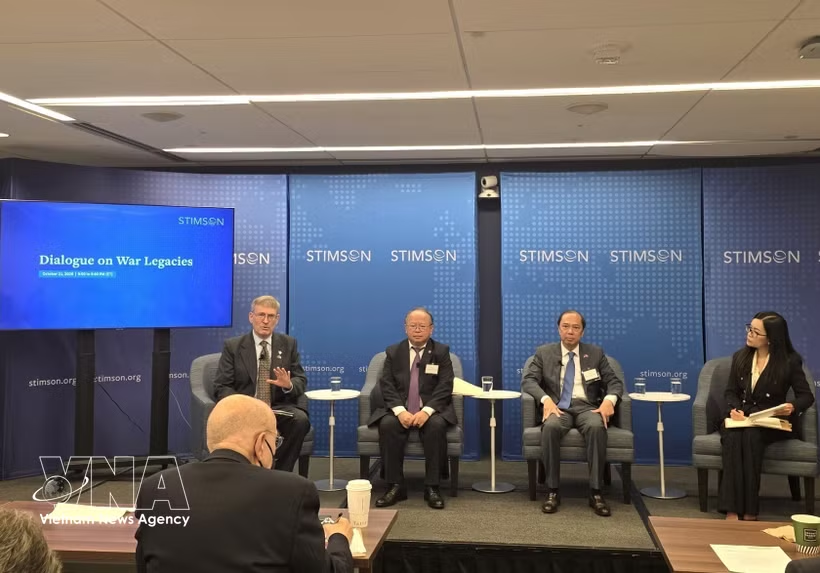
Addressing a dialogue on war legacies in Southeast Asia organised by the Stimson Centre in Washington, D.C on October 21, Vietnamese Ambassador to the US Nguyen Quoc Dung briefed representatives of US government agencies, non-governmental organisations and experts on Vietnam’s efforts to address war consequences, while calling for international support and cooperation in urgent humanitarian work.

Vietnamese Ambassador to the US Nguyen Quoc Dung (second, right) attends a dialogue on war legacies in Southeast Asia organised by the Stimson Centre in Washington, D.C on October 21. (Photo: VNA)

Washington, D.C, (VNA) – The Vietnamese Embassy in the US has stepped up cooperation with US partners in addressing post-war consequences, focusing on mobilising support and resources for Vietnam’s 500-day campaign to search for, recover and identify the remains of fallen Vietnamese soldiers nationwide.

Addressing a dialogue on war legacies in Southeast Asia organised by the Stimson Centre in Washington, D.C on October 21, Vietnamese Ambassador to the US Nguyen Quoc Dung briefed representatives of US government agencies, non-governmental organisations and experts on Vietnam’s efforts to address war consequences, while calling for international support and cooperation in urgent humanitarian work.

He said Vietnam has consistently cooperated fully and in good faith with the US in seeking information on missing US servicemen and remained committed to this humanitarian mission. Vietnam is also pursuing the national 500-day campaign, launched in April, to search for, collect and identify the remains of fallen Vietnamese soldiers.

Under the campaign, Vietnam has mobilised unprecedented resources, aiming to recover around 7,000 sets of remains. Efforts are also being intensified to match DNA samples through a centralised database of martyrs’ relatives, and clear unexploded ordnance left over from the war in key former battlefields.

The diplomat said that time is becoming critical in the search for fallen soldiers as former battlefields have increasingly been transformed into residential areas, roads, farms and industrial zones, erasing physical traces. Meanwhile, veterans and witnesses are ageing, narrowing opportunities to collect firsthand accounts. Achieving the campaign’s goals requires combining Vietnam’s field records and oral histories with US wartime archives, forensic anthropology and advanced DNA technology.

Dung said Vietnamese experts will partner with those from Texas Tech University to return to the National Archives and Records Administration (NARA)’s facility in College Park, Maryland, in the coming weeks to continue examining roughly 2-3 million pages of wartime archives that may contain clues to fallen Vietnamese soldiers, including coordinates in military reports, temporary burial sites, troop movements, old maps and aerial photographs.

He noted that universities, veterans, historians, archivists and technology experts could all make meaningful contributions. Artificial intelligence (AI) could help search and cross-reference millions of pages of documents, but could not replace human memory. Technology must therefore be combined with eyewitness accounts, and action is needed now.

Reflecting on past progress, the ambassador affirmed that cooperation in addressing war legacies had played a pivotal role in transforming Vietnam-US relations into a Comprehensive Strategic Partnership, the diplomat said, adding that the most profound results were reflected in children being able to attend school safely, people with disabilities gaining greater independence, and families finally welcoming loved ones home after decades of waiting.

Earlier, on October 19, Dung discussed the objectives and significance of the campaign and Vietnam’s cooperation with US partners with lecturers and students from the University of Georgia in Washington, D.C.

The university is an active partner in training on remote-sensing technologies to locate suspected burial sites, environmental DNA research, field sampling methods, and the analysis of commingled remains. It is also helping advance the establishment of a joint research and working group for a DNA laboratory in Hanoi.

According to the diplomat, Vietnam has been working closely with US partners to examine NARA archives, including clues to mass graves. The US’s cooperation in sharing military operational data and providing DNA identification technologies was not only an expression of responsibility but also a profound gesture of reconciliation, demonstrating how the two countries could overcome historical legacies through mutual respect and empathy./.
VNA

See more

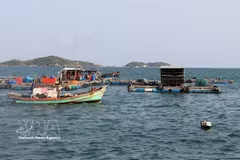
Vessels in the area of An Thoi fishing port in An Giang province (Photo: VNA)

An Giang steps up crackdown on IUU fishing

Ho Van Mung, Chairman of the An Giang provincial People’s Committee, has ordered local departments, law enforcement forces and authorities to tighten discipline, clearly assign responsibilities and strictly hold agency and local leaders accountable for results in combating IUU fishing.

The seminar entitled “65 Years of the Agent Orange/Dioxin Disaster in Vietnam” takes place in Hanoi on October 21, 2026. (Photo: VNA)

Seminar calls for long-term support for Agent Orange/dioxin victims

VAVA President Lt. Gen. Nguyen Huu Chinh stressed that assistance should extend beyond immediate relief to ensure victims have better access to healthcare, rehabilitation, education, vocational training and livelihood opportunities, enabling them to integrate into society.

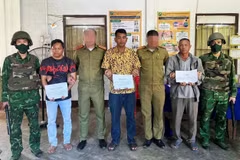
Three suspects are arrested during a crackdown on a cross-border ring involved in stockpiling, trading and transporting fireworks illegally from Laos into Vietnam. (Photo published by VNA)

Cross-border illegal fireworks trafficking ring dismantled, 30 tonnes seized

Authorities in Vietnam's central province of Quang Tri and Laos’ Savannakhet province have successfully dismantled a cross-border ring involved in stockpiling, trading and transporting fireworks illegally from Laos into Vietnam, seizing around 30 tonnes of various types of fireworks and arresting three Lao nationals linked to the case.

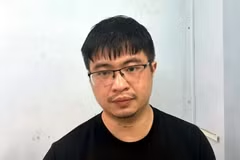
Pho Duc Nam, alias Mr Pips (Photo povided by the police)

Mr Pips case to be heard at three locations via hybrid trial

Given the large number of participants in the proceedings, including 188 defendants, more than 200 defence lawyers and hundreds of related parties and witnesses, the court has decided to hold the trial in a hybrid format, combining in-person and online proceedings.

At the second session of the 16th NA on October 20 (Photo: VNA)

Draft law proposes decentralising management of culture, sports and tourism

Minister of Culture, Sports and Tourism Lam Thi Phuong Thanh said the draft aims to institutionalise the Party’s policies on restructuring the state apparatus, operating the two-tier local administration model, strengthening decentralisation, cutting administrative procedures and business conditions, promoting digital transformation, and resolving problems arising during the implementation of existing laws.

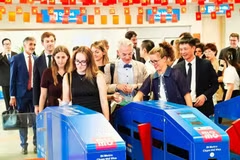
An international delegation experiences the ticket control system at Cau Giay Station. (Photo: VNA)

EU provides 10 million EUR to prepare Hanoi Metro Line 3 extension

Hanoi's Metro Line 3 is 12.5 km long and has 12 stations, including eight elevated and four underground stations. The elevated section from Nhon to Cau Giay began commercial operations in August 2024, providing an additional high-capacity public transport option in western Hanoi.

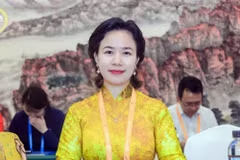
Professor and Doctor Phan Thi Tra My, Chairwoman of the Association of Vietnamese Enterprises in China (Photo published by VNA)

Overseas Vietnamese women offer ideas for national development

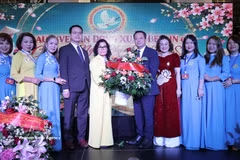
In this process, overseas Vietnamese women play a natural, persistent and enduring role. Vietnamese mothers continue to speak Vietnamese with their children every day, prepare Vietnamese dishes and preserve family traditions, lifestyles and Vietnamese ways of interacting with others. Vietnamese women wearing traditional “ao dai” in their host societies also help introduce and promote the country’s cultural identity to international friends.