Vietnamese language education network expanded across Canada

In line with the Political Bureau’s Resolution No. 23-NQ/TW on overseas Vietnamese affairs, CVCEC’s initiative combines technology and educational cooperation to connect previously independent classes, expand access to Vietnamese language learning and help young people maintain their ties with the homeland.

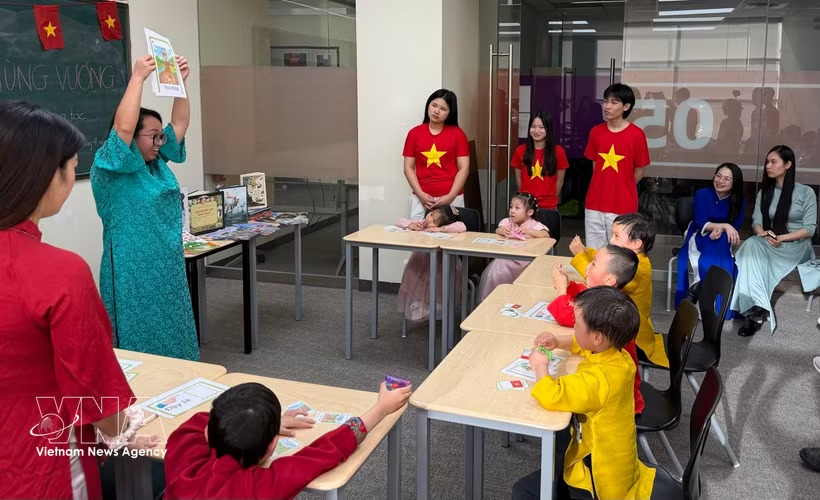
The Canada-Vietnam Cultural and Educational Council officially launches the Viet Youth Readiness Hub and opens a community Vietnamese language class for children (Photo: VNA)

Ottawa (VNA) - The Canada-Vietnam Cultural and Educational Council (CVCEC) is expanding Vietnamese language classes across Canada by combining in-person teaching with online learning, helping young people preserve their mother tongue and national cultural identity.

According to CVCEC Chairwoman Phan Thi Quynh Trang, one of the biggest challenges facing Vietnamese families in Canada is maintaining an environment where children can regularly use their mother tongue. Many children understand Vietnamese when their parents speak it but respond in English or French, while those of Vietnamese origin often communicate with one another in these dominant languages. Without regular practice, their ability to speak Vietnamese may gradually decline across generations.

To address this, CVCEC is connecting volunteer teachers, parents, and community organisations through a coordinated network with shared curricula, learning materials, and teaching methods, enabling Vietnamese communities across provinces to participate in a shared learning system and overcome geographical barriers.
|
In Prince Edward Island (PEI), three classes currently teach Vietnamese and traditional culture to 30 students under the academic supervision of teacher Hoang Minh Ha and volunteer teachers. After two years, many children who initially could not speak Vietnamese or had never studied it have learned to read, tell stories, and gradually practise writing.

Lessons combine language instruction with cultural activities. Students learn about Vietnamese history and customs and make traditional foods such as "Banh Chung" (square glutinous rice cake), and mooncakes. These activities help them learn Vietnamese naturally and strengthen their ties with their families and homeland, CVCEC said. More than 20 parents in PEI also support the classes and organise community activities.

However, expanding in-person teaching remains challenging because Vietnamese communities in some provinces are small and dispersed, most teachers work voluntarily, and venue rental, equipment and operating costs strain long-term sustainability.

To address these constraints, CVCEC is developing the “My Vietnamese language school” platform, combining online learning with in-person classes. In cooperation with BambooTech – a Finnish educational technology company, it is digitising the Vui hoc Tieng Viet (Learning Vietnamese with fun) textbook series published by the Publishing House of Ho Chi Minh City University of Education and developing resources on Vietnamese language and traditional culture based on the Khai Minh Duc education system’s curriculum.

The platform features eight themes and 40 learning stages, with speaking practice, writing exercises, and online interaction. Teachers can follow a shared curriculum, while students can access free materials and practise at home. An online class in Manitoba connects with students in PEI, while CVCEC is working with teachers in Finland to standardise teaching resources.

Beyond community classes, CVCEC is seeking cooperation with local education authorities. It has also called on the State Committee for Overseas Vietnamese to connect the TDSB with education authorities in Hanoi and Ho Chi Minh City to facilitate exchanges of experience and expand professional cooperation.

According to Trang, connecting the education systems of Canada and Vietnam will improve teaching quality and create more opportunities for Vietnamese to learn in a multicultural educational environment. In the longer term, CVCEC hopes to promote the recognition of Vietnamese as a credit-bearing foreign language in appropriate programmes within the host country's education system.

In line with the Political Bureau’s Resolution No. 23-NQ/TW on overseas Vietnamese affairs, CVCEC’s initiative combines technology and educational cooperation to connect previously independent classes, expand access to Vietnamese language learning and help young people maintain their ties with the homeland. /.


VNA
See more

Phuoc An Minh Bridge is 3 metres wide and 33 metres long, meeting the design standards for new rural bridges. (Photo: VNA)

An Giang mobilises resources to improve social welfare

Local authorities have stepped up efforts to mobilise donations from businesses, organisations and philanthropists to build bridges, roads and houses, supporting poverty reduction and new-style rural development.

Collecting samples for DNA testing (Photo: VNA)

Dien Bien province collects 81 DNA samples to identify war martyrs

Dien Bien has 7,398 graves of martyrs and youth volunteers across 11 cemeteries, 6,894 of which contain remains. In the first phase of the 500-day campaign, authorities exhumed and sampled 4,607 graves in seven cemeteries, meeting 100% of the plan, and handed 4,343 eligible samples to the Military Forensic Institute for testing.

Deputy Prime Minister Ho Quoc Dung and delegates view a robot at the centralised practice centre of the University of Engineering and Technology, Vietnam National University, Hanoi. (Photo: VNA)

Vietnam National University urged to lead in technology development

VNU Hanoi should affirm its position as a research and innovation university complex by continuing to reform its governance model, capitalising on its multidisciplinary strengths, and promoting digital transformation and the application of artificial intelligence.

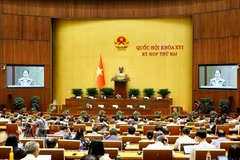
Minister of Culture, Sports and Tourism Lam Thi Phuong Thanh, ed by the Prime Minister, presents the proposal for the draft Law on the Development of Cultural Industries. (Photo: VNA)

Cultural industries development and intellectual property laws under review

According to the Government’s submission, the draft Law on Cultural Industries Development covers the development of ecosystems for cultural industries; support for creativity and the establishment and valuation of intellectual property rights; human resources; infrastructure; markets; finance; and investment incentives and support.

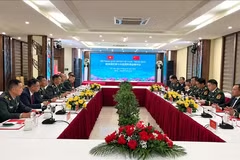
At the talks in Lao Cai province (Photo published by VNA)

Vietnam, China seek to advance opening of Bat Xat-Ba Sa border crossing

The border between Lao Cai and Yunnan has remained generally stable, with bilateral cooperation becoming increasingly substantive. Border guard forces from both countries have closely coordinated in border management and maintaining social order and safety, based on mutual respect for each other’s independence, sovereignty and territorial integrity.

Ship C235, part of the “No-Number Ships” fleet commanded by Captain Nguyen Phan Vinh, transports weapons to support the southern battlefield in 1968 (Photo: VNA)

Keeping alive the tradition of legendary Ho Chi Minh Trail at Sea

The legendary Ho Chi Minh Trail at Sea's enduring values continue to be passed down and nurtured today, inspiring younger generations to take pride in the nation’s heritage and carry it forward as they contribute to national development and the safeguarding of the country’s sovereignty over its seas and islands.

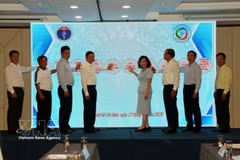
At the hotline launch ceremony (Photo: VNA)

Ho Chi Minh City launches child protection hotline

Ho Chi Minh City launched a 24/7 child protection hotline on October 22 to receive reports of child abuse, violence, maltreatment and illegal child labour, as well as cases involving women experiencing violence or abuse and in need of support.