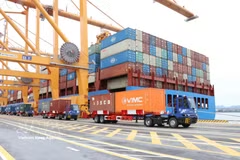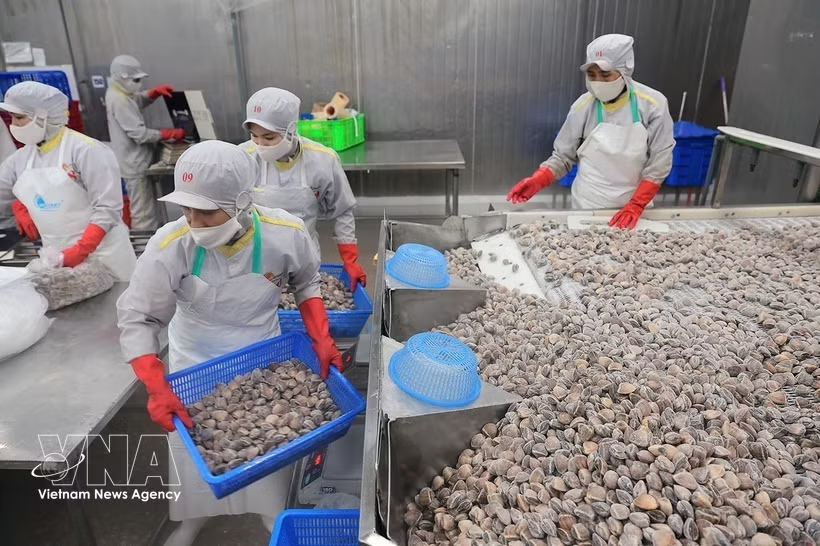
Hanoi (VNA) – Vietnam’s export value of agro-forestry-aquatic products in the first eight months of 2026 totally nearly 49.31 billion USD, up 7% year on year, according to the Ministry of Agriculture and Environment.
Of the total, overseas shipments of agricultural products were valued at 25.66 billion USD, up 2.7%; livestock products at 511.9 million USD, up 30%; aquatic products at 7.94 billion USD, up 10.9%; and forestry products at 12.57 billion USD, up 5.4%.
Asia remained the largest export market for Vietnam’s major agro-forestry-aquatic products, accounting for 45.5% of the total. It was followed by the Americas and Europe, with shares of 21.5% and 13.4%, respectively. Africa and Oceania made up 2.3% and 1.5%.
Exports to Asia went up 11.3% year on year, while those to the Americas and Europe increased 0.6% and 1.7%, respectively. Shipments to Oceania climbed 16.4%, and Africa fell 18.3%.
China, the US and Japan were the three largest individual markets, accounting for 22.7%, 19.1% and 6.8% of Vietnam’s exports, respectively.
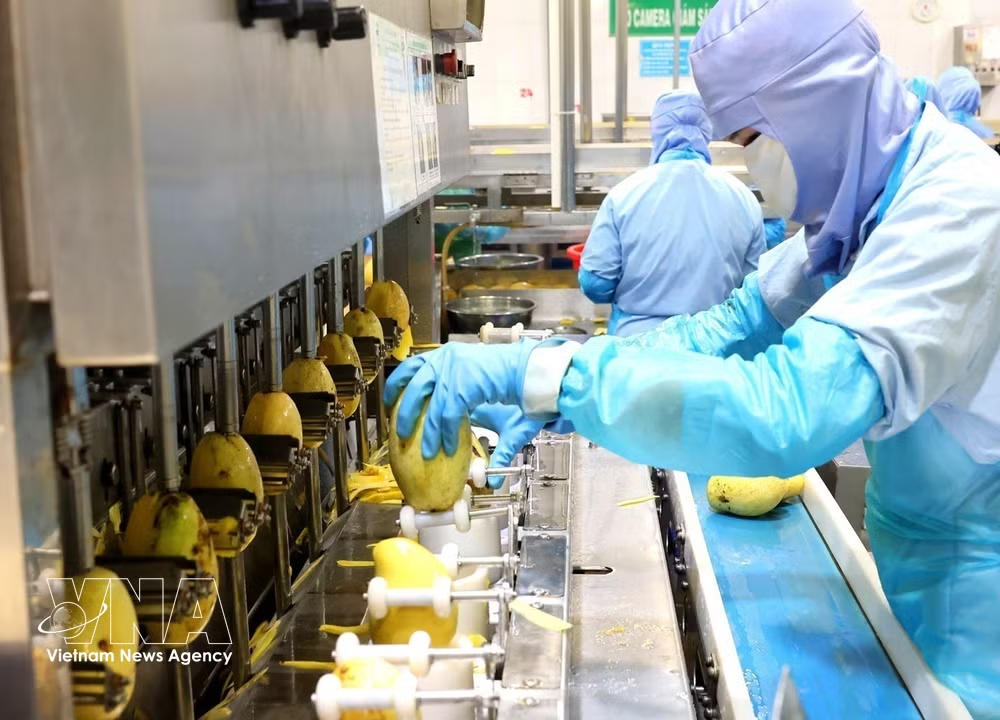
Among key products, fruit and vegetables, pepper and cashew nuts posted export growth during the period. Fruit and vegetables recorded the strongest growth, reaching 6.02 billion USD, up 24.9%. Pepper exports stood at 1.24 billion USD, up 9.6%, and cashew exports reached 3.35 billion USD, up 2%.
Cashew nuts were the only among the three that saw a decline in export volume but an increase in value. The volume fell 1.7%, but its value rose 2% as the average export price rose 3.7% to 7,058 USD per tonne.
Pepper exports gained in value despite a 4.3% drop in the average export price, mainly because the export volume increased 14.5%.
Meanwhile, coffee, rubber, tea, rice, cassava and cassava products experienced lower exports. Rice saw the sharpest drop, down 11.9% to 2.86 billion USD, followed by coffee at 9.1%, rubber at 6.2%, cassava and cassava products at 2.5%, and tea at 2%.
Coffee export volume rose 13.1%, but its value fell 9.1% as the average export price dropped 19.7%. Rubber shipments fell 16.1% in volume while the average price increased 11.9%, but this was not enough to offset the decline in volume.
Rice faced pressure from both lower export volume and prices, which respectively fell 6.3% and 6%, resulting in an 11.9% decline in export value. Tea shipments contracted 10.2% in volume, but the average export price rose 9.1%, limiting the decline in value to 2%.
On the import side, Vietnam’s agro-forestry-aquatic imports were estimated at 35.06 billion USD in the first eight months, up 8.1% year on year. The import value in August fell 9.9% from the previous month and 7.4% from the same month last year.
The US, China and Cambodia were the three largest suppliers, respectively accounting for 10.2%, 9.7% and 7.2% of Vietnam’s agro-forestry-fishery imports. Purchases from these markets climbed 22.4%, 8% and 21.7% from a year earlier, respectively./.