Vietnam’s CPI rises 3.63% in 2024

Vietnam’s consumer price index (CPI) in 2024 rose 3.63% year-on-year, meeting the target set by the National Assembly (NA), the General Statistics Office (GSO) reported on January 6.

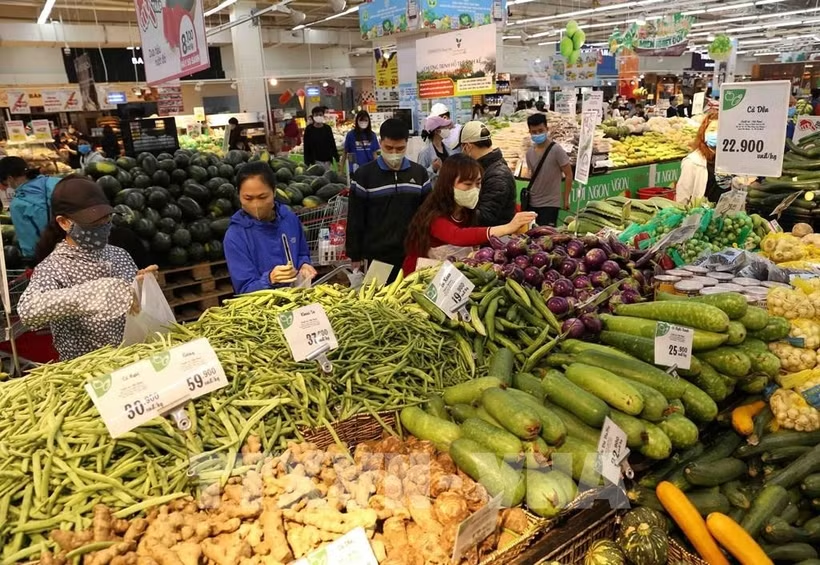
Illustrative image. (Source: VNA)

Hanoi (VNA) – Vietnam’s consumer price index (CPI) in 2024 rose 3.63% year-on-year, meeting the target set by the National Assembly (NA), the General Statistics Office (GSO) reported on January 6.

Nguyen Thi Huong, head of the GSO, told a press conference in Hanoi that the index in the fourth quarter went up 2.87% from the corresponding time last year, and that in December increased 2.94% year-on-year.

She attributed the increase to the rising prices of food and services, particularly rice prices following export trends, the impact of natural disasters, and growing demand during holidays and celebrations.

Specifically, food prices grew by 12.19% year-on-year, rice prices up 15.93%, and catering services up 3.99%.

The prices of housing, electricity, water, fuels, and construction materials expanded by 5.2% year-on-year. In addition, the prices of drugs and medical services increased by 7.16%; educational services up 5.37%, and transportation up 0.76%.

Meanwhile, the prices of the post and telecommunications group in 2024 contracted by 1.02% compared to 2023 due to the decrease in the prices of old-generation phones as businesses launched discount programmes to stimulate demand for smartphones.

Domestically, in December, the gold price decreased by 1.38% compared to the previous month, but rose 31.07% over the same period last year. For the whole year, it increased by 28.64%.

The average US dollar price in the free market was around 25,488 VND, representing a rise of 4.91% year-on-year./.

VNA

See more

Delegates pose for a photo at the Chile-Vietnam Business Forum in Hanoi on November 16 (Photo: VNA)

Vietnam, Chile seek to expand trade ties

Chilean President José Antonio Kast pointed to potential for cooperation in agriculture and food, and called for stronger technical cooperation, better market access and closer links in innovation, technology, services and sustainable development.

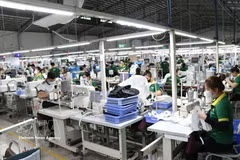
Production of footwear for export at Lefaso Tra Vinh Industrial Investment and Production Joint Stock Company, Tra Cu commune, Vinh Long province (Illustrative image. Source: VNA)

VEFTA implementation requires exporters to restructure supply chains: Experts

Under VEFTA, tariff reductions to zero will be meaningless for Vietnam’s key export sectors, including textiles and garments, footwear, and agricultural and aquatic products, if goods are found to contain banned chemicals, violate rules of origin or lack transparency regarding their carbon footprints.

Deputy Prime Minister Nguyen Van Thang meets with Martin Sommer, head of the IMF’s Article IV consultation mission team to Vietnam, in Hanoi on November 13, 2026. (Photo: VNA)

IMF sees positive growth prospects for Vietnam, urges cautious monetary policy

Martin Sommer, head of the IMF’s Article IV consultation mission team to Vietnam, noted that inflation risks in Vietnam remain under control, but several factors could add to price pressures. He therefore called for cautious monetary policy management and readiness to respond promptly if inflationary pressures increased.

Representatives of the three first-prize-winning startups receive their awards at the event. (Photo: SGGP)

Seven green-tech startups secure 770,000 USD at Net Zero Challenge 2026

In its fourth year, the competition attracted more than 1,100 applications from 80 countries and territories, making it the most competitive edition since its launch in 2023. Nine finalists presented solutions in three categories, namely renewable energy and carbon removal; food systems and sustainable agriculture; and circular economy and waste management.

Vietnamese and Malaysian businesses connect at the event (Photo: VNA)

Vietnam, Malaysia connect businesses to boost bilateral trade cooperation

It centred on a business-to-business (B2B) matchmaking session, bringing Vietnamese and Malaysian companies together to discuss import-export needs, seek partners and explore cooperation. Vietnamese businesses aimed to connect with Malaysian importers, distributors and retailers, while expanding access for their products to Malaysia and other markets.