Worship of Kitchen Gods - beautiful custom of Tet

Worshipping “Ong Cong, Ong Tao” (Land Genie and Kitchen Gods) is a long-standing custom of great significance as it symbolises the farewell to all bad things of the old year to help people relaxedly enter a new year of peace and happiness.
Worship of Kitchen Gods - beautiful custom of Tet ảnh 1Offerings to the Land Genie and Kitchen Gods on the 23rd day of the 12th lunar month (Photo: laodong.vn)

Hanoi (VNA) – Worshipping “Ong Cong, Ong Tao” (Land Genie and Kitchen Gods) is a long-standing custom of great significance as it symbolises the farewell to all bad things of the old year to help people relaxedly enter a new year of peace and happiness.

The Land Genie and Kitchen Gods worshipping ritual is held on the 23rd day of the 12th lunar month, which falls on January 14 this year. It is also considered the start of the Lunar New Year (Tet) festival - the biggest and most important traditional holiday for Vietnamese.

As the legend goes, “Ong Cong” (Land Genie) is the one in charge of land while “Ong Tao” (Kitchen Gods), consisting of two males and one female, are those who keep a watch over kitchen affairs of a family. They take note of a family’s issues in a year and will ride carps back to the Heaven on the 23rd day of the 12th lunar month to report all the good and bad things of that family to the God of Heaven.

Worship of Kitchen Gods - beautiful custom of Tet ảnh 2Golden carps farmed in Thuy Tram village of Tuy Loc commune, Cam Khe district, Phu Tho province, to serve the worship of the Land Genie and Kitchen Gods (Photo: VNA)

Given this, Vietnamese people believe that the Land Genie and Kitchen Gods are decisive to the good or bad luck and blessing for their families.

Besides, people also view the image of a carp swimming upstream and then leaping over the falls to turn into a dragon as a symbol of steadfastness in surmounting challenges to secure success.

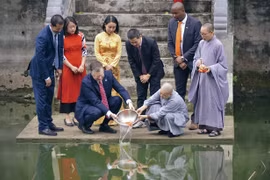
Wishing for good luck in the new year, people hold a ceremony on the 23rd day of the 12th lunar month to send off the Land Genie and Kitchen Gods to the Heaven. Rituals are not necessarily complicated but need to be solemn and show the family’s sincerity.

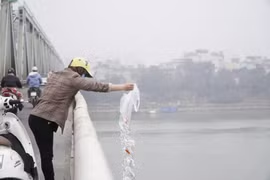
Worship of Kitchen Gods - beautiful custom of Tet ảnh 3(Photo: VNA) 

Rituals and offerings vary according to region. Typically, apart from lamps, incense, votive papers, fresh flowers, and a five-fruit tray, there is also a tray of traditional dishes such as steamed sticky rice, chicken, pork pie, fried spring rolls, and bamboo shoot soup. However, depending on each family’s conditions, people can also prepare vegetarian dishes as offerings.

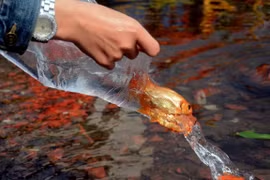
The offerings also include a set of votive paper clothes and, especially, golden carps - the “vehicle” for the gods to return to the Heaven. People often prepare two or three live carps and then release them into a river or lake after the worshipping ritual with the belief that the fish will carry the gods to the Heaven. Nowadays, live carps can also be replaced with paper ones, which will be burned together with other paper offerings after the ritual.

Worship of Kitchen Gods - beautiful custom of Tet ảnh 4Golden carps are released after the worshipping ritual as people believe they will carry the Kitchen Gods to the Heaven (Photo: VNA)

The worshipping ceremony is conventionally held at any times from the noon of the 22nd day of the 12th lunar month to the noon of the next day because people believe the gods will leave for the Heaven after midday and thus, if the ritual is conducted after that, they would be unable to receive offerings.

With the appropriate practice of the Land Genie and Kitchen Gods worship, people can help uphold and pass down traditional cultural values in the modern life./.

VNA

See more

Singer Dang Duong is among the artists featured in the national concert Proud to Be Vietnamese 2026. (Photo of the organisers)

Concert to celebrate unity and pride

The programme carries profound political, cultural and social significance, helping promote historical values and the Vietnamese tradition of paying tribute to the past generations, while nurturing love for the homeland and country and strengthening bonds among generations of Vietnamese people.

A visitor watches a calligraphy demonstration at the first Vietnam Calligraphy Festival 2026. (Photo: VNA)

Vietnam Calligraphy Festival celebrates national cultural heritage

The festival features more than 100 exhibition booths, bringing together calligraphy clubs from across the country, calligraphers, artisans, culture researchers, businesses and representatives of traditional craft villages. Exhibitions, exchanges, discussions and hands-on activities celebrate calligraphy and promote Vietnam’s cultural values.

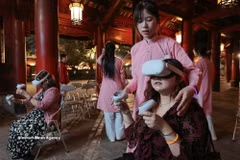
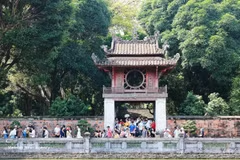
Tourists experience writing calligraphy through virtual reality at Hanoi's Temple of Literature. (Photo: VNA

Hanoi works to unlock heritage resources

When innovation deepens understanding of traditional values rather than replacing them, heritage becomes not only something to preserve but also a resource for sustainable tourism, economic development and reinforcement of Hanoi’s position as a UNESCO Creative City.

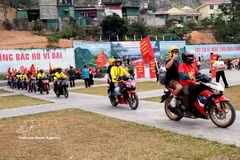
Following the launch ceremony, the 100-motorbike convoy travels from Dong Van across Ma Pi Leng Pass, taking in spectacular mountain scenery and the Nho Que River before finishing at Pa Vi Ha in Meo Vac commune. (Photo: VNA)

100 motorbikes conquer Ma Pi Leng Pass to promote safe travel

A convoy of 100 motorbikes set off on a journey across Ma Pi Leng Pass on October 21 as part of a roadshow campaign to promote safe motorcycle travel in the northern province of Tuyen Quang, home to the Dong Van Karst Plateau UNESCO Global Geopark.

The work "Khong gian cua nui" (The Space of Mountains) by Le Lang Luong. (Photo: Published by VNA)

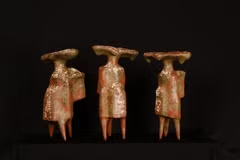
Vietnam-Japan sculpture exhibition to bring artists together in Kanagawa

The “Dialogue” exhibition in Japan's Kanagawa prefecture from November 8-11 will feature more than 30 works by artists from both countries, including 26 pieces by 13 contemporary Vietnamese sculptors from different generations. These artists have developed distinctive artistic languages and made their own marks on Vietnam’s contemporary art scene.

A performance at the event (Photo: VNA)

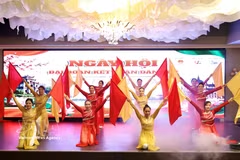
Vietnamese in Hungary stage first Great National Unity Festival

The event also served as a showcase for Vietnamese culture, customs, cuisine and traditions, in step with Vietnamese Culture Day. It encouraged Vietnamese of all generations to hold onto their cultural identity while spreading the image of Vietnam and its people among Hungarians, adding to people-to-people exchanges and mutual understanding between the two countries.

An ao dai fashion show at the festival. (Photo: VNA)

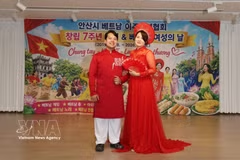
Vietnamese culture shines at festival in RoK

A celebration marking the seventh founding anniversary of the Vietnamese Migrant Women’s Association (VMWA) in Ansan, Gyeonggi province, the Republic of Korea, took place on October 18, featuring cultural exchanges and activities to mark Vietnamese Women’s Day (October 20).

Vietnam harnesses culture as growth driver

Vietnam harnesses culture as growth driver

Under a March 17, 2026 action plan from the municipal Party Committee, which follows the Politburo’s Resolution 80-NQ/TW dated January 7, 2026, on Vietnamese cultural development, the city is moving beyond preservation alone. It is now upholding heritage values while developing cultural products, spaces and markets tied to innovation and global integration.