Ho Chi Minh City (VNA) - The Airports Corporation of Vietnam (ACV) has proposed studying traffic priority measures for airport buses and inter-airport shuttle services on key routes and at major junctions to ensure smooth passenger transfers between Ho Chi Minh City and Long Thanh International Airport in Dong Nai city before rail links become operational.
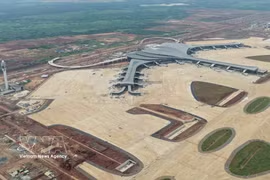
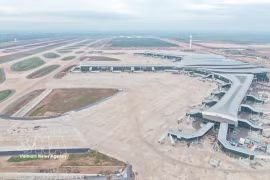
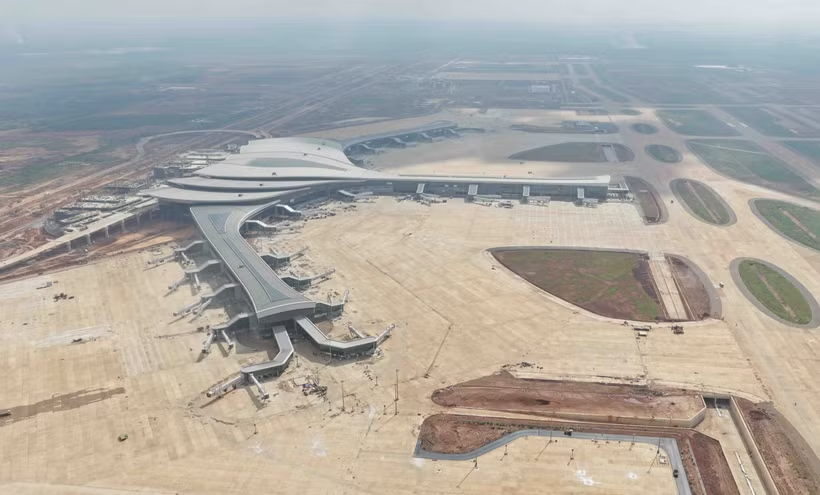
Preparations for Long Thanh International Airport’s commercial launch in late 2026 are being accelerated. ACV said construction of Component Project 3, which covers essential airport facilities, is about 86% complete. Four of the 16 main bidding packages have been completed, while the remaining 12 are being fast-tracked for completion in this December. Most are expected to meet the deadline.
Other facilities are also being completed in coordination, including runways, taxiways, aircraft aprons, lighting and navigation systems, passenger and cargo terminals, aviation fuel supply facilities, rescue and firefighting works, aviation security systems, the air traffic control tower and other flight operations infrastructure.
Under its initial operating plan, the airport is expected to handle up to 366 flights a week, comprising 322 domestic and 44 international services. Vietnam Airlines plans to operate the Long Thanh–Hanoi route and several international routes, while Vietjet Air is expected to run domestic services connecting the airport with major economic and tourism centres nationwide.
Efficient transport links between Ho Chi Minh City and Long Thanh Airport will be vital to its initial operations, as many international passengers are expected to travel to or from the southern metropolis and neighbouring areas.
Before rail links are operational, road transport will serve as the main means of passenger travel between the two locations. Access routes include the Ho Chi Minh City–Long Thanh–Dau Giay expressway, Nhon Trach bridge, Ring Road 3 and National Highway 25C, as well as the Ho Chi Minh City–Long Thanh–Dau Giay and Bien Hoa–Vung Tau expressways leading to the airport access interchange.
ACV is working closely with state management agencies, municipal authorities and transport operators to develop an integrated passenger transport network. In coordination with Ho Chi Minh City departments and agencies, it is drawing up plans for public transport links between the city and Long Thanh, including direct services between Tan Son Nhat and Long Thanh airports via existing expressways.
Coach services, shuttle buses and other transport options are being considered to ensure reliable, frequent services aligned with flight schedules, providing seamless connections for passengers, flight crews and workers and supporting the airport’s smooth and efficient initial operation, an ACV representative said.
ACV has proposed priority arrangements for airport transport on key routes between Ho Chi Minh City and Long Thanh Airport to ensure reliable journey times for airport buses and inter-airport shuttles. It also recommended standardised pick-up and drop-off points with clear signage at city centres, transport hubs and high-demand areas.
In the long term, ACV aims to develop a multimodal network linking Long Thanh and Tan Son Nhat airports with major urban centres through inter-airport services, buses and shuttles connected to key transport hubs, public transport interchanges and future urban railways.
Dedicated shuttle services between Tan Son Nhat and Long Thanh airports will operate at flexible frequencies aligned with flight schedules, especially during peak hours. Airlines and authorities will also coordinate to streamline check-in, security and immigration procedures, while providing information counters and clear terminal signage.
ACV has also called for the early development of mass transit projects, particularly the Thu Thiem–Long Thanh railway, and other modern public transport links. Integrating air, road and rail networks are expected to ease road congestion and strengthen Long Thanh airport’s role as a regional aviation hub./.