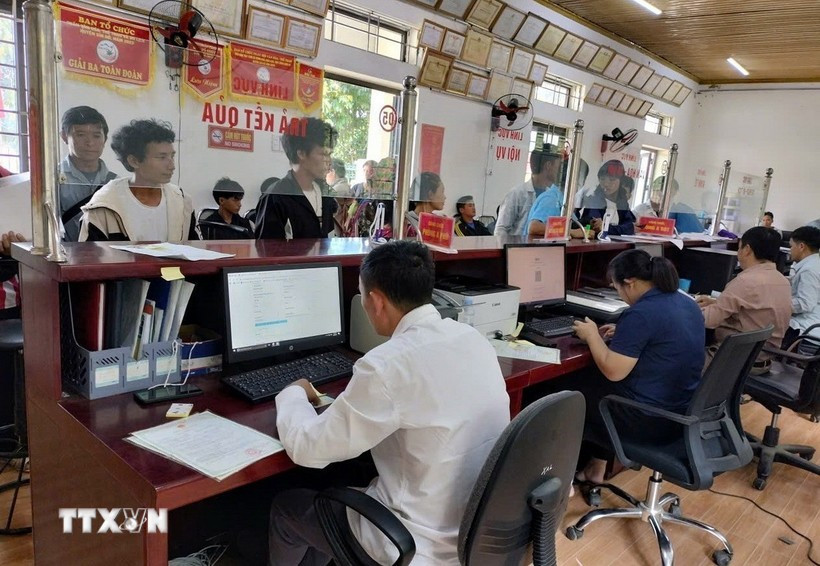
Hanoi (VNA) – Nearly two months since the implementation of the two-tier local government model, the strong direction from central authorities has helped ensure smooth operations and initial successes though certain challenges remain.
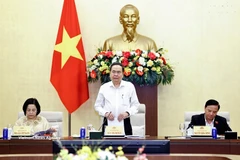
In late August 2025, the Politburo and the Secretariat issued Conclusion No. 186-KL/TW regarding the performance of the political system's new apparatus and the two-tier local government model. The conclusion praised the swift implementation of the new model by central and local authorities, highlighting that while organisational and personnel arrangements are largely stable, many initial challenges to have been tackled.
Party committees have demonstrated a high sense of responsibility, closely following directions from higher-level committees and playing a pivotal role in guiding and supporting grassroots operations. Many localities have adapted quickly to ensure that work continues without disruption, particularly in the administrative procedures directly affecting citizens and businesses, it noted.
Specific requirements have been laid out for central authorities. Ministries and agencies must directly engage in devising solutions to legal challenges and guiding localities through emerging issues. The Government and National Assembly Party Committees were tasked with finalising the legal framework for the two-tier local government system, creating a favourable legal environment for local implementation, and supporting local authorities in carrying out their assigned responsibilities.
The Ministry of Home Affairs was directed to swiftly propose amendments related to organisational structure, staffing, and personnel recruitment, assessment, planning, and training in accordance with new regulations. It was also tasked with assisting the Government in issuing standards for administrative units, administrative unit classification, and urban area classification by September 2025.
The Ministry of Public Security was required to issue specific guidance on the delegation of authority to utilise the National Resident Database, ensuring timely, legal, and efficient data usage for public service delivery.
A critical direction from central authorities is to accelerate the integration of management software with local governments' common systems, ensuring seamless connectivity and reducing data duplication and disruptions in operations. Localities were also instructed to review and eliminate unnecessary documentation by maximising existing data.
The Government’s working groups will continue to visit localities to assess conditions, provide guidance, and assist with the operation of the two-tier government model, including training and updating officials on new regulations.
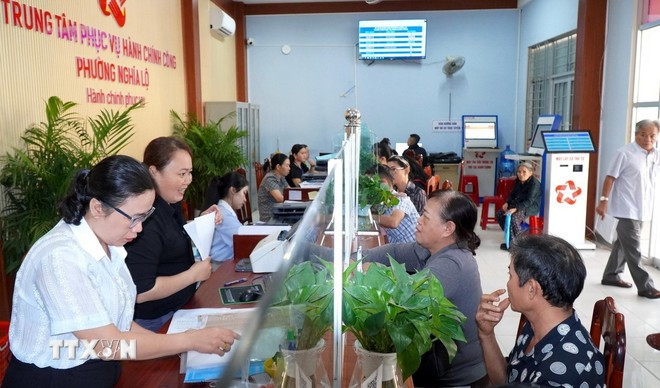
Central authorities also emphasised that leaders of local Party committees and administration are accountable to the Politburo and the Party Central Committee's Secretariat. They were required to report obstacles comprehensively and promptly, and propose concrete solutions to ensure effective operations.
According to the Ministry of Home Affairs, 56 specialised agencies have been established in several localities while 3,139 commune-level public administrative service centres set up across the country. Notably, Hanoi and Quang Ninh adopt a one-tier public administrative service model with branch offices or administrative service points. Some regions have creatively appointed experienced personnel with IT and scientific expertise to these centres.
Data from the National Public Service Portal, provided by the Government Office, shows that as of 5pm on August 19, Ho Chi Minh City had synchronised 645,566 records on this portal, Hanoi 444,327, and Hai Phong 293,935. In contrast, Cao Bang, Lai Chau, and Dien Bien had the fewest, with 32,865, 18,869, and 14,922 records, respectively.
Despite training efforts in IT and digital transformation, challenges persist. In Dong Nai, some staff struggle to adapt to new processes, especially in finance, IT, and judicial affairs. In Tay Ninh, a lack of expertise in construction, land management, and economics at the commune level is hindering effectiveness. New staff unfamiliar with local issues often deliver lower-quality advice.
Staff concerns about reassignment and limited personnel quotas remain widespread. In many communes, staff work extended hours, including weekends, to meet heavy workloads.
These challenges, seen in Dong Nai and Tay Ninh, reflect broader national difficulties, indicating that streamlining government and merging administrative units is both an objective need and a heavy duty.
Only with decisive leadership from above, proactive engagement at the grassroots, and public support can the system operate smoothly and effectively, meeting the country’s development requirements in the new era./.