Much work still ahead to ensure smooth, effective two-tier local government model: PM

According to the Ministry of Home Affairs, to date, localities have completed the restructuring of provincial and communal-level People’s Councils and People's Committees, establishing 465 specialised agencies under 34 provincial-level People’s Committees and 9,916 offices under 3,321 commune-level committees.

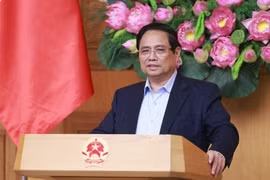
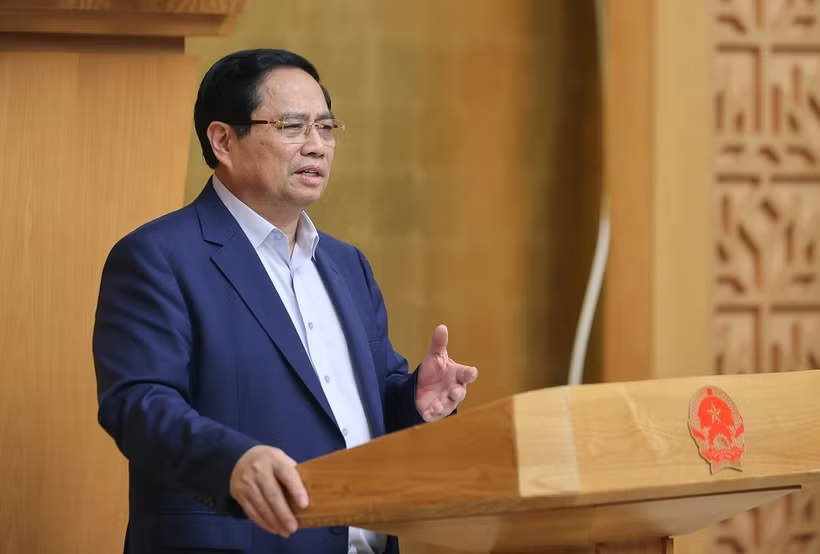
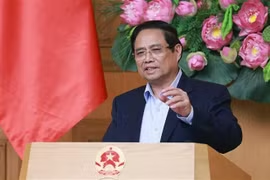
Prime Minister Pham Minh Chinh addresses the meeting (Photo: VNA)

Hanoi (VNA) - Although the new two-tier local government model has run stably since its launch on July 1, there is much to do to ensure its smooth, synchronous and effective operations, Prime Minister Pham Minh Chinh has stressed.

Chairing a meeting of the Government Party Committee’s Standing Board and the Government on August 23 to review two months of implementing the model, PM Chinh highlighted positive changes with the administration shifting from management-oriented to service-oriented, and reforms winning public consensus and increasing confidence in a modern, professional system.

However, he acknowledged difficulties in personnel arrangements, infrastructure, budgeting, digitalisation, asset handovers and housing for officials.

He noted Party General Secretary To Lam’s directions that staff shortages must be addressed immediately by reinforcements from provincial or ministerial levels.

The PM urged delegates to assess achievements, shortcomings and obstacles, and propose practical solutions.

He requested reviews of conclusions of the Government and the PM, improvements to the legal framework and the design of tools to measure performance.

Administrative restructuring, he said, has created new development space, requiring proper planning and transparent budgeting.
vna-potal-thu-tuong-chu-tri-cuoc-hop-thao-go-vuong-mac-trong-thuc-hien-chinh-quyen-dia-phuong-hai-cap-8229891.jpg
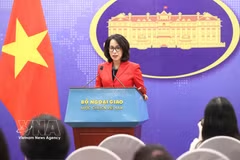
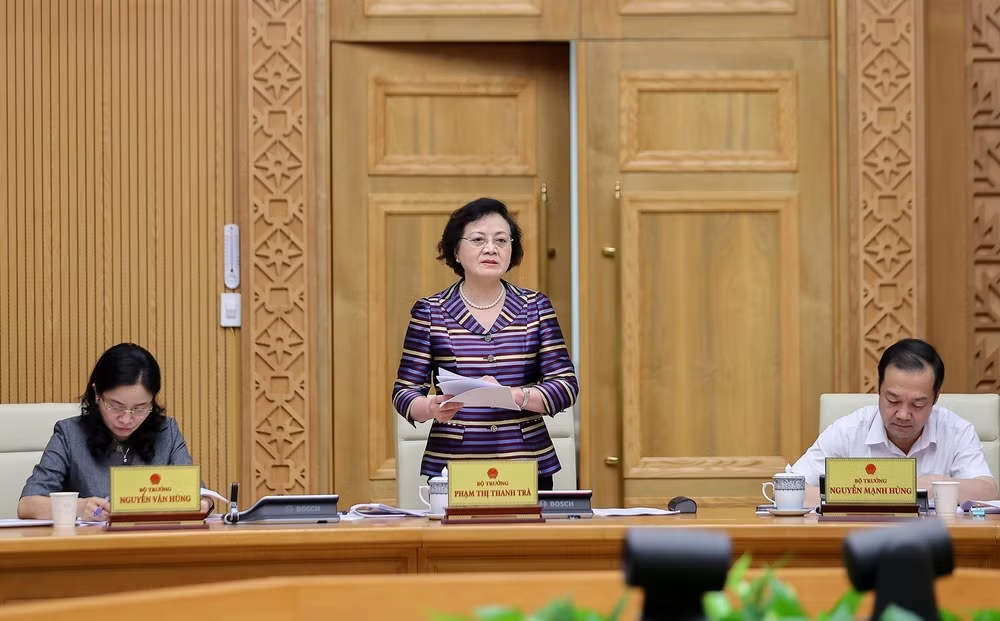
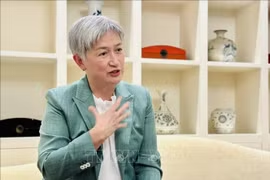
Minister of Home Affairs Pham Thi Thanh Tra speaks at the meeting (Photo: VNA)

According to the Ministry of Home Affairs, to date, localities have completed the restructuring of provincial and communal-level People’s Councils and People's Committees, establishing 465 specialised agencies under 34 provincial-level People’s Committees and 9,916 offices under 3,321 commune-level committees.

Public service centres have been set up in 32 localities, handling 4.4 million dossiers from July 1 to August 19, nearly 75% submitted online.

As of August 21, 2025, based on 30 Government decrees on decentralisation and delegation of authority, ministries and ministerial-level agencies had issued 66 circulars to further detail and guide state management responsibilities under the two-tier local government model.

Personnel downsizing has seen more than 94,000 officials leave their posts, with over 50,000 already receiving payments.

The Ministry of Finance reported 16,124 surplus properties requiring handling, including 6,704 arising from restructuring.

At the meeting, ministers pointed out remaining challenges, including uneven staff capacity, incomplete digitalisation and records management, and difficulties in transferring data, assets and finances./.
VNA

See more

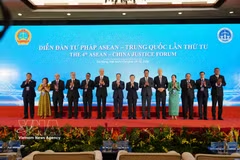
Officials pose for a group photo at the opening ceremony of the fourth ASEAN–China Justice Forum in Da Nang on October 10, 2026. (Photo: VNA)

Da Nang hosts fourth ASEAN–China Justice Forum

The forum offers a venue for participants to share experience in handling cross-border criminal cases and civil and commercial disputes, as well as to explore ways for more effective cooperation in line with national laws and international treaties.

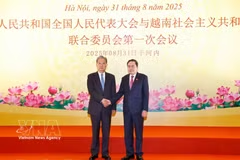
President of the National Assembly Tran Thanh Man (right) and Chairman of the Standing Committee of the National People’s Congress of China Zhao Leji at the first session of the Cooperation Committee between the two legislative bodies in Hanoi on August 31, 2025 (Photo: VNA)

Top legislator’s visit to step up Vietnam–China parliamentary ties

NA President Tran Thanh Man's visit is expected to mark further progress in cooperation between the two Parties and countries, as well as between their parliaments, helping to further develop the Comprehensive Strategic Cooperative Partnership and the Vietnam–China community with a shared future that carries strategic significance.

Prime Minister Le Minh Hung leaves Phnom Penh at noon October 10, concluding the wo-day official visit to Cambodia. (Photo: VNA)

PM Le Minh Hung wraps up official visit to Cambodia

PM Le Minh Hung’s first official visit to Cambodia as head of the Vietnamese Government is an important diplomatic activity, demonstrating the high priority that the Party, State and Government of Vietnam attach to relations with Cambodia.

Prime Minister Le Minh Hung meets with staff of the Vietnamese Embassy and representatives of the Vietnamese community in Cambodia on October 10, 2026. (Photo: VNA)

PM pledges continued support for Vietnamese community in Cambodia

Sharing the difficulties facing Vietnamese-origin people in Cambodia, PM Le Minh Hung said the Vietnamese Government will continue to urge Cambodia to provide favourable conditions for the community to stabilise their lives and secure sustainable livelihoods.

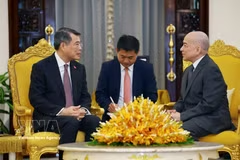
Prime Minister Le Minh Hung meets with Cambodian King Norodom Sihamoni at the Royal Palace in Phnom Penh on October 10, 2026. (Photo: VNA)

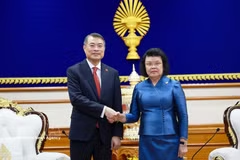
Vietnamese PM pays courtesy visits to Cambodian King, Queen Mother

King Norodom Sihamoni voiced firm confidence that under the leadership of the Communist Party of Vietnam, headed by General Secretary and President To Lam, and through the dedicated efforts by the Vietnamese Government, National Assembly, and people, the country will continue to achieve even greater accomplishments in its national construction and development.

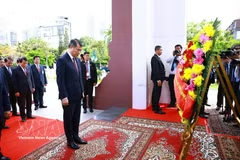
Prime Minister Le Minh Hung pays tribute to late Cambodian King Norodom Sihanouk (Photo: VNA)

PM pays tribute to King Norodom Sihanouk, lays wreaths at Cambodian monuments

Prime Minister Le Minh Hung’s official visit to Cambodia on October 9-10, at the invitation of Prime Minister Hun Manet, marks a particularly significant diplomatic milestone. It underscores the consistent priorities of Vietnam’s foreign policy in the new term, including proactive engagement, strengthened political trust and a stronger focus on translating bilateral commitments into tangible outcomes.

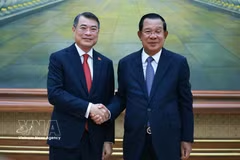
Prime Minister Le Minh Hung (left) and CPP President and President of the Cambodian Senate Hun Sen ( Photo: VNA)

Prime Minister meets with Cambodian People's Party, Senate leader

To further advance bilateral ties in the new era, the two leaders agreed to continue making full use of existing cooperation mechanisms across all channels, including meetings between the two Parties, promote exchanges between young leaders and youth from both countries, and expand cooperation between their legislative, executive and judicial bodies, people’s organisations and localities.

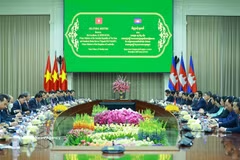
Prime Minister Le Minh Hung holds talks with his Cambodian counterpart Hun Manet in Phnom Penh on October 9. (Photo: VNA)

Vietnam, Cambodia seek to bolster all-round ties

The two PMs expressed their satisfaction with the positive development of Vietnam-Cambodia relations in recent years. Political ties have continued to be consolidated, with political trust strengthened through regular high-level visits and contacts.

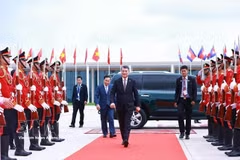
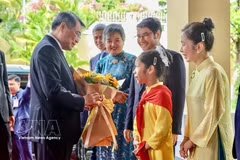
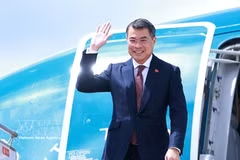
Prime Minister Le Minh Hung arrives at Techo International Airport in Phnom Penh on the afternoon of October 9, beginning an official visit to Cambodia at the invitation of Cambodian Prime Minister Hun Manet. (Photo: VNA)

PM arrives in Phnom Penh, starting official visit to Cambodia

This is PM Hung’s first official visit to Cambodia. It holds particular significance, demonstrating the high priority that the Party, State and Government of Vietnam attach to relations with Cambodia and contributing to further deepening the bilateral ties of “good neighbourliness, traditional friendship, comprehensive cooperation and long-term sustainability”.