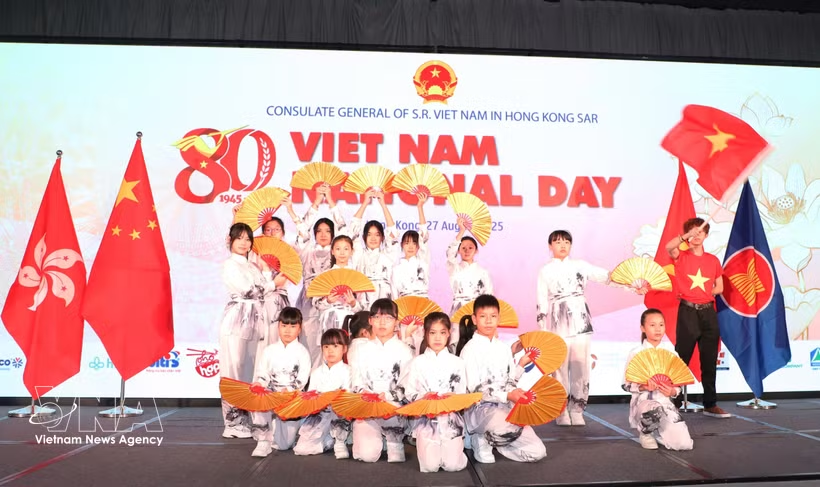
Hanoi (VNA) – In Hong Kong (China), dances and songs by Do Tu Quynh, leader of the community dance group “Ruby’s Dance Crew” – a welcoming space for preserving and celebrating Vietnamese identity among young overseas Vietnamese – have played a big role in keeping traditional culture alive within the community and sharing it with the local public.
Quynh’s involvement in teaching traditional dance and singing stemmed from her longing for her homeland. Four years after arriving in Hong Kong, while volunteering with the Women’s Association and organising a Mid-Autumn Festival programme for new settlers, she was reminded of her youth teaching dance and songs to children at a local cultural troupe in Vietnam.
Amid Hong Kong’s vibrant cultural environment, she became concerned that Vietnamese children born and raised there were gradually losing their connection with their language and national culture. Wanting to preserve roots and create an environment in which they could stay connected to their homeland, Quynh began teaching dance and singing. The class, initially attended by children of local Hong Kong friends, gradually expanded to include Vietnamese families. She regarded its transformation into a “common home” connecting Vietnamese hearts as a deeply moving and joyful moment.
Teaching traditional dance and songs to children growing up overseas has never been easy. Differences in living environments and ways of thinking, together with pronunciation influenced by the local language, mean that the children need more time to grasp rhythms and pronounce Vietnamese correctly.
At the same time, their enthusiasm and responsiveness when introduced to traditional props and costumes have proved a major advantage, alongside strong family support. Parents actively help prepare props and readily order performance costumes from Vietnam for their children.
To help the children understand rather than memorise movements and lyrics, Quynh uses storytelling to convey the spirit of Vietnamese culture. Before each dance or song, she explains the meaning behind familiar cultural images, including why Vietnamese people cherish the national flag, the image of the stork, rice ears, and the graceful “ao dai” (Vietnamese long dress).
For Quach Gia Nhi, a group member of mixed Vietnamese-Hong Kong heritage, national pride has been nurtured through stories about Vietnamese history and culture told by her mother before each performance. Once the children understand their roots, their expressions and movements naturally become more graceful, subtle, and emotionally expressive.
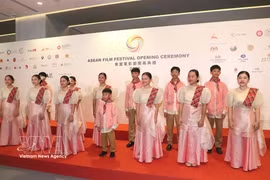
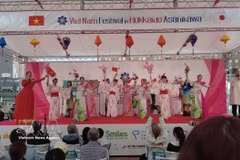
With dedication and consistent training, Quynh’s dance group has often teamed up with the Vietnamese Consulate General in Hong Kong for major cultural diplomacy events. At the Asian Ethnic Cultural Exchange programme at the Hong Kong Cultural Centre, which drew over 30,000 attendees, their collaborative Vietnamese folk-dance performances earned warm applause from both local audiences and international visitors.
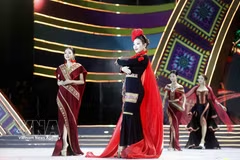
Audiences in Hong Kong and around the world have been captivated by the grace and subtlety of Vietnamese folk dance, along with the elegance of the traditional “ao dai.” Through the innocence and enthusiasm of young overseas Vietnamese performers, they’ve seen a Vietnam that is both youthful and vibrant yet deeply rooted in tradition.
Quynh shared that performing on international stages always filled her and the children with deep emotion and pride, as it allowed them to play a small part in sharing Vietnam and its culture with friends across Asia and beyond.
The quiet but persistent journey undertaken by Quynh and her pupils is a vivid illustration of the role of the overseas Vietnamese community as a cultural bridge. Through their daily efforts to preserve and spread national identity, they are helping to bring the beauty of Vietnamese culture to the wider world./.
VNA