Hanoi (VNA) – With September 8 designated Day honouring Vietnamese language among the Vietnamese community abroad under a 2023-2030 project, a wide range of activities to teach, learn, preserve and promote the mother tongue have been organised around the world, helping connect generations of Vietnamese expatriates with their homeland and roots.
In the new context, Politburo Resolution No. 23-NQ/TW, dated August 2, 2026, continues to place the preservation of the Vietnamese language within the strategic vision of mobilising resources from the Vietnamese community abroad and promoting Vietnamese cultural values around the world.
Diverse activities to promote Vietnamese
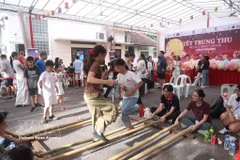
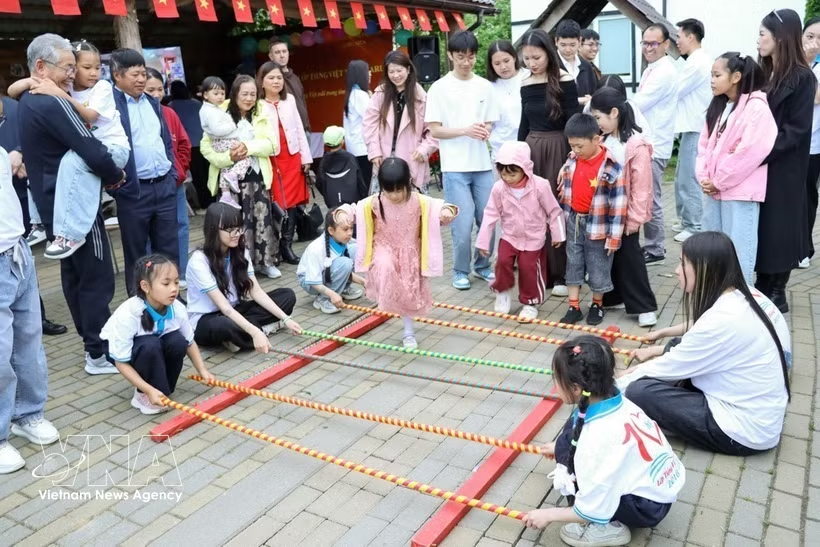
To implement the 2023-2030 project, activities marking the date are organised throughout the year and incorporated into events, festivals and programmes for the Vietnamese community abroad.
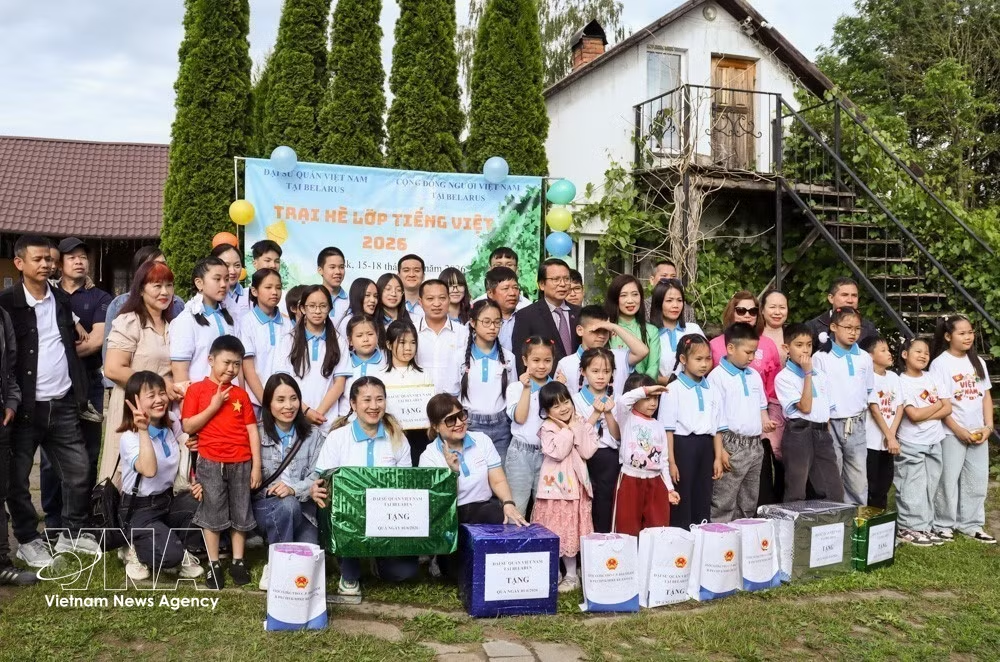
A notable example is the Vietnam Summer Camp, which features Vietnamese language exchange activities. Over more than two decades, the camp has attracted thousands of young Vietnamese people and students from abroad to return to their homeland, helping strengthen community bonds, preserve and promote national cultural identity, and foster a sense of affection for and responsibility towards the homeland and country among younger generations of Vietnamese expatriates.
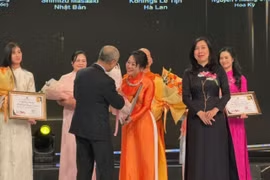
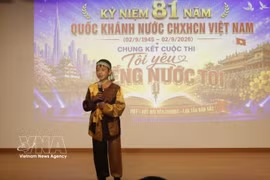
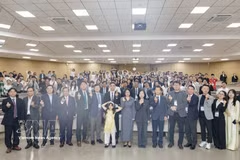
In addition, since 2023, a Vietnamese language gala has become a meaningful annual event, spreading love for the mother tongue among overseas Vietnamese and international friends. A contest seeking Vietnamese language ambassadors abroad is one of the project’s signature activities. To date, it has honoured 24 outstanding individuals who have contributed to promoting the Vietnamese language.
These ambassadors include not only Vietnamese living abroad, but also foreigners who have developed a special affection for Vietnam, love the language and made practical and meaningful contributions to teaching, promoting and spreading Vietnamese among international friends.
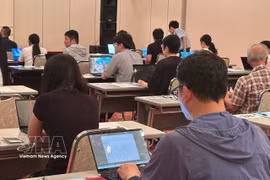
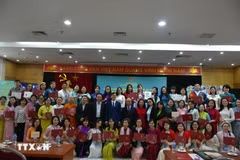
Since 2013, the State Committee for Overseas Vietnamese under the Ministry of Foreign Affairs has worked with the Ministry of Education and Training and universities to organise training courses on Vietnamese teaching methods for OV teachers. The courses not only equip them with teaching skills, but also give them opportunities to learn about Vietnam’s history, culture and country, thereby deepening their understanding and raising their awareness of the role and significance of preserving the language.
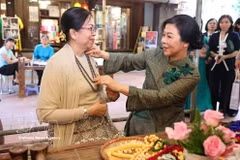
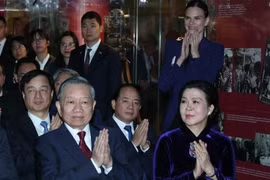
Over the years, during visits, diplomatic activities and meetings with OV communities, Party and State leaders have consistently paid close attention to Vietnamese teaching and learning. They have visited classes, met and encouraged teachers and students, and presented books, bookcases and language learning materials to communities in Singapore, Thailand, Finland and Sri Lanka.
To date, hundreds of Vietnamese language classes have been maintained across Asia, Europe, the Americas and many other parts of the world. Many teaching models have adopted creative approaches suited to the practical conditions of each locality, making an important contribution to preserving and promoting Vietnamese within the community.
Vietnamese – a national soft power resource
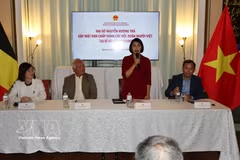
Deputy Minister of Foreign Affairs Le Thi Thu Hang said that although each person may choose a different path and live either in Vietnam or anywhere else in the world, the language remains an invisible yet strong bond connecting us with our roots.
The project was launched at the right time, meeting the expectations and aspirations for the mother tongue to be promoted more strongly and widely among every Vietnamese person living abroad.
These achievements and efforts take on even greater significance as work concerning OV enters a new stage of development with the issuance of Politburo Resolution No. 23-NQ/TW.
The resolution affirms that Vietnamese is not merely a means of communication, but also a national soft power resource. Every Vietnamese language class abroad, every Vietnamese-language book preserved, and every teacher who patiently passes on the mother tongue to younger generations is contributing to nurturing Vietnamese identity in the hearts of people around the world./.