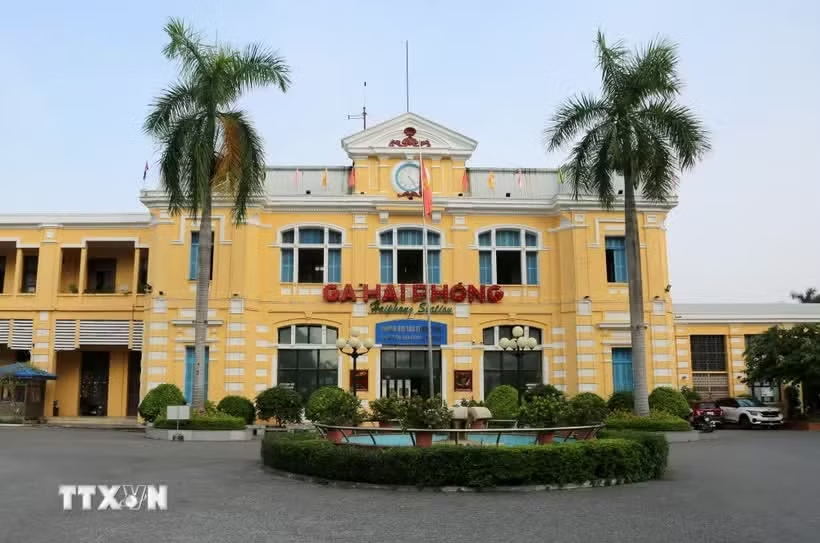
Hai Phong (VNA) – Hai Phong had the honour of welcoming the late President Ho Chi Minh on nine occasions. Hai Phong Railway Station holds a special place in that history, as the departure point for a special train that took him back to Hanoi on October 21, 1946.
The trip took place following his return to Vietnam from France, an important milestone in the history of Vietnam’s railway sector, which marks October 21 as its traditional day.
Today, railway officials and workers are helping preserve the station’s historical, architectural and cultural values, turning the landmark into a living heritage of the port city.
A historic landmark in the heart of the port city
According to the municipal Department of Culture, Sports and Tourism, Hai Phong Railway Station is part of the Hanoi-Hai Phong railway line and is classified as a first-grade station in the national railway system. Like Hai Phong Opera House and Hai Phong Museum, the station bears distinctive French architectural features and is considered one of the most beautiful railway stations built by the French in Vietnam.
After 128 years, the station has retained much of its original appearance. Several features have been preserved almost intact, including the main building, iron columns supporting the inner canopy, an old section of railway track and the original blue-stone foundation.
Nguyen Van Phong, Director of Hai Phong Railway Station, who has spent 30 years working there, said that the station is a historical revolutionary relic, part of an important national history. Together with the Hai Phong Railway Transport Branch, it is a key passenger transport unit of the Vietnam National Railway Group.
The station welcomes around 2,500 passengers a day normally, and up to 3,500-5,000 at weekends and nearly 8,000 during public holidays and the Lunar New Year.
Preserving the station’s architecture and landscape is a priority. Some facilities have deteriorated over time, with peeling walls and faded paint. Phong regularly reminds staff to protect the historic structure. During renovation, original materials and colours are carefully selected, while damaged decorative mouldings are restored to preserve the building’s original appearance. New facilities, such as parking areas and waiting rooms, are also designed in harmony with its French architectural style.
Connecting the past with the present
The station is also being developed as a tourist destination. The municipal Department of Culture, Sports and Tourism is piloting a railway sightseeing route from the station to Hai Phong Port. The route is part of the first railway line connecting Hai Phong with Hanoi.
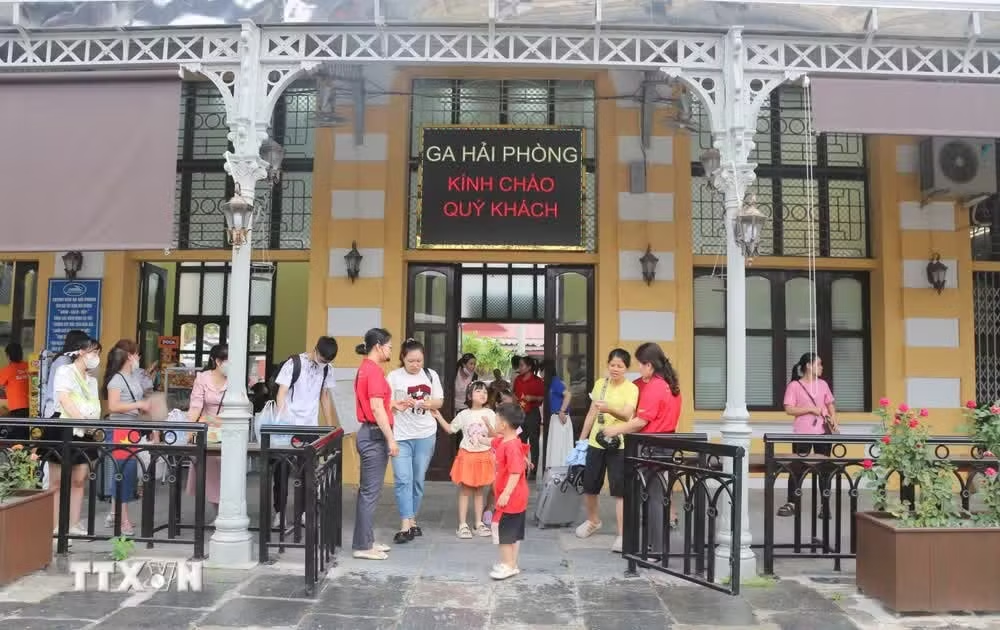
According to its director, despite the rapid development of other modes of transport, railways retain advantages in terms of safety, fuel efficiency and large-scale transport capacity.
For young railway workers, the station’s history is preserved not only through its architecture and artefacts but also through their daily work. Young engineer Nguyen Thanh Dat, Secretary of the station’s youth union, said he takes pride in working at such a historic site. Besides ensuring safe and punctual train operations, he uses modern technology to improve coordination and promotes the station to domestic and international visitors through social media.
For foreign visitors, the station offers a unique experience. Juliette, a French tourist, said she discovered it through social media and chose to travel from Hanoi to Hai Phong by train. She was impressed by its historic French architecture and romantic, well-preserved surroundings./.