Hanoi (VNA) – Prime Minister Le Minh Hung has urged Hai Phong to take the lead in reforming its growth model based on science, technology, innovation and digital transformation, positioning the northern port city as a pioneer in implementing the Party and State’s key development orientations.
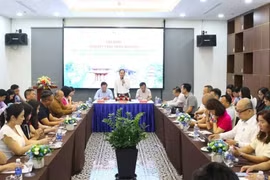
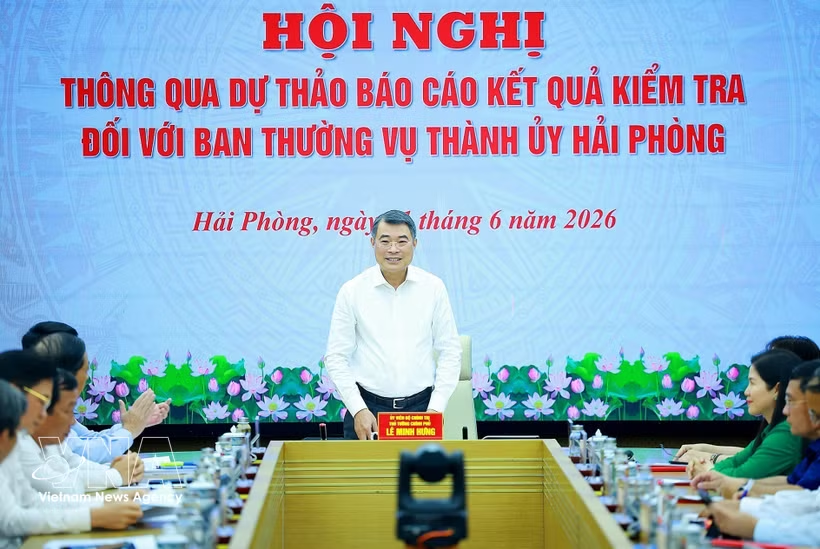
He made the request while chairing a conference on June 1 to review a draft report on the second-round inspection and supervision of the Standing Board of the Hai Phong Party Committee.
The draft report assessed the city’s implementation of four key areas – the organisation and operation of the two-tier local administration system; measures to achieve annual growth of at least 10% during 2026–2030; the implementation of Politburo Resolution No. 57-NQ/TW on breakthroughs in science – technology development, innovation and national digital transformation; and the evaluation and classification of Party organisations, Party members and officials.
To the report noted Hai Phong has effectively translated central authorities' policies, resolutions and directives into concrete programmes and plans. The two-tier local administration system has been running smoothly, delivering tangible benefits to citizens and businesses.
However, coordination among agencies has at times been lax while the digitisation of archives and administrative records remains slow.
Regarding economic development, the city has proactively worked to realise the two-digit growth goal, including developing and public investment disbursement scenarios and adjusting them according to circumstances. Nevertheless, contributions from newly launched projects and major enterprises is still limited, new growth drivers have yet to exert a strong impact, and several long-delayed projects remain unresolved.
The report also noted that Hai Phong has promptly institutionalised Resolution No. 57 through detailed action plans and clear task assignments. While progress has generally been on schedule, digital infrastructure, databases and funding for science, technology, innovation and digital transformation remain inadequate in some areas.
PM Hung commended the city’s proactive and innovative measures in operating the two-tier local administration model, applying technology to governance and accelerating administrative reform.
He said Hai Phong’s experiences should be carefully reviewed for replication where appropriate. Effective mechanisms and models, he added, should be considered for institutionalisation to facilitate broader adoption nationwide.
The Government leader acknowledged that Hai Phong continues to rank among the country’s top performers in economic growth, budget revenue collection, public investment disbursement and economic governance.
However, he cautioned against complacency, noting that it fell short of its first-quarter growth target and will face significant pressure to meet its ambitious annual goal.
He urged the city to conduct a more in-depth assessment of growth quality, particularly the sustainability of budget revenues and the share of land-related income, in order to develop more stable and long-term revenue sources.
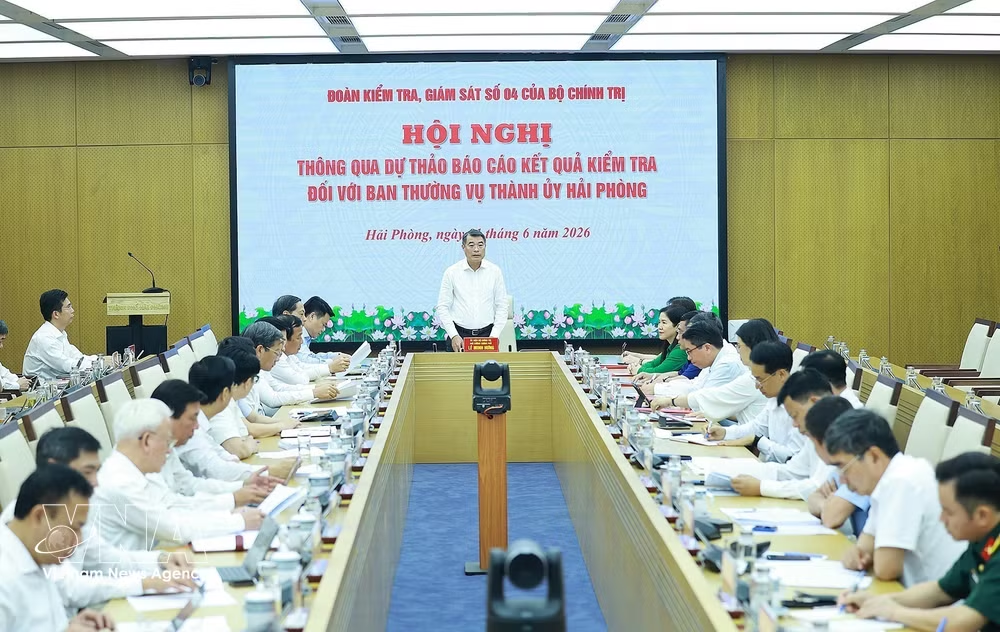
PM Hung stressed that Hai Phong should become a national pioneer in implementing a new growth model driven by science – technology, innovation and digital transformation.
The city should prioritise the development of high-tech, manufacturing, processing and supporting industries while refining foreign investment attraction policies to promote technology transfer, workforce development and domestic enterprises' participation in global supply chains.
Regarding governance reform, the PM described the two-tier local administration system as a major innovation in governance mindset and apparatus structure. He called for a comprehensive review after one year of implementation, with particular attention to the capacity of commune-level personnel.
The municipal Party Committee's Standing Board was urged to assess staffing needs based on actual workloads and development requirements, while addressing personnel shortages in specialised fields such as land administration, finance, investment, science and technology, education and health care. It should also strengthen training programmes and increase the rotation of personnel from municipal departments and agencies to the grassroots level.
He emphasised the need for a shift from an administrative management mindset to a development-facilitating governance approach centred on citizens and businesses. Administration performance, he said, should be measured by public and business satisfaction.
He also called on Hai Phong to develop a set of detailed performance indicators for agencies, localities and officials, and to review decentralisation arrangements to identify areas requiring adjustment between local and central levels.
On science, technology and innovation, PM Hung noted that the city’s digital infrastructure, databases and investment levels have yet to meet development requirements. He urged greater investment in research and development, stronger mechanisms for commissioning scientific projects, expanded data sharing, and closer cooperation among research institutes, universities and businesses to build a vibrant innovation ecosystem and attract high-quality human resources.
For the remainder of the year and the 2026–2030 period, the Government leader instructed Hai Phong to update its growth scenarios, assign clear targets to sectors and localities, strengthen implementation supversision, and mobilise resources effectively to achieve double-digit growth.
He called for accelerating the implementation of key infrastructure projects, including transport, energy, industrial park, logistics and seaport developments, while promoting the attraction of high-quality FDI, domestic investment and social resources.
The city was also tasked with achieving a 100% public investment disbursement rate in 2026; building a medium-term public investment plan for 2026–2030 with a focus on projects with strong regional connectivity and spillover effects; stepping up trade promotion, consumption stimulation and tourism development programmes; and pushing ahead with improving the business environment.
PM Hung further urged Hai Phong to thoroughly deal with long-delayed projects, complete the rearrangement of surplus public land and property after administrative restructuring, and ensure planning adjustments are aligned with central directives and the Red River Delta master plan.
Regarding the city’s proposals, he said the inspection delegation will report them to the Politburo and Secretariat, asking relevant ministries and agencies to study and address issues within their authority./.