Ho Chi Minh City (VNA) – The transformation of “Cashless Day” initiative into “Digital Finance Day 2026” not only promotes smart payment solutions and expands access to financial services for people and businesses, but also contributes to the growth of modern consumption and digital commerce in Ho Chi Minh City.
The “Digital Finance Day 2026” is scheduled to take place in Ho Chi Minh City on June 16 under the theme “Smart Payments Drive Digital Finance.”
According to organisers, the shift reflects a new development trend as digital finance is increasingly becoming a critical component of the digital economy and a key driver of economic growth.
With a young population, a high smartphone penetration rate, and steadily improving digital data infrastructure, Vietnam is well positioned to move beyond the goal of a cashless society toward the development of an inclusive digital finance ecosystem.
Pham Anh Tuan, Director General of the Payment Department under the State Bank of Vietnam (SBV), noted that since 2019, the “Cashless Day” programme has significantly changed payment habits among the public.
By the end of 2025, Vietnam had recorded more than 25.2 billion non-cash payment transactions with a total value exceeding 362 quadrillion VND (13.75 trillion USD).
According to Tuan, this year’s programme aims at a broader objective of financial inclusion, enabling people ranging from urban residents to traders in traditional markets to access transparent, secure and efficient financial services.
The SBV has been focusing on improving the legal framework, developing secure and standardised national payment infrastructure, and accelerating the application of population data and electronic identification systems to facilitate quicker access to banking services for individuals and businesses.
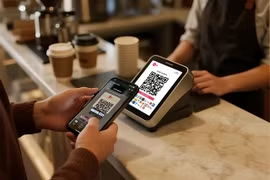
Notably, the central bank is promoting the transition from conventional QR transfer codes to standardised QR payment codes for wider adoption at retail outlets and traditional markets.
The move is considered an important step toward standardising transaction data, enhancing transparency and supporting financial management. At the same time, bilateral QR-code retail payment connections with several countries in the region are being expanded.
According to the SBV representative, following the launch of Vietnam–China bilateral payment connectivity, spending by Chinese tourists in Vietnam increased sharply, rising from several hundreds of billions of VND per day to several billions of VND daily.
Promoting modern consumption
Nguyen Nguyen Phuong, Deputy Director of the Ho Chi Minh City Department of Industry and Trade, said that as the city pursues a target of double-digit GRDP growth, the industry and trade sector is prioritising the development of modern commercial infrastructure, e-commerce, digital payments and consumer demand stimulation measures to create new growth drivers.
The city is implementing its trade development strategy for the 2026–2030 period while formulating an e-commerce development plan through 2030.
Under the strategy, the city’s Shopping Season promotion programme has been identified as a key task to stimulate consumer spending and encourage tourism-shopping models aimed at attracting international visitors.
The promotion of cashless payments across modern retail systems has achieved positive results thanks to competitive pressures and the need to improve customer experience. However, implementation in traditional markets and small retail outlets remains challenging as cashless payments have not always matched the practical needs of traders.
Many wards and communes in Ho Chi Minh City have proactively requested cooperation in deploying cashless payment models at traditional markets instead of implementing them on a large scale from the outset, Phuong said.
At Ben Thanh Market, QR Pay and QR Global payment experiences have attracted considerable interest from traders and shoppers. Many vendors said QR codes displaying pre-entered payment amounts help reduce errors, shorten transaction times and improve revenue management.
Tran Thi Hong, a trader at Ben Thanh Market, said around 70% of her customers currently choose cashless payment methods, while the figure reaches 80–90% among younger consumers.
The adoption of QR Pay automatically records revenue data, making income declaration and tax compliance more convenient, she said.
According to the municipal Department of Industry and Trade, expanding digital payments is helping modernise commercial activities and providing traditional markets with additional momentum to adapt to new consumption trends, broaden customer access and better serve international tourists.
Representatives of businesses and financial institutions also noted that Vietnam has emerged as one of the region’s most dynamic digital payment markets. The proportion of contactless payments on Visa’s network in Vietnam has increased from around 50% three years ago to approximately 80% today, highlighting the rapid pace of digital transformation in the finance, banking and consumer sectors./.