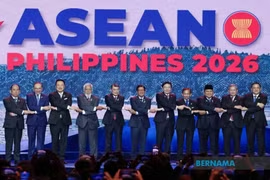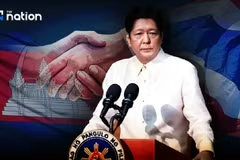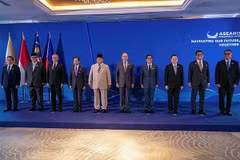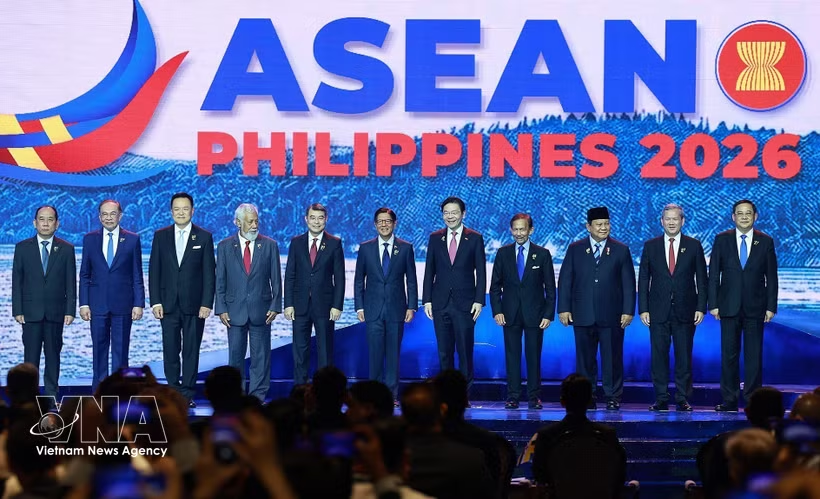
Hanoi (VNA) – Philippine President Ferdinand Marcos Jr. said on May 8 that leaders of the Association of Southeast Asian Nations (ASEAN) had agreed to strengthen intra-bloc trade and reinforce regional food security mechanisms amid rising energy prices and disruptions to global shipping routes caused by conflict in the Middle East.
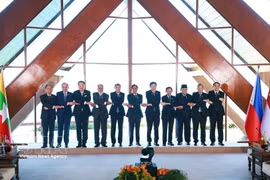
Speaking at a press conference following the 48th ASEAN Summit in Cebu, Marcos said ASEAN leaders pledged to maintain the flow of essential goods within the region while ensuring open and predictable markets, alongside enhancing intra-ASEAN trade and regional food security mechanisms.
According to the Philippine President, soaring fuel prices, disruptions to maritime transport and rising fertiliser costs are affecting households and economies across Southeast Asia. In response, ASEAN countries agreed to build more resilient supply chains, support micro, small and medium-sized enterprises (MSMEs) in agriculture and smallholder farmers, promote climate-resilient farming models and strengthen ASEAN-led food reserve systems.
He also highlighted calls for the early ratification of the upgraded ASEAN Trade in Goods Agreement (ATIGA), aimed at modernising regional trade rules and reducing non-tariff barriers. He said the revised agreement includes crisis-response provisions designed to ensure the uninterrupted flow of essential goods during emergencies.
The upgraded ATIGA, whose negotiations were concluded in 2025, also incorporates measures related to supply chain disruptions, digital trade and green economy initiatives as ASEAN seeks to promote its role in global production networks.
Food security is currently one of the Philippines’ top priorities during its ASEAN Chairmanship in 2026, alongside energy stability and the protection of ASEAN citizens overseas./.
PM outlines three key proposals to respond to energy crisis at ASEAN Summit
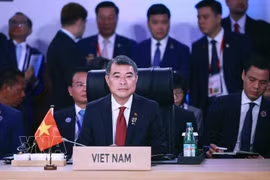
ASEAN should take the lead in upholding rules and strengthening trust in international relations by consistently promoting multilateralism and respect for international law. It should actively contribute to maintaining security, safety, and freedom of navigation and overflight globally and in the region, said Prime Minister Le Minh Hung.