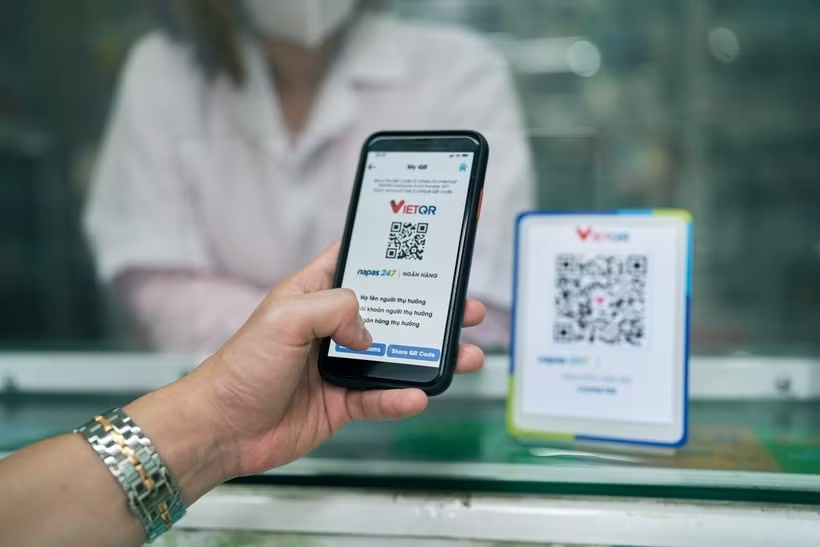
Hanoi (VNA) – The State Bank of Vietnam (SBV) has achieved notable progress in speeding up digital transformation, strengthening the digital services ecosystem and sustainably promoting cashless payments, Deputy Governor Pham Tien Dung has said.
In an interview granted to VietnamPlus, Dung said the Party and State have identified digital transformation as an inevitable trend, an objective requirement, a strategic choice and also a top priority for fast and sustainable development. Particularly, the Politburo’s Resolution No. 57-NQ/TW on making breakthroughs in science – technology development, innovation, and national digital transformation serves as a guiding framework for the process.

Adopting a people-centred approach that prioritises convenience and user experience, the banking sector has implemented a range of solutions and recorded encouraging results.
In terms of institutional development, he elaborated, the SBV has advised on and promulgated many legal documents related to digital transformation and cashless payments, including the Law on Anti-Money Laundering, the Law on Credit Institutions, and a decree on cashless payments. Notably, Decree No. 94/2025/ND-CP on a sandbox mechanism in the banking sector has established a flexible legal framework for financial technologies.
The central bank has also issued guiding circulations and requests on safety and security in banking operations. It advised the Government to promulgate a decree on mobile money services to expand access to payment services, particularly in rural, remote, mountainous, border, and insular areas.
Digital infrastructure has been continuously upgraded, with the interbank electronic payment system operating safely and efficiently. The financial switching and electronic clearing system run by the National Payment Corporation of Vietnam (Napas) has enhanced connectivity with other sectors to facilitate public services, especially in health care, education, and transport.
The ATM and POS network now covers most localities nationwide. Vietnam has also completed cross-border QR code payment connections with Thailand, Cambodia, Laos, and China, and is expanding to additional markets.
The national credit information system has been upgraded to boost the processing capability and automatically update data while host-to-host connections expanded to 55 credit institutions to improve efficiency, safety and transparency, according to Dung.

He went on to say that the ecosystem of digital banking products and services has expanded rapidly, offering modern and convenient payment methods integrated across sectors. Many core banking operations have been fully digitised, with over 90% of transactions at several institutions conducted digitally. More than 87% of Vietnamese adults now have bank accounts while cashless payments continue to grow strongly.
Regarding data connectivity, the sector has pushed ahead with building and upgrading infrastructure to ensure accurate, consistent and shared data. A major milestone is the coordination with the Ministry of Public Security to standardise customer data under Project 06. By early 2026, over 146 million customer information files of individuals and more than 1.6 million others of organisations had been biometrically verified using chip-based ID cards or the VNeID application, he said.
The SBV has also completed the synchronisation of its specialised database with the National Data Centre and developed application programming interfaces (API) to share with other state agencies, contributing to a more integrated and efficient data ecosystem.
The official added that ensuring safety and security in payment and information systems and preventing high-tech crime remains a priority. The SBV has required service providers to strengthen safeguards.
Notably, the SBV has piloted the SIMO system for risk management, monitoring and prevention. By mid-January 2026, the system had issued warnings to over 2.6 million customers, helping prevent or halt transactions worth nearly 3.06 trillion VND (116.17 million USD).
Administrative reform linked with digitalisation has been accelerated to reduce costs for people and businesses. The SBV has simplified more than 90% of administrative procedures and cut 255 business conditions. Last year, it supplied an additional 32 online end-to-end public services, raising the total to 57. Up to 90.51% of organisations expressed satisfaction with the settlement of administrative procedures by the SBV, reflecting growing trust in digital platforms.
Dung noted that cashless payments have grown strongly in recent years. Following the implementation of the Government’s scheme for 2021–2025, the transaction volume and value has risen by an average of 58.86% and 24.36% per year, respectively, surpassing the set targets. In 2025, the value of cashless payments reached about 28 times GDP.

In the first 11 months of 2025, non-cash transactions continued to surge, particularly via Internet, mobile and QR code channels, while ATM transactions declined, indicating a shift away from cash.
Looking ahead, he said, the banking sector will continue to implement key tasks in line with the Party, National Assembly, and Government’s directions. Focus will be put on raising awareness, perfecting institutional frameworks, upgrading infrastructure, expanding data connectivity and promoting secure digital payments. Efforts will also be made to enhance the use of resident data for personalised services, strengthen fraud prevention, and improve customer protection.
At the same time, the sector will invest in high-quality human resources, step up coordination with other ministries and sectors, and draw on international experience to advance digital banking and cashless payments in Vietnam, the Deputy Governor added./.