Central bank rolls out measures to support economic growth

By June 2025, Vietnam's total credit had reached over 17.2 quadrillion VND (658.43 billion USD), up 9.9% from end-2024 and 19.32% year-on-year—the highest growth rate since 2023—signalling strong recovery in manufacturing, agriculture, and supporting sectors.

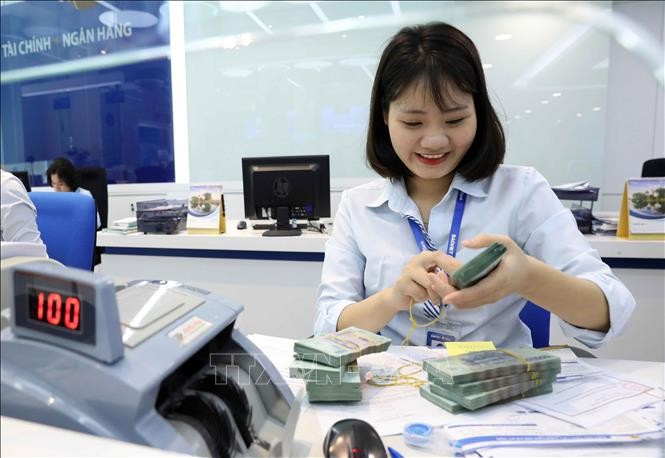
By June 2025, total credit had reached over 17.2 quadrillion VND (658.43 billion USD), up 9.9% from end-2024 and 19.32% year-on-year—the highest growth rate since 2023 (Photo: VNA)

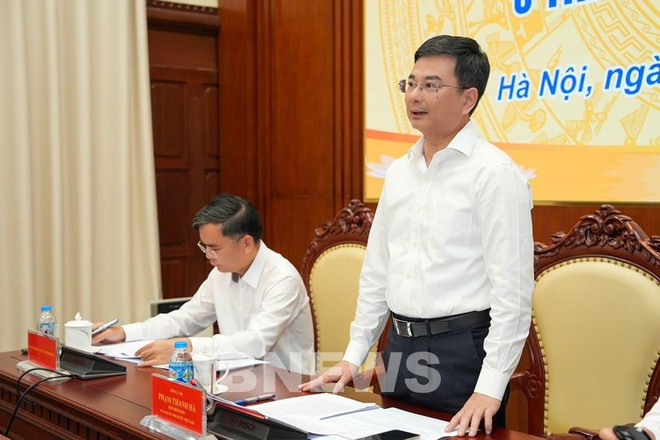
Hanoi (VNA) – Amid multiple risks and uncertainties in the global economy, the State Bank of Vietnam (SBV) will maintain a proactive, flexible, timely, and effective monetary policy in harmony with fiscal and macro-economic measures to prioritise growth, uphold macroeconomic stability, and control inflation, according to SBV Deputy Governor Pham Thanh Ha.

Ha noted that on July 8 (Vietnam time), the US announced new tariffs of 25–40% on imports from 14 countries, effective from August 1, with threats of further hikes if retaliatory measures are taken. Though inflation trends toward target levels, resurgence risks remain.

These global financial and monetary risks are pressuring Vietnam’s domestic monetary policy, exchange rate and interest rate management, and efforts to achieve the 2025 economic growth target of 8% or higher, he stressed.

The official said that the SBV has instructed credit institutions to reduce operational costs, advance digital transformation, and adopt IT solutions to lower lending rates. It will also manage exchange rates flexibly according to market movements, using monetary tools to ensure foreign exchange stability—a foundation for macro-economic balance and inflation control.

Credit growth will be guided by macro-economic conditions, inflation trends, and capital absorption capacity. Efforts will promote safe and effective lending toward production, business, priority sectors, and growth-driving industries while closely monitoring high-risk areas.

The SBV will continue implementing its 2021–2025 plan to restructure credit institutions alongside resolving non-performing loans (NPLs), said the Deputy Governor. It is stepping up measures to prevent new bad debts and executing decrees on cashless payments and banking innovation via the sandbox mechanism.
img-20250708-122721-20250708122922.jpg
SBV Deputy Governor Pham Thanh Ha (Photo: SBV)

By June 2025, total credit had reached over 17.2 quadrillion VND (658.43 billion USD), up 9.9% from end-2024 and 19.32% year-on-year—the highest growth rate since 2023—signalling strong recovery in manufacturing, agriculture, and supporting sectors.

Pham Chi Quang, Director of the SBV’s Monetary Policy Department, noted that the first-half credit growth was 2.5 times higher than the same period in 2024, substantially boosting the economy. With a 2025 inflation target of around 4.5% - higher than 2024, the SBV has room to stimulate credit without overburdening price stability.

Capital is the economy’s lifeblood. To reach 8% growth in 2025 and double-digit rates beyond, credit must remain a key driver, Quang stated.

He emphasised that credit expansion must go hand-in-hand with quality control, NPL oversight, and systemic risk management. Restructuring credit institutions remains a core 2025 priority.

On January 3, the SBV íntructed commercial banks to engage in the social housing, worker housing, and old apartment renovation credit programme under the Government's Resolution 33/NQ-CP.

Loans under this programme are excluded from annual SBV-imposed credit growth quotas. Effective through 2030, lending is capped at levels registered by participating banks, he stated.

Current interest rates are 6.4% per annum for developers and 5.9% for homebuyers, 0.2 percentage points lower than the previous period, and markedly lower than the initial 8.7% and 8.2% rates.

By the end of May, banks had disbursed 4.09 trillion VND, including 3.46 trillion VND to developers across 27 projects and 630 billion VND to homebuyers in 25 projects./.
VNA

See more

Industrial production surges in the first two months of 2026. (Photo: VNA)

Industrial production posts strong growth in first two months

According to the National Statistics Office (NSO) under the Ministry of Finance, the index of industrial production (IIP) in February was estimated to decrease 18.4% from the previous month but increase 1% year on year. Overall, in the January–February period, the IIP rose 10.4% compared with the same period last year.

A delegation from the Nghe An provincial People’s Committee inspects production and business activities at the VSIP Nghe An Industrial, Urban and Service Park. (Photo:nhandan.vn)

Nghe An steps up reforms to attract FDI

In 2025, the provincial People’s Committee licensed 25 new FDI projects and approved capital adjustments for 20 others, bringing the total newly registered and additional investment to more than 1 billion USD. Many large-scale projects in the Southeast Nghe An Economic Zone have already become operational, contributing to export growth, state budget revenues and job creation.

Nearly 35,500 enterprises are newly registered nationwide, with total registered capital reaching nearly 313.7 trillion VND and more than 167,500 registered workers. (Photo: VNA)

Nearly 35,500 new businesses set up in first two months

The enterprises registered combined capital of about 313.7 trillion VND and more than 167,500 employees. Compared with the same period last year, the number of new businesses surged by 70.7%, while registered capital rose by 36.1% and registered labour increased by 19.1%.

The yarn factory of Unitex Textile and Dyeing Company Limited applies new technology to optimise operations using an automated model. (Photo: VNA)

Resolution 68: International lessons for private sector development

A common feature in many successful economies is a fundamental shift in the perception of private enterprises. In countries such as Singapore, Germany, Republic of Korea (RoK) and China, private firms are viewed not mainly as entities requiring strict control but as development partners and key forces generating growth, jobs and innovation.

The production line of Regza Electronics Vietnam Co., Ltd. located in Dong Nai province. (Photo: VNA)

Vietnam’s overseas investment rises 2.3-fold in first two months

During the period, 36 new overseas projects were granted investment certificates with total registered capital from Vietnamese investors reaching 532.4 million USD, up 2.3 times compared to the same period last year. In addition, three projects adjusted their capital with an additional 7.8 million USD, 1.5 times higher than a year earlier.

Workers of PTSC Thanh Hoa check the system for crude oil imports. Vietnam saw strong increase in fuel imports in the first two months of this year. (Photo" VNA)

Vietnam records strong increase in fuel imports in two months

Statistics of Vietnam Customs showed that Vietnam spent more than 1.44 billion USD importing 2.18 million tonnes of petroleum products in the first two months of this year, representing a sharp increase of 31.4% and 43%, respectively, over the same period last year.

Prime Minister Pham Minh Chinh visits a macadamia cultivation model in Huoi Tao B village, Pu Nhi commune, Dien Bien province on March 8. (Photo: VNA)

PM requests boosting agricultural development in Northwestern region

PM Chinh encouraged local residents to explore additional crops and livestock suitable for intercropping in order to maximise land use efficiency. Farmers were also urged to strengthen cooperation with one another and with businesses by joining cooperatives, consolidating land resources and working together to expand production and improve incomes.

Farmers in the Mekong Delta province of An Giang harvest rice grown under the project 'Sustainable Development of One Million Hectares of High-Quality, Low-Emission Rice Associated with Green Growth in the Mekong Delta by 2030.' (Photo: VNA)

Promoting high-quality rice exports amid mounting challenges

According to the Ministry of Agriculture and Environment (MAE), an estimated 600,000 tonnes of rice worth 370 million USD was exported in January, up 12.4% in volume and 16.9% in value year-on-year. The average export price reached 616.6 USD per tonne, up 4%.