Hanoi (VNA) – During the first five months of 2025 and in May alone, Vietnam's economy demonstrated many positive indicators, reflecting robust recovery and stable growth as the Government is resolved to achieve a growth rate of at least 8% this year and double-digit expansion beyond.
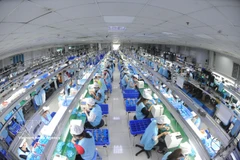
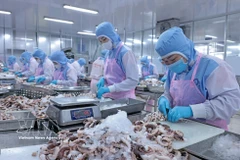
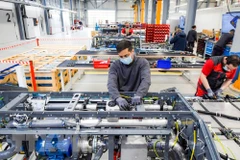
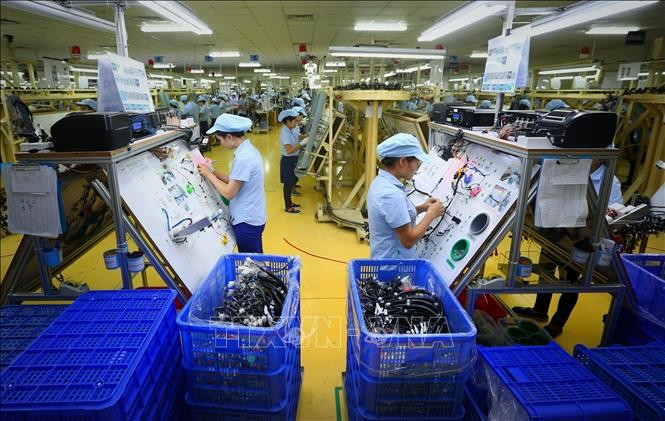
The National Statistics Office reported that industrial production has sustained the upward trend, with the Index of Industrial Production (IIP) in May increasing 4.3% month-on-month and 9.4% year-on-year. Notably, the processing and manufacturing sector surged by 10.8%, contributing substantially to overall growth.
The Purchasing Managers' Index (PMI) also saw improvement, climbing from 45.6 in April to 49.8 in May, signaling renewed business confidence. Retail sales and consumer service revenues went up 10.2% in May, with a cumulative increase of 9.7% over five months. International arrivals to Vietnam surpassed 9.2 million, marking a year-on-year increase of 21.3%, underscoring the tourism sector's recovery.
During the period, public investment disbursement also improved, reaching over 24% of this year's target, a significant rise compared to the same period last year.
Meanwhile, foreign direct investment (FDI) attraction remained a bright spot, with total registered capital hitting a five-year high of 18.4 billion USD, surging 51% from a year earlier. As much as 8.9 billion USD of FDI capital was disbursed, up nearly 8%. Singapore, China, and Japan remain leading investors in Vietnam so far this year.
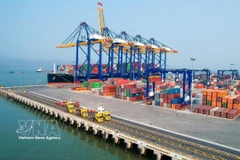
The country also maintained a strong upward trend in foreign trade with total turnover for the first five months nearing 356 billion USD, up 15.7%. Of that, exports exceeded 180 billion USD, up 14%, while imports rose 17.5%, resulting in a trade surplus of approximately 4.7 billion USD.
In addition, the consumer price index (CPI) is still under control. In May, it climbed 0.16% from the previous month, 1.53% from December 2024, and 3.24% from a year earlier. During the five months, the CPI increased 3.21% year-on-year.
Despite these encouraging signs, challenges persist. Over 111,800 businesses were established or resumed operations in five months, reflecting an 11.3% increase. However, the number of those exiting the market was nearly equal, about 111,600 – up 14.4% year-on-year, indicating ongoing difficulties for enterprises.
Various sectors, particularly small- and medium-sized enterprises, still face challenges such as rising production costs due to high global material prices, increased logistics costs, and foreign exchange rate fluctuations. Additionally, people's income remains low, the real estate market shows limited improvement, and institutional obstacles still need to be addressed.
Notably, 37 out of the 47 ministries/sectors and 24 of the 63 localities reported public investment disbursement rates below the national average, with many under 10%.
In its macro-economic report for May, the BIDV Training and Research Institute also pointed out external challenges such as geopolitical risks, especially trade - technology tensions, and growing trade protectionism, particularly the US reciprocal tariff policy, retaliatory moves by countries, and unpredictable negotiation results, which may result in higher inflationary pressure and slower-than-expected interest rate reduction.
Despite numerous difficulties and challenges, the Government remains steadfast in the growth target of over 8% this year.
Addressing the Government meeting for May, Prime Minister Pham Minh Chinh outlined several key tasks for the time ahead, including renewing traditional growth drivers, promoting new ones such as science - technology and innovation, taking strong measures to increase revenue and cut expenditures to save resources for major projects.
Other priorities include keeping macro-economic stability, controlling inflation, ensuring major economic balances, and continuing a proactive, flexible, timely, and efficient monetary policy harmonised with a reasonably expanded and focus-drivern fiscal policy.
Dr. Le Duy Binh, Director of Economica Vietnam, said that macroeconomic stability is crucial for protecting internal capacity and sustaining growth. Proper inflation control and measures for increasing disposable income will help fuel consumer spending. To turn domestic consumption into a boost to aggregate supply, encouraging consumers to purchase locally produced goods is necessary.
The BIDV Training and Research Institute recommended effectively implementing the policies on making institutional breakthroughs, streamlining the apparatus, merging administrative units, fighting wastefulness, substantively improving the investment environment, and easing the administrative burden.
It also suggested replicating the "modern public administration centre" model to better service quality when the two-tier local administration model is applied, and promptly developing plans for efficient use of surplus government facilities after the administrative restructuring./.
VNA