Da Nang pushes forward with FTZ project, eyes strategic investors

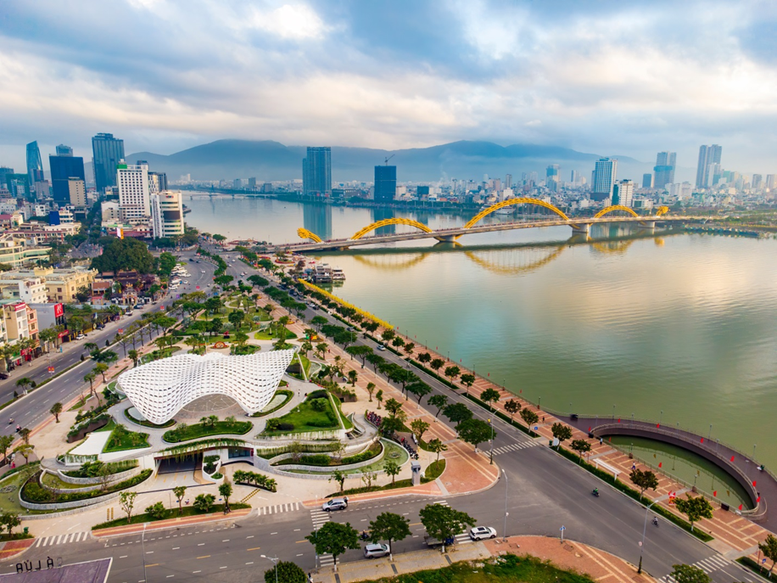
The central city of Da Nang is zoning off land areas, building infrastructure, proposing policies, and actively seeking strategic investors to soon put its Free Trade Zone (FTZ) into operation.

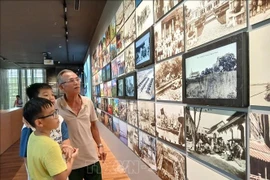
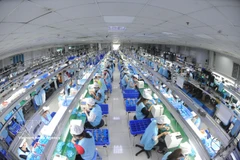
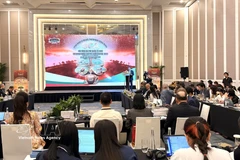
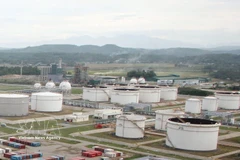
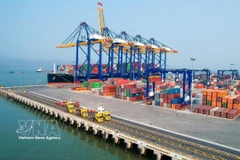
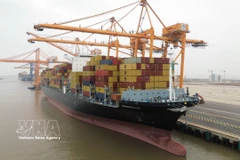
Illustrative image (Photo: baochinhphu.vn)

Da Nang (VNA) – The central city of Da Nang is zoning off land areas, building infrastructure, proposing policies, and actively seeking strategic investors to soon put its Free Trade Zone (FTZ) into operation.

As Vietnam’s first FTZ, envisioned as a model to be replicated nationwide, the project has drawn significant attention. According to the Vietnam Institute of Architecture, FTZ development should be based on four pillars: digital platforms and global trade connectivity, technology and digital transformation, legal and institutional frameworks, and cybersecurity and data protection.

For planning and architecture, the institute proposed integrated connections with seaports, airports, railways, the East–West Economic Corridor, and nearby industrial zones. Clear functional subdivisions are needed for production, logistics, financial services, expert housing, trade exhibitions, and green spaces. Large-scale service facilities should be built for both the FTZ and the city, with modern, energy-efficient, and eco-friendly designs.

The institute also recommended studying the Dubai International Financial Centre (DIFC), Singapore’s Raffles Place, and Shenzhen’s Qianhai to choose a successful approach suited to local conditions. Priority should go to fintech, green finance, digital banking, and asset management—fields with high growth potential and limited land demand. Initial development could focus on “pioneer nuclei” such as fintech clusters, digital payment centres, and startup hubs, before expanding into an integrated financial model.

A transparent business environment, streamlined administration, one-stop mechanisms, and special FTZ policies are deemed prerequisites. Human resource strategies are equally important, linking universities, research institutes, and international training organisations, while attracting foreign experts with flexible visas, good living conditions, and competitive incentives.

Technology and logistics infrastructure

According to Viettel Solutions, the FTZ should optimise supply chains, shorten customs clearance times, and boost cargo volumes. Integrated data technology, real-time monitoring, and comprehensive management are the key.

The company proposed forming Da Nang Port Logistics Centre with six functional zones, warehouses, container yards, transshipment, support services, offices, multimodal transport, and specialised inspection areas. It also suggested an Off-Airport Cargo Terminal to reduce pressure on Da Nang International Airport and the development of a modern inter-regional logistics hub. Value-added services such as sorting, packaging, insurance, tax refunds, and smart inventory management should be prioritised.

The roadmap targets a digital foundation by 2025–2026, expanded digitalisation and smart governance from 2027–2030, and full leadership in digital transformation after 2030.

Pham Hong Diep, Chairman of the Board of Directors of Shinec JSC, proposed planning infrastructure development, investment attraction, global financial connectivity, human resources, and digital infrastructure. He also suggested studying the Chu Lai–Dung Quat corridor (800–1,000ha), near Ky Ha Port and Chu Lai Airport, to leverage logistics advantages and strengthen regional links. Between 2025 and 2032, the FTZ should align with major projects such as upgrading Tien Sa and Ky Ha ports, building the Da Nang–Chu Lai–Quang Ngai coastal expressway, promoting the Chu Lai–Da Nang high-speed railway, and upgrading Chu Lai Airport into an international cargo hub with an investment of 7.5–9 billion USD.

When the FTZ is established, opportunities will expand for private enterprises, especially small and medium-sized entities, Diep told Dau tu [Vietnam Investment Review] newspaper, adding that Shinec is ready to join infrastructure projects when conditions are right.

Nguyen Tuan Hai, Chairman of Alphanam Group, shared this view, recalling the Sao Do Group’s investment wave in Da Nang 20 years ago and affirming that “now is the truly ripe time.” He noted that the municipal administration has shown strong commitment to partnership and openness in resolving difficulties./.


VNA

See more

Representatives of Ho Chi Minh City's tax agency address concerns and clarify tax-related issues raised by the FDI business community. (Photo: VNA)

Ho Chi Minh City moves to ease tax hurdles for FDI firms

The Ho Chi Minh City tax agency said it will maintain regular dialogue with businesses, push ahead with administrative reform and digital transformation, and identify implementation bottlenecks to recommend policy adjustments, facilitating investment and business activities for FDI enterprises.

A workshop on the Halal market is held in Ho Chi Minh City on June 16, 2026. (Photo: VNA)

Growing Halal market offers opportunities for Vietnamese businesses

The Halal market is becoming a promising avenue for businesses in Ho Chi Minh City. With its well-developed manufacturing, trade and service ecosystem and dynamic business community, the city is well positioned to strengthen its role in regional and global Halal supply chains.

Wistron Infocomm Vietnam Co., Ltd, an FDI enterprise, has invested in Dong Van III Industrial Park of Ninh Binh province since 2021, creating jobs for more than 12,800 workers. (Photo: VNA)

Vietnam seeks to position itself as leading destination for foreign investment

A significant shift in the recently issued Resolution 10 is the move from a strategy of attracting “more capital” towards attracting “higher-quality FDI”. The objective is no longer limited to investment volume but extends to absorbing advanced technologies, increasing domestic value creation, strengthening innovation capacity and accelerating modernisation in the economy.

Enterprises must disclose to investors the issuance plan, legal and investment risks and the rights and obligations of issuers and bondholders. (Photo: VNA)

Vietnam tightens rules on corporate bond issuance

Under Decree No 200/2026/ND-CP, enterprises issuing bonds will continue to operate under the principle of self-borrowing, self-repayment and self-responsibility, meaning issuers are fully accountable for the efficiency of capital use, debt repayment capacity and any disputes arising from bond issuance, use of funds, and payment of principal and interest.

A performance on The Huc bridge of the temple as part of a nighttime tourism programme to discover the Ngoc Son temple on Hoan Kiem Lake, downtown Hanoi. (Photo: VNA)

Hanoi adopts framework to boost night-time economy development

The resolution encourages a wide range of cultural, artistic and tourism activities, including performances, exhibitions, film screenings, presentations of traditional and intangible cultural heritage, and other programmes held in public spaces, pedestrian streets, heritage sites, theatres, cinemas and cultural venues.

A cargo port in Thiruvananthapuram city, India (Photo: ANI/VNA)

Ample room remains for Vietnam–India logistics cooperation

The GTTCI expert noted that alongside logistics and integrated warehousing, e-commerce is expected to be a particularly high-growth sector in the coming years. He described it as a multi-billion-dollar market with significant untapped opportunities for cooperation between Vietnam and India.

The meeting between Minister of Finance Ngo Van Tuan and Ambassador Julien Guerrier, head of the EU Delegation to Vietnam, on June 15. (Photo: thoibaotaichinhvietnam.vn)

Vietnam, EU enhance cooperation in green finance

Minister of Finance Ngo Van Tuan called on the EU to help facilitate Vietnamese firms' access to green finance, expand technical and financial assistance for green transition, and enhance cooperation in strategic technologies, innovation, digital finance and high-tech human resources development.

An overview of the working session between Deputy Finance Minister Tran Quoc Phuong and Kim Dongil, Director of ADB representing the Republic of Korea, Papua New Guinea, Sri Lanka, Taipei (China), Uzbekistan, Vanuatu and Vietnam. (Photo: Ministry of Finance)

Vietnam, ADB to advance strategic projects with strong economic impact

ADB has identified a pipeline of 27 projects for Vietnam through 2029, with total planned financing of approximately 4.6 billion USD. The projects focus on sectors that are among Vietnam’s priorities, including infrastructure, energy, urban development, agriculture and public sector management.

Illustrative photo (Photo: VNA)

Exports gain momentum from high-tech growth drivers

According to the Ministry of Industry and Trade, Vietnam’s exports reached 215.66 billion USD in the first five months of 2026, up 19.5% year-on-year. Twenty-six export items generated more than 1 billion USD in revenue each, including seven with turnover exceeding 10 billion USD.