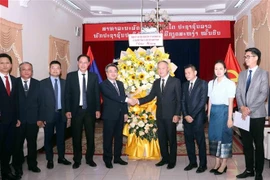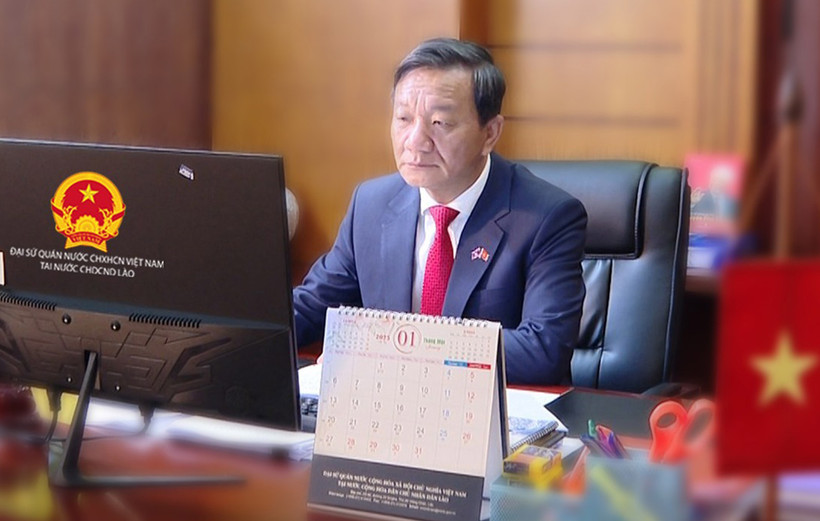
Vientiane (VNA) – Vietnamese Ambassador to Laos Nguyen Minh Tam highlighted the extraordinary bond between the Communist Party of Vietnam (CPV) and the Lao People’s Revolutionary Party (LPRP) which have enjoyed a great friendship, special solidarity and comprehensive cooperation over years.
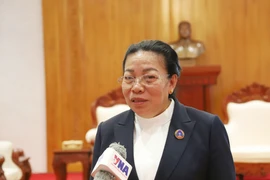
In an interview with the Lao News Agency (KPL) on the occasion of the 70th founding anniversary of the LPRP (March 22), the Vietnamese diplomat underscored the unique historical connection between the two Parties, noting they are the sole political organisations that have led their respective national liberation movements and continue to govern their countries with socialist orientation.
The roots of this relationship trace back to the formation of the Indochinese Communist Party, which integrated the revolutionary struggles of the Lao people as a part of the broader Indochinese and global revolutionary movements. This marked the beginning of a revolutionary alliance between the two countries which were developed from the time-honoured relationship, traditional solidarity, and mutual support.
Following the establishment of the Lao People's Party, now known as the LPRP, both Parties found common ground in their fundamental objectives, he said, adding they shared a vision of protecting hard-won national independence and building free, prosperous societies for their people while resisting the US invaders.
Tam went on to say that discussing the traditional friendship, special solidarity, and comprehensive cooperation between Vietnam and Laos means exploring the special bond between the two Parties and vice versa.
He emphasised that amidst the current global and regional profound changes that could affect the bilateral relations, both countries must continue to recognise the strategic importance of their relationship and maintain the principles that the two Parties and States have consistently upheld.
The two countries have agreed to enhance their comprehensive cooperation based on the principles of independence, self-reliance, resilience, as well as equal and win-win cooperation, and the combination between the special features of the Vietnam – Laos ties and international practice, for prosperous development in each nation and for peace, stability, collaboration, and development in Southeast Asia and beyond.
He suggested the two Parties and countries focus on deepening the political relations and enhancing cooperation in strategic issues related to each nation’s security and development, describing them as a solid foundation to foster the great friendship, special solidarity, and comprehensive cooperation between Vietnam and Laos.
It is necessary to consolidate and improve the common perceptions of the two Parties on the strategic significance of the special relations, seeing it pivotal to the national renewal, construction and protection in each country, he highlighted, laying stress on the importance of maintaining political and ideological education through cultural exchange and people-to-people diplomacy while coordinating efforts to counter and refute distorted arguments aimed at undermining and dividing the relationship between the two Parties and countries.
The Vietnamese diplomat recommended enhanced theoretical and practical exchanges, including Party-building experiences, state management, socio-economic development, and international integration strategies. This involves direct cooperation between the two Parties’ agencies and between local Party organisations, particularly those in border regions.
Additionally, he underscored the need to promote strategic guidance in economic, cultural, educational, defence, security, and diplomatic cooperation, with the economic areas focusing on institution, transportation infrastructure, finance-banking, electricity, telecommunications, and tourism. Meanwhile, defence and security cooperation remains a cornerstone, and cultural and educational exchanges serve as the foundation of their relationship.
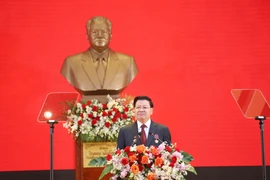
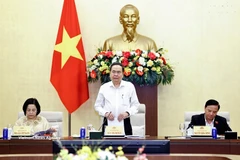
He expressed his confidence that inspired by the legacies of President Ho Chi Minh and President Kaysone Phomvihane as well as efforts from the two Parties, States and peoples, the great friendship, special solidarity, and comprehensive cooperation will continue to evolve, becoming increasingly substantive, effective, and mutually beneficial and making contributions to peace, stability, cooperation, and development in the region and the whole world./.