Hanoi (VNA) – An expert from HSBC believe that Vietnam must cultivate a transparent, cooperative, and stable environment to establish an international financial centre (IFC) capable of attracting investment and fostering innovation.
Following the National Assembly’s approval of a resolution on the establishment of an international financial centre in late June, Phil Wright, Chief Operating Officer at HSBC Vietnam, said that the country currently enjoys a dynamic and promising economy, supported by a young workforce, rapid adoption of advanced technologies, and steady inflows of foreign investment.
He noted that these advantages create favourable conditions for Vietnam to transform into an international financial hub, one that not only strengthens its capital market but also nurtures an ecosystem driving innovation, competitiveness, and sustainable growth.
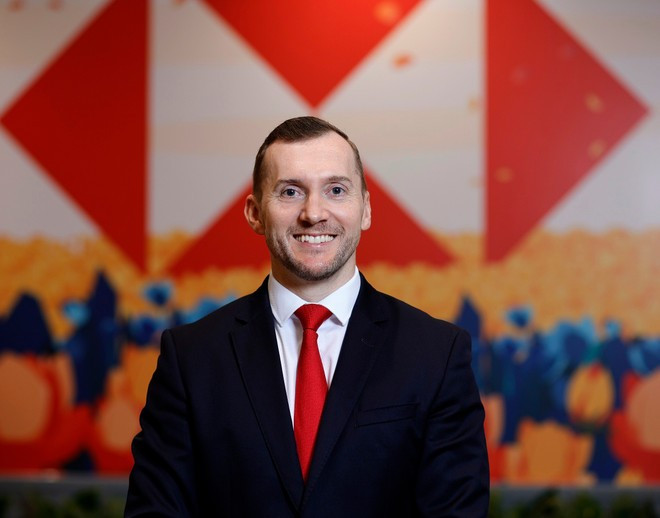
To turn this ambition into reality, Wright suggested that Vietnam learn from the experiences of established global financial centres and build a legal and policy foundation that facilitates innovation while ensuring essential stability. He outlined several key steps that could help Vietnam unlock its innovation potential and position itself as a leading regional financial hub.
Wright said regulation transparency is one of the defining traits of successful financial centres. The UK offers a good example, having built a clear and effective legal framework.
In 2016, the UK’s Financial Conduct Authority (FCA) introduced a “sandbox” mechanism, an experimental space allowing fintech firms to test new products under regulatory supervision. More than 1,000 companies have participated since, helping attract investment, spur growth, and advance financial technology innovation.
Wright said Vietnam can adopt a similar model to send a strong message that innovation is welcomed within a well-regulated environment. This will not only build investor confidence but also enable the country’s financial ecosystem to grow more strongly.
In addition to transparency, policy consistency is vital for businesses seeking to sustain and scale up their operations. Singapore stands out as a prime example in this regard. The Monetary Authority of Singapore (MAS) launched “Project Guardian” to explore the tokenisation of assets in the capital market through pilot long-term programmes. This consistent and forward-looking approach has allowed innovation initiatives to develop sustainably.
Vietnam can learn from Singapore’s experience by maintaining a stable and consistent policy framework that fosters long-term trust and development motivation among businesses and investors. A long-term, transparent, and consistent regulatory environment will help Vietnam not only attract investment but also enable innovation initiatives to grow in a sustainable way.
Wright further emphasised that innovation cannot thrive in isolation. Hong Kong (China), for instance, has shown that collaboration between fintech firms, banks, investors, and educational institutions is crucial. Innovation hubs like Cyberport and various technology parks in Hong Kong provide funding and networking opportunities that help start-ups scale up rapidly.
He suggested that Vietnam can establish similar innovation clusters, bringing together fintech companies, banks, telecommunications service providers, investors, and universities. A strong public – private partnership model will help create a dynamic financial ecosystem where new ideas can be tested and developed, generating fresh employment opportunities and attracting skilled professionals.
Building an international financial centre is a complex process that requires balancing innovation with stability.
Wright warned that an overly aggressive innovation drive without proper safeguards could lead to issues such as speculative bubbles or regulatory gaps, while excessive caution could stifle creativity.
He said that Vietnam needs to find the right balance between encouraging innovation and maintaining financial stability. Policies should facilitate experimentation but include firm safeguards to prevent risks from spreading beyond control. Flexibility and prudence in regulation will be key to building a sustainable international financial centre that appeals to global investors.
The HSBC expert also underscored the importance of compliance with international standards. Adherence to global frameworks on anti-money laundering, cybersecurity, and personal data protection, he said, will help Vietnam build a transparent, safe, and trustworthy investment environment.
Applying such global standards will not only ensure Vietnam meets international requirements but also help attract multinational corporations, financial institutions, and global experts, factors essential for establishing a credible international financial hub.
Finally, Wright stressed that no financial centre can thrive without high-quality human resources. Vietnam, he said, should intensify investment in education, training, and professional development to cultivate talent in areas such as data analytics, cybersecurity, risk management, and financial engineering.
Collaborations among universities, professional organisations, and start-up incubators in developing the next generation of fintech leaders will be crucial to building a strong and skilled workforce for the development of an international financial centre.
Vietnam now stands at a pivotal moment in its journey toward becoming a vibrant and sustainable global financial hub. By combining transparency, policy consistency, collaboration, and stability with adherence to international standards and a strong focus on talent development, the country can create an environment conducive to innovation and investment while enhancing its global economic standing.
This transformation, Wright concluded, will demand patience, vision, and close coordination between government agencies and the business community. Yet, if Vietnam takes these strategic steps, it could lay the foundation for a thriving international financial centre one that contributes significantly to national prosperity and elevates Vietnam’s position on the global financial map in the decades ahead./.