First low-carbon tourism certificate granted in Hoi An

First low-carbon tourism certificate granted in Hoi An
First low-carbon tourism certificate granted in Hoi An ảnh 1General director of EMIC Phan Xuan Thanh (L) receives the Gold Platinum Low-Carbon Tourism Standard certification given by Magnus International, a leading company in environmental project management and carbon offsets. (Photo courtesy of EMIC)

Hoi An (VNS/VNA) — The Field Restaurant, managed by EMICHospitality, situated in the ancient city of Hoi An in the central province ofQuang Nam, has been awarded the Gold Platinum Low-Carbon Tourism Standardcertification by Magnus International, a leading company in environmentalproject management and carbon offsets. This distinction marks it as the firsttourism establishment in Vietnam to achieve such a high standard.

Renowned for its exceptional dining experiences that honour indigenousculture while promoting natural ecosystem regeneration, the restaurant hasdedicated considerable time to establishing a foundation rooted in zero wasteprinciples, circular economy practices, and sustainability standards within thetourism sector.

Comprehensive waste management protocols have been implementedacross all service areas, including waste management training programmes,initiatives to minimise waste, and measures to enhance energy efficiency.Additionally, the restaurant actively participates in community-basedenvironmental and livelihood projects.

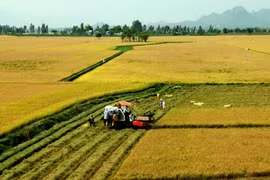
Operated within a self-sufficient garden setting, the restaurantemploys biological wastewater treatment systems, as well as effective energyand water management practices, all situated amidst picturesque paddy fields.

It's hailed as the pioneering restaurant in Hoi An championing asustainable approach based on the 5-R principle – Refuse, Reduce, Recycle,Reuse, and Repurpose – since 2017.

EMIC Hospitality, in partnership with the Environmental ManagementFund Foundation and Magnus International Thailand, signed a Memorandum ofUnderstanding (MoU) aimed at enhancing their commitment to sustainability andpositioning Hoi An as a model for sustainable and responsible tourism.

Kulladejha Siriwattanawat, President of the EnvironmentalManagement Fund Foundation, highlighted the significance of the Platinum levelcertification of the Low Carbon Tourism standard (LCTS), emphasising that whiletourism is a vital industry for Vietnam, it also comes with environmentalconsequences.

Quang Nam province pioneered the 'Zero Plastic Waste Tourism'campaign in Việt Nam in 2019. Over 100 hotels, homestays, villas, andrestaurants have pledged to reduce plastic waste./. 
VNA

See more

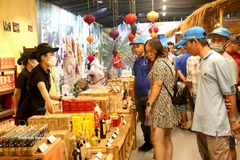
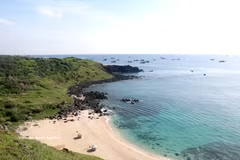
The night market for tourists to shop for Mui Ne specialties at the Fishermen Show, Lam Dong's Phu Thuy ward (Photo: VNA)

Lam Dong taps night-time economy to boost coastal tourism

According to the provincial Department of Culture, Sports and Tourism, night-time economic activities have taken shape through products combining arts, culture, cuisine and shopping. Notable attractions include the Fishermen Show, Cham cultural experiences at Po Sah Inu Tower, and entertainment activities at NovaWorld Phan Thiet.

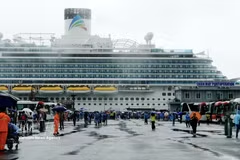
Panama-flagged cruise ship Adora Flora City docks at Chan May Port in the central city of Hue on November 25, 2026. (Photo: VNA)

Cruise ship brings over 3,700 tourists to Hue

Panama-flagged cruise ship Adora Flora City brings 3,701 tourists and 1,255 crew members to the central city of Hue. The visitors are expected to give a boost to local services, transport, and trade.

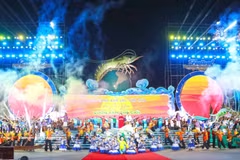
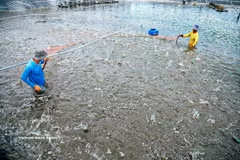
Ca Mau province is a shrimp farming hub of Vietnam. (Photo: VNA)

Ca Mau Shrimp Festival 2026: A celebration of culture, tourism

The southernmost province of Ca Mau will run a five-day event series from November 21-25 celebrating Vietnam Culture Day (November 24) and the second Ca Mau Shrimp Festival 2026 in An Xuyen ward, mixing culture, art, exhibitions, trade promotion and tourism.

Capella Hanoi, developed by Sun Group, is recognised by Condé Nast Traveler as one of Southeast Asia’s most imaginative luxury hotels. (Photo: Sun Group)

Condé Nast Traveler explores a “world of opera” at Sun Group’s Hanoi hotel

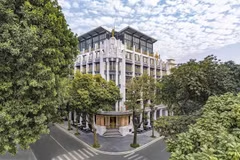
Just steps from the Hanoi Opera House, Capella Hanoi opens onto a world distinct from the city streets outside. Through the lens of Condé Nast Traveler, one of the world’s leading travel magazines, the hotel’s appeal extends beyond elaborate design to the theatrical stories woven throughout its spaces, turning a stay into a journey of artistic discovery.

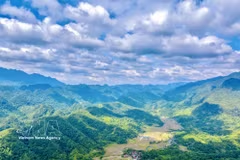
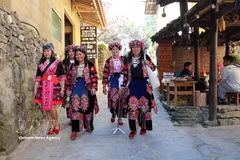
Foreign tourists in traditional Lo Lo costumes visit Lung Cu (Photo: VNA)

Lung Cu tourism development requires coordinated infrastructure investment

Tourism growth has brought more visitors to Lung Cu, prompting accommodation establishments and restaurants to operate at high capacity and driving up demand for electricity and water. However, some infrastructure facilities have yet to keep pace, affecting business operations and visitors' experiences.

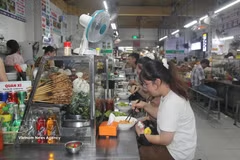
Tourists enjoy local food at Con Market in Da Nang. (Photo: VNA)

Da Nang takes local cuisine onto digital map

Cuisine is a major attraction for visitors to Da Nang, with traditional dishes offering not only distinctive flavours but also rich stories that reflect the region's culture, people, and heritage. The city is now developing a digital culinary ecosystem through e-commerce platforms and online services, creating new opportunities to showcase local cuisine, boost tourism, and support the local economy.

Sa Pa in full bloom as cherry blossoms herald the season. (Photo: VNA)

Sa Pa: A mountainous land blossoming in all four seasons

Alongside efforts to preserve the cultural identity of local ethnic communities, Sa Pa ward in the northern mountainous province of Lao Cai is accelerating digital transformation, developing smart urban services and upgrading infrastructure and public spaces to build a green, culturally distinctive and smart urban area.