Ca Mau shrimp festival highlights cultural identity, targets global markets

Ca Mau province's shrimp output is estimated at 636,000 tonnes this year, up 6.9% year on year, while seafood export revenue is projected to exceed 2.8 billion USD.

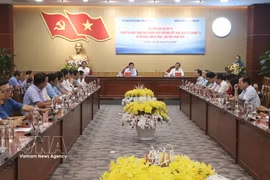
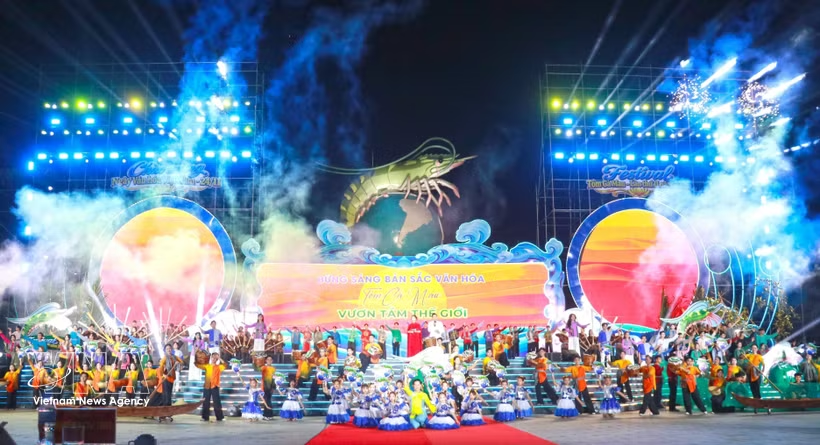
An overview of the opening ceremony of the second Ca Mau Shrimp Festival 2026 (Photo: VNA)

Ca Mau (VNA) – The southernmost province of Ca Mau on November 21 opened a series of activities to celebrate Vietnam Culture Day and the second Ca Mau Shrimp Festival 2026, under the theme “Shining cultural identity – Ca Mau shrimp reaching the world”.

The opening ceremony took place at Phan Ngoc Hien Square in An Xuyen ward, with the attendance of Deputy Prime Minister Le Tien Chau, representatives of ministries and agencies, provincial leaders and thousands of local residents.

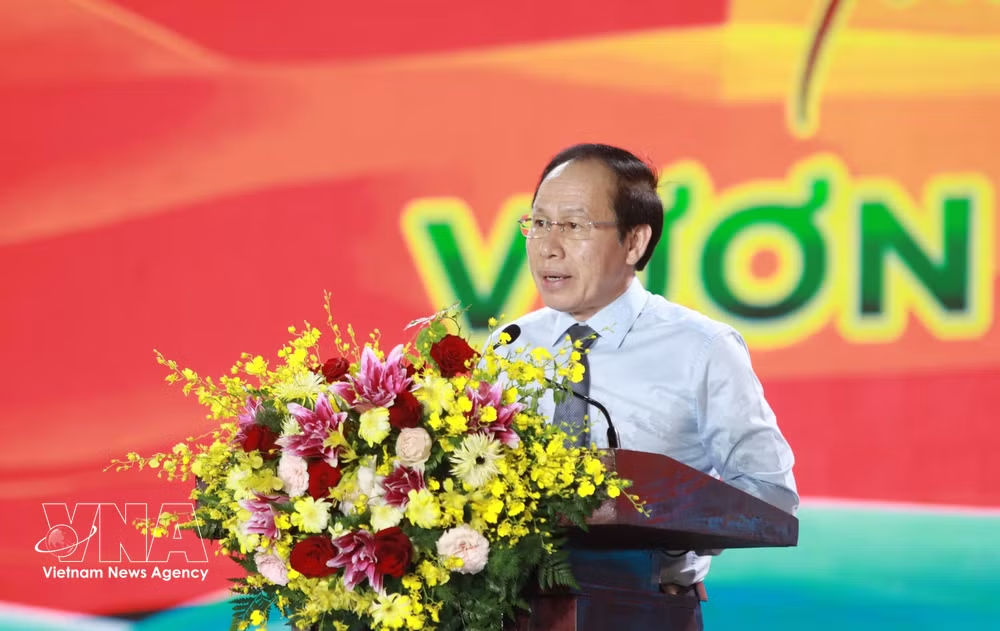
Addressing the event, the Deputy PM emphasised that culture is the soul of the nation, its spiritual foundation, intrinsic strength and an important driving force for development. Culture is reflected not only in traditional values passed down through generations but also in lifestyles, social conduct, creativity and aspirations for progress among individuals, communities and nations, he said.
vnanet-ca-mau2.jpg
Deputy Prime Minister Le Tien Chau speaks at the event (Photo: VNA)


In Ca Mau, culture and shrimp farming are closely intertwined. Shrimp farming forms an integral part of the riverine, forest and coastal culture of residents in Vietnam’s southernmost region. Mangrove-shrimp and rice-shrimp farming models, together with the Ca Mau shrimp brand, embody indigenous knowledge and generations of experience in living harmoniously with nature.

The festival takes on added significance as it coincides with activities marking Vietnam Culture Day on November 24, he noted.

Chau called on ministries, localities, associations and businesses in the shrimp industry to shift towards more in-depth development, prioritising quality, added value and sustainable incomes for farmers. He urged Ca Mau to establish clear development orientations for each ecological zone, select effective production models and replicate successful practices.

The province should take the lead in applying science and technology, promoting innovation and digital transformation to address major challenges facing the industry, improve supply-chain value and link shrimp production with cultural and tourism development. He added that the Government would direct ministries and agencies to improve institutional frameworks and policies, creating favourable conditions for the sustainable growth of Vietnam’s shrimp sector.
vnanet-ca-mau3.jpg
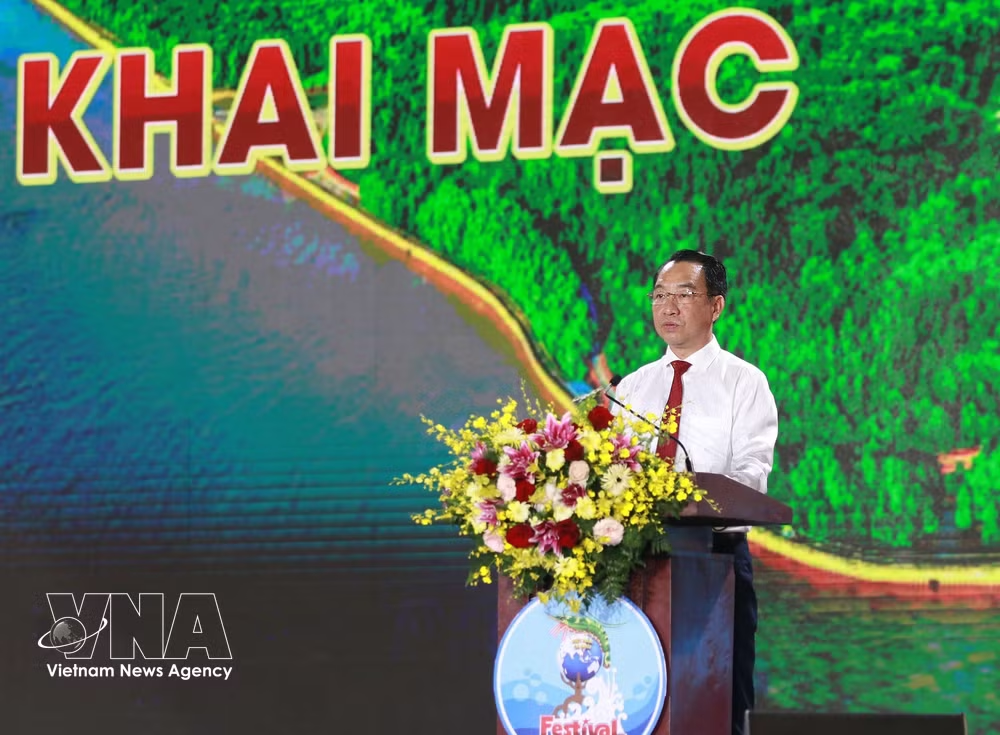
Chairman of the People’s Committee of Ca Mau province Lu Quang Ngoi speaks at the opening ceremony of the second Ca Mau Shrimp Festival 2026 (Photo: VNA)

In his opening remarks, Chairman of the provincial People’s Committee Lu Quang Ngoi said Ca Mau is a meeting point of the distinctive cultural traditions of the Kinh, Chinese and Khmer ethnic communities. Don ca tai tu (Southern amateur music), cai luong (reformed opera), Ngu am (five-tone musical ensemble), traditional festivals, craft villages, cuisine and community-oriented lifestyles have shaped the identity of this riverine, forested and coastal land.

These cultural values, nurtured through generations of land reclamation, construction and defence, are a source of pride and an invaluable internal resource for sustainable development, he noted.

The provincial leader said that with three sides bordering the sea, a 310-km coastline and diverse saltwater, freshwater and brackish ecosystems, Ca Mau also boasts significant marine economic and aquatic resources. Shrimp has become a key commodity, underpinning the livelihoods of large numbers of residents and serving as a prominent symbol of the provincial economy.

The province's shrimp output is estimated at 636,000 tonnes this year, up 6.9% year on year, while seafood export revenue is projected to exceed 2.8 billion USD.

Ngoi stressed that taking Ca Mau shrimp to global markets requires more than higher output. Quality, reputation, environmental responsibility and greater economic benefits for farmers, businesses and communities must be the priorities.

The five-day festival, which runs until November 25, features 350 booths and is expected to attract 8,000–10,000 visitors. It aims to promote the local shrimp brand, connect markets, technology and investment, and strengthen cooperation throughout the industry's value chain.

Provincial authorities also expect the event and its accompanying cultural and tourism activities to stimulate trade, boost economic growth and contribute to the province's target of achieving growth of more than 10% in 2026./.
VNA

See more

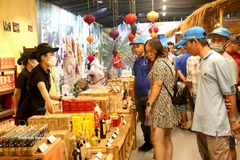
The night market for tourists to shop for Mui Ne specialties at the Fishermen Show, Lam Dong's Phu Thuy ward (Photo: VNA)

Lam Dong taps night-time economy to boost coastal tourism

According to the provincial Department of Culture, Sports and Tourism, night-time economic activities have taken shape through products combining arts, culture, cuisine and shopping. Notable attractions include the Fishermen Show, Cham cultural experiences at Po Sah Inu Tower, and entertainment activities at NovaWorld Phan Thiet.

Panama-flagged cruise ship Adora Flora City docks at Chan May Port in the central city of Hue on November 25, 2026. (Photo: VNA)

Cruise ship brings over 3,700 tourists to Hue

Panama-flagged cruise ship Adora Flora City brings 3,701 tourists and 1,255 crew members to the central city of Hue. The visitors are expected to give a boost to local services, transport, and trade.

Capella Hanoi, developed by Sun Group, is recognised by Condé Nast Traveler as one of Southeast Asia’s most imaginative luxury hotels. (Photo: Sun Group)

Condé Nast Traveler explores a “world of opera” at Sun Group’s Hanoi hotel

Just steps from the Hanoi Opera House, Capella Hanoi opens onto a world distinct from the city streets outside. Through the lens of Condé Nast Traveler, one of the world’s leading travel magazines, the hotel’s appeal extends beyond elaborate design to the theatrical stories woven throughout its spaces, turning a stay into a journey of artistic discovery.

Foreign tourists in traditional Lo Lo costumes visit Lung Cu (Photo: VNA)

Lung Cu tourism development requires coordinated infrastructure investment

Tourism growth has brought more visitors to Lung Cu, prompting accommodation establishments and restaurants to operate at high capacity and driving up demand for electricity and water. However, some infrastructure facilities have yet to keep pace, affecting business operations and visitors' experiences.

Tourists enjoy local food at Con Market in Da Nang. (Photo: VNA)

Da Nang takes local cuisine onto digital map

Cuisine is a major attraction for visitors to Da Nang, with traditional dishes offering not only distinctive flavours but also rich stories that reflect the region's culture, people, and heritage. The city is now developing a digital culinary ecosystem through e-commerce platforms and online services, creating new opportunities to showcase local cuisine, boost tourism, and support the local economy.

Sa Pa in full bloom as cherry blossoms herald the season. (Photo: VNA)

Sa Pa: A mountainous land blossoming in all four seasons

Alongside efforts to preserve the cultural identity of local ethnic communities, Sa Pa ward in the northern mountainous province of Lao Cai is accelerating digital transformation, developing smart urban services and upgrading infrastructure and public spaces to build a green, culturally distinctive and smart urban area.

Large numbers of domestic and foreign tourists continue to choose Hoi An ancient town in Da Nang city despite the ongoing rainy season (Photo: VNA)

Hoi An offers unique tourist experiences during flooding season

Despite the weather conditions, tourists continue to stroll along both banks of the Hoai River in Hoi An, take photographs and explore the flooded streets. Some have rolled up their trousers and waded through the water to continue sightseeing and capture unusual moments of their visits.

Golfers at a golf course in Bac Ninh city (Photo: VNA)

Vietnam’s golf tourism maintains strong international appeal

Vietnam's decade-long recognition as Asia's Best Golf Destination demonstrates its sustained attractiveness and established position in the regional and global golf tourism market. The achievement offers an opportunity to step up destination promotion, expand links with the international golf community and attract high-spending visitors who tend to stay longer.