Ho Chi Minh City eyes internationally standardised service ecosystem to boost medical tourism

An official of Ho Chi Minh City said the city's specialised hospitals, skilled workforce and modern medical capabilities provide a strong foundation for developing services in specialised treatment, dentistry, assisted reproduction, cosmetic procedures and health check-ups.

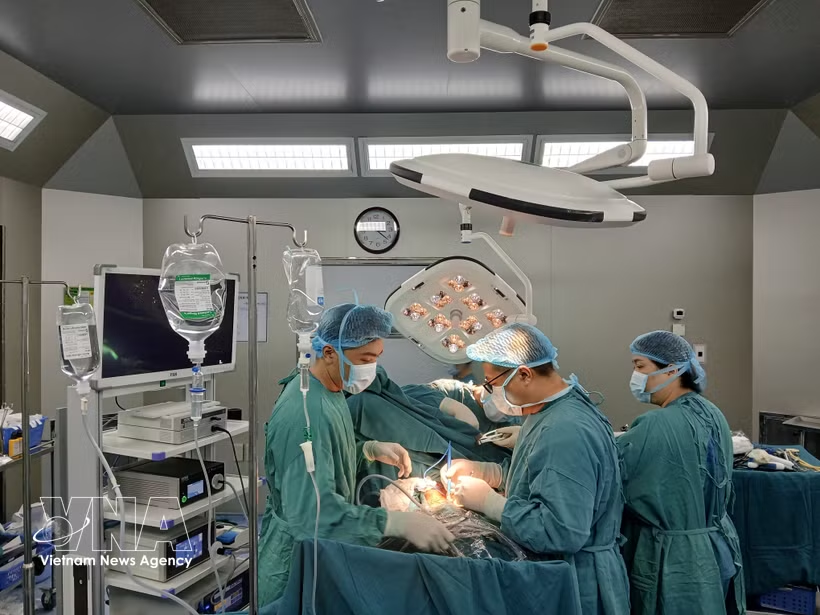
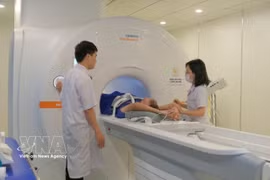
Vietnam's advantages include affordable treatment, professional expertise, modern technologies and the development of both public and private hospitals. (Illustrative photo: VNA)

Hanoi (VNA) – With competitive treatment costs, highly qualified medical professionals, advanced techniques and diverse tourism and resort services, Vietnam holds an opportunity to become an attractive medical tourism destination in the region.

As international integration deepens, medical tourism is making an increasing contribution to economic growth. However, Ho Chi Minh City has yet to fully tap this potential as most hospitals lack specialised services for international patients.

Competitive costs, high professional standards

In early October, Minh Anh International Hospital in Ho Chi Minh City admitted a 31-year-old Cambodian woman in critical condition due to mesenteric artery embolism, near-total necrosis of the small intestine and multiple organ failure. After emergency surgery, intensive care and specialised treatment, her condition gradually improved, and she was discharged.

A 41-year-old Singaporean patient was referred to Tu Du Hospital after her unborn baby was diagnosed with a severe congenital heart defect. Having waited more than a decade to have a child, she did not want to terminate the pregnancy. Following two foetal cardiac interventions, the baby's heart condition improved, offering hope for survival.

Professor and Academician Nguyen Van De, Chairman of the Vietnam Association of Private Hospitals, said that while Vietnamese people commonly travelled abroad for treatment 30 years ago, the trend is now beginning to reverse.

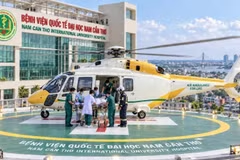
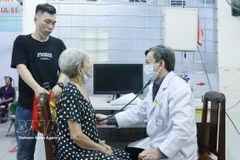
Vietnam's advantages include affordable treatment, professional expertise, modern technologies and the development of both public and private hospitals.

For some services, De noted, treatment costs are only 30–50% of those in Singapore and Thailand. A dental implant costs around 1,000–1,200 USD in Vietnam, compared with up to 5,000 USD in the US, while in vitro fertilisation (IVF) costs about one-third of the price in Thailand and one-fifth of that in the US.

Combining medical expertise with quality services

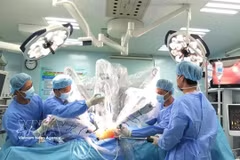
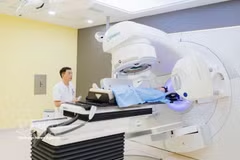
Vietnam is strengthening its capabilities in advanced fields such as organ transplantation, cardiovascular intervention, robotic surgery, assisted reproduction and cancer treatment. Hospitals are investing in modern equipment and advanced techniques to improve treatment outcomes and attract international patients.

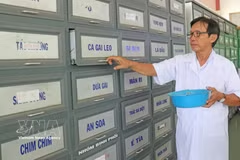
Traditional medicine also offers potential. Doctor Do Tan Khoa, Director of the Ho Chi Minh City Hospital of Traditional Medicine, said acupuncture, catgut embedding, therapeutic exercises and herbal medicine could become distinctive medical tourism products when properly combined with rehabilitation and resort services.

Vietnam's dental sector attracts around 100,000 international patients annually, generating estimated revenue of 3.5 trillion VND (135.3 million USD). Assisted reproduction is another emerging strength thanks to reasonable costs, modern techniques and high success rates.

Stronger coordination needed

According to the Ho Chi Minh City Department of Health, the city recorded hundreds of patient visits from Cambodia, Laos, Indonesia and other countries in the first nine months of 2026.

However, Dr Huynh Minh Chin, Deputy Director of the department, said only a small number of hospitals have developed dedicated services for international patients.

Most healthcare facilities remain focused on conventional treatment, with limited links to tourism, accommodation and patient care. Coordination among the health, tourism, public security and foreign affairs sectors is still fragmented. Inadequate market research and medical tourism data also hamper policy development and promotion.

Chin said the city's specialised hospitals, skilled workforce and modern medical capabilities provide a strong foundation for developing services in specialised treatment, dentistry, assisted reproduction, cosmetic procedures and health check-ups.

Following its merger with Binh Duong and Ba Ria–Vung Tau, the city can better connect healthcare with coastal and ecological tourism, resorts, traditional medicine and rehabilitation, creating an integrated chain from treatment to recovery and wellness.

Dr Duong Huy Luong, Deputy Director General of the Department of Medical Service Administration under the Ministry of Health, said Vietnam cannot compete sustainably with Thailand and Singapore on low costs or individual medical techniques alone. The country needs specialised medical centres, standardised services and stronger partnerships between hospitals, travel companies and accommodation providers.

By combining medical expertise with internationally standardised services and effective branding, Vietnam can turn medical tourism into a high-value service sector that contributes more significantly to economic growth./.

VNA
See more

Collecting a sample from a pediatric patient for influenza testing (Photo: VNA)

Ho Chi Minh City acute respiratory infections surge over 64%

According to the Ho Chi Minh City Centre for Disease Control (HCDC), influenza viruses are are among the fastest-rising pathogens, with 151 positive samples in a single week. Influenza A is the dominant strain, with A/H1N1pdm09 in 116 samples, or nearly 77%.

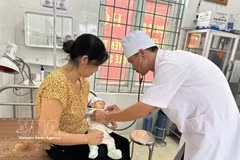
A doctor at Trung Nguyen Medical Station in Te Lo commune, Phu Tho province, examines a child patient. (Photo: VNA)

Phu Tho builds hospital culture to improve patient satisfaction

In recent years, alongside efforts to improve the quality of medical examinations and treatment, Phu Tho province’s health sector has focused on creating civilised, friendly hospital environments and strengthening healthcare workers’ sense of responsibility and service-oriented attitudes, with the aim of earning patients’ trust and satisfaction.

An overview of the meeting between Deputy Prime Minister Pham Thi Thanh Tra and César Louis-Philip Marseille, Managing Director of VAMED Engineering GmbH of Austria and member of the Board of Directors of VAMED+WWH Group of Germany,in Hanoi on October 7. (Photo: VNA)

Deputy PM suggests studying long-term development of hospital ship model

Vietnam is one of VAMED’s important partners in Southeast Asia. The group plans to invest 1.2 billion EUR in Vietnam over the next five years, creating jobs for thousands of workers and promoting knowledge and technology transfer. It also wishes to expand cooperation through preferential credit projects, public-private partnerships (PPPs) and partnerships with private enterprises; and supply medical products from Austria and Germany for Vietnamese partners.

The Son Tra regional medical centre (Photo: benhviensontra.com.vn)

Da Nang: Satellite hospitals prove effective at grassroots level

The model is an important component of the roadmap to turn Da Nang into a specialised medical centre for the central and Central Highlands regions, with a number of key specialties, in line with the spirit of Politburo Resolution No. 72-NQ/TW dated September 9, 2025, on breakthrough solutions to strengthen the protection, care and improvement of people's health.

Illustrative image (Photo: daibieunhandan.vn)

Ho Chi Minh City digitises 99.4% of hospital records

As of July 2026, 163 of the city's 164 hospitals, or 99.4%, adopted electronic medical records, the report said. About 64% of public hospitals and 65% of private hospitals now run the technology across their entire operations

Yersin International Clinic in Ho Chi Minh City. (Photo: VNA)

Ho Chi Minh City eyes more foreign medical tourists

Director of the municipal Department of Health Tang Chi Thuong said a key prerequisite for attracting foreign patients is a strategy to develop centres of medical excellence. He proposed selecting hospitals and specialties with strong expertise for investment towards international standards, particularly in competitive fields such as cardiology, oncology, robotic surgery, assisted reproduction, paediatrics, dentistry, cosmetic medicine, specialised health check-ups, traditional medicine and rehabilitation.

A nurse from Children's Hospital No. 1, Ho Chi Minh City, collects a blood sample for HIV testing from an infant. (Illustrative photo: VNA)

Health cooperation adds fresh momentum to Vietnam-US relations

Through this MOU, the US Department of State, working with Congress, plans to provide 98.75 million USD in life-saving global health assistance over the next five years, including 21.385 million USD in dedicated Global Health Security funding, to support Vietnam’s transition to full country ownership of its HIV/AIDS and tuberculosis programmes while strengthening its capacity to detect and respond to emerging and re-emerging infectious disease threats.

Minister of Health Dao Hong Lan and US Ambassador to Vietnam Jennifer McNamara Wick sign the memorandum of understanding on health cooperation. (Photo: US Embassy in Vietnam)

Vietnam, US launch five-year health cooperation

The cooperation will also support Vietnam in strengthening its healthcare capacity and gradually enhancing self-reliance in HIV/AIDS and tuberculosis prevention and control programmes, as well as in responding to emerging and re-emerging infectious diseases.