Phu Tho builds hospital culture to improve patient satisfaction

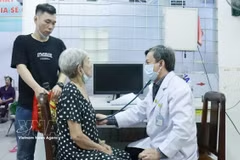
In recent years, alongside efforts to improve the quality of medical examinations and treatment, Phu Tho province’s health sector has focused on creating civilised, friendly hospital environments and strengthening healthcare workers’ sense of responsibility and service-oriented attitudes, with the aim of earning patients’ trust and satisfaction.

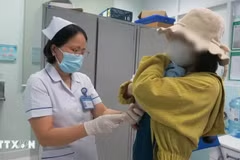
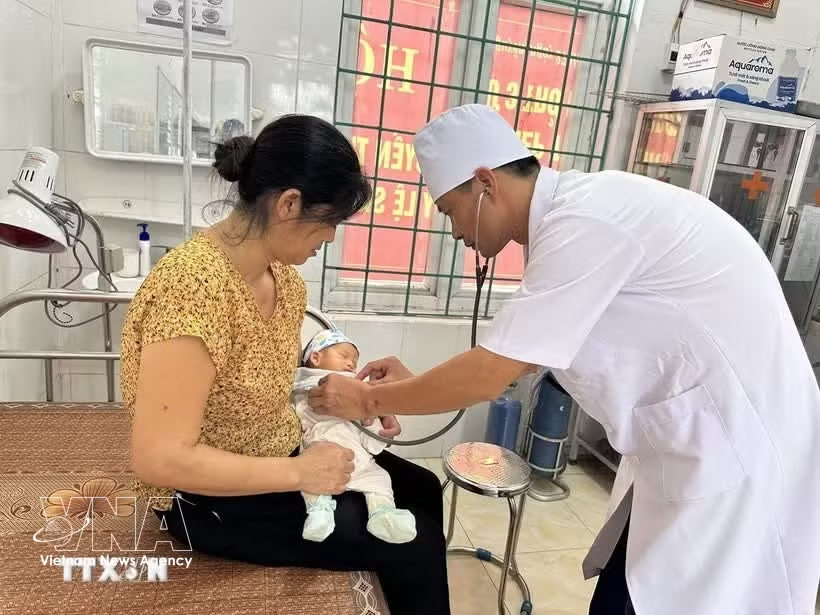
A doctor at Trung Nguyen Medical Station in Te Lo commune, Phu Tho province, examines a child patient. (Photo: VNA)

Phu Tho (VNA) - In recent years, alongside efforts to improve the quality of medical examinations and treatment, Phu Tho province’s health sector has focused on creating civilised, friendly hospital environments and strengthening healthcare workers’ sense of responsibility and service-oriented attitudes, with the aim of earning patients’ trust and satisfaction.

The way healthcare professionals interact with patients reflects not only their professional ethics but also helps build public confidence in medical facilities. In hospitals, where patients often feel anxious and exhausted, a gentle word or a caring attitude can provide reassurance throughout treatment.

At Phuc Yen General Hospital, efforts to improve communication and conduct are reflected in small but meaningful changes. Rather than calling patients solely by their queue numbers, medical staff are encouraged to call them by name, demonstrating friendliness and respect.

Nguyen Van Hung, Director of the hospital, said that as healthcare facilities increasingly prioritise service quality, patient satisfaction has become a key factor in establishing a hospital’s reputation. Professional expertise remains essential, but the attitude of healthcare workers toward patients must receive equal attention.

In general hospitals, which handle large numbers of patients every day, heavy workloads can sometimes affect communication and behavior. Even isolated incidents involving a lack of restraint, responsibility or appropriate language can undermine patients’ trust in healthcare providers.

Bui Van Dinh, 65, from Muong Cong residential area in Tan Lac commune, has been living with kidney failure for three years. In April 2026, he transferred to the centre for dialysis, reducing his journey to the medical facility to approximately three kilometres. Over time, he has become familiar with the healthcare staff and has come to appreciate their concern and support. Their personal attention, he said, makes treatment less stressful and strengthens his confidence in continuing long-term care.

Vu Thi Hong Loan, head nurse of the centre’s Emergency, Intensive Care and Poison Control, Anesthesia and Resuscitation, and Hemodialysis Department, said staff regularly learn about patients’ personal circumstances so they can offer appropriate support. The department conducts two dialysis sessions daily, each serving six to eight patients. The work requires meticulous attention, caution and a strong sense of responsibility, as well as patience and close engagement to help patients feel secure during treatment.

Meritorious Physician Le Hong Trung, Director of the Phu Tho Department of Health, said incidents of inappropriate conduct in healthcare facilities remain isolated cases. Nevertheless, patients seeking medical examinations and treatment are often anxious and want to feel cared for and receive clear explanations. Healthcare workers should therefore communicate proactively, listen patiently and exercise control over their words and behavior.

Under the guiding principle of “Building a hospital culture, with patients at the centre,” Phu Tho’s health sector has introduced various initiatives since the beginning of the year to improve professional conduct. Alongside communication and behavior training and emulation campaigns, the sector is promoting civilised, friendly workplaces and emphasising the responsibility and service attitudes of public employees and other healthcare personnel.

Alongside improving clinical expertise, medical establishiments are investing in clean, green and attractive surroundings, better staff uniforms and professional conduct, and cultural, artistic and sporting activities to foster a healthy working environment.

Building a hospital culture is a long-term process requiring perseverance and individual responsibility. When patients are treated with respect, listened to and supported promptly, their confidence in healthcare providers grows, helping improve service quality and advance the goal of delivering better healthcare for the public./.

See more

An overview of the meeting between Deputy Prime Minister Pham Thi Thanh Tra and César Louis-Philip Marseille, Managing Director of VAMED Engineering GmbH of Austria and member of the Board of Directors of VAMED+WWH Group of Germany,in Hanoi on October 7. (Photo: VNA)

Deputy PM suggests studying long-term development of hospital ship model

Vietnam is one of VAMED’s important partners in Southeast Asia. The group plans to invest 1.2 billion EUR in Vietnam over the next five years, creating jobs for thousands of workers and promoting knowledge and technology transfer. It also wishes to expand cooperation through preferential credit projects, public-private partnerships (PPPs) and partnerships with private enterprises; and supply medical products from Austria and Germany for Vietnamese partners.

The Son Tra regional medical centre (Photo: benhviensontra.com.vn)

Da Nang: Satellite hospitals prove effective at grassroots level

The model is an important component of the roadmap to turn Da Nang into a specialised medical centre for the central and Central Highlands regions, with a number of key specialties, in line with the spirit of Politburo Resolution No. 72-NQ/TW dated September 9, 2025, on breakthrough solutions to strengthen the protection, care and improvement of people's health.

Illustrative image (Photo: daibieunhandan.vn)

Ho Chi Minh City digitises 99.4% of hospital records

As of July 2026, 163 of the city's 164 hospitals, or 99.4%, adopted electronic medical records, the report said. About 64% of public hospitals and 65% of private hospitals now run the technology across their entire operations

Yersin International Clinic in Ho Chi Minh City. (Photo: VNA)

Ho Chi Minh City eyes more foreign medical tourists

Director of the municipal Department of Health Tang Chi Thuong said a key prerequisite for attracting foreign patients is a strategy to develop centres of medical excellence. He proposed selecting hospitals and specialties with strong expertise for investment towards international standards, particularly in competitive fields such as cardiology, oncology, robotic surgery, assisted reproduction, paediatrics, dentistry, cosmetic medicine, specialised health check-ups, traditional medicine and rehabilitation.

A nurse from Children's Hospital No. 1, Ho Chi Minh City, collects a blood sample for HIV testing from an infant. (Illustrative photo: VNA)

Health cooperation adds fresh momentum to Vietnam-US relations

Through this MOU, the US Department of State, working with Congress, plans to provide 98.75 million USD in life-saving global health assistance over the next five years, including 21.385 million USD in dedicated Global Health Security funding, to support Vietnam’s transition to full country ownership of its HIV/AIDS and tuberculosis programmes while strengthening its capacity to detect and respond to emerging and re-emerging infectious disease threats.

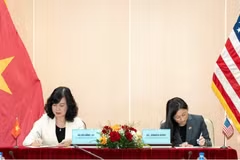
Minister of Health Dao Hong Lan and US Ambassador to Vietnam Jennifer McNamara Wick sign the memorandum of understanding on health cooperation. (Photo: US Embassy in Vietnam)

Vietnam, US launch five-year health cooperation

The cooperation will also support Vietnam in strengthening its healthcare capacity and gradually enhancing self-reliance in HIV/AIDS and tuberculosis prevention and control programmes, as well as in responding to emerging and re-emerging infectious diseases.

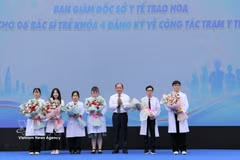
Director of the Ho Chi Minh City Department of Health Tang Chi Thuong (third, right) presents flowers to congratulate six young doctors who have volunteered to work at grassroots-level health stations (Photo: VNA)

Ho Chi Minh City strengthens grassroots healthcare workforce

Ho Chi Minh City's Department of Health on September 10 reviewed a pilot programme combining hospital-based practice with work at grassroots health stations and organised the fourth healthcare job fair, attracting nearly 1,000 candidates and 94 recruiters offering 806 positions.

Children undergo health screening. (Photo: Dong Da General Hospital in Hanoi)

Vietnam to screen students nationwide for five health risks from 2028

Vietnam will launch nationwide screening for five groups of school-related diseases and health conditions among students from preschool through high school from 2028, including overweight and obesity, refractive errors, spinal curvature, oral diseases and mental health disorders.