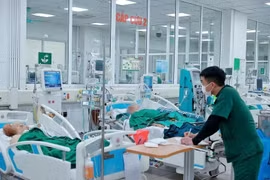
Ho Chi Minh City acute respiratory infections surge over 64%

According to the Ho Chi Minh City Centre for Disease Control (HCDC), influenza viruses are are among the fastest-rising pathogens, with 151 positive samples in a single week. Influenza A is the dominant strain, with A/H1N1pdm09 in 116 samples, or nearly 77%.

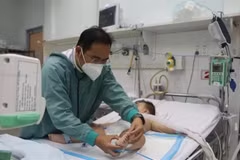
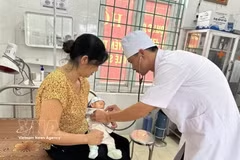
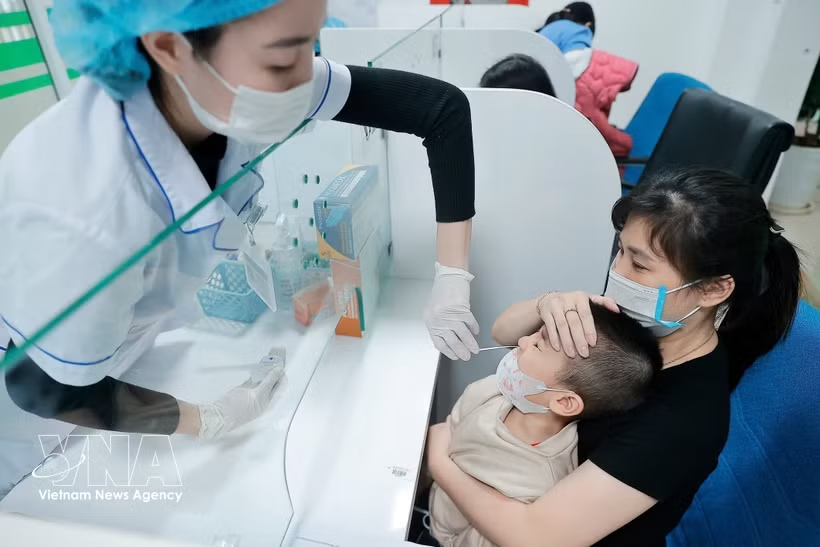
Collecting a sample from a pediatric patient for influenza testing (Photo: VNA)

Ho Chi Minh City (VNA) - Ho Chi Minh City recorded 34,664 acute respiratory infections in the first week of October, more than 64% above the previous four-week average, prompting health experts to warn of favourable conditions for viral spread and urge the public to adopt preventive measures.

The rise has been attributed to seasonal weather changes and students’ return to school, which together allow respiratory pathogens to spread quickly.

According to the Ho Chi Minh City Centre for Disease Control (HCDC), influenza viruses are are among the fastest-rising pathogens, with 151 positive samples in a single week. Influenza A is the dominant strain, with A/H1N1pdm09 in 116 samples, or nearly 77%.

HCDC continues to run a citywide surveillance system for pathogens that cause acute respiratory infections. It collects samples at 29 healthcare facilities, including hospitals and regional medical stations, and closely monitors clusters of cases in the community.

Continuous analysis of case trends and virus strains lets the health sector flag risks early, forecast transmission and recommend interventions suited to actual conditions.

Older adults and those with underlying health conditions should take greater care, as they face a higher risk of severe illness and serious complications if infected.

Residents are advised to wash their hands regularly with clean water and soap. When coughing or sneezing, they should cover the mouth and nose with a tissue or elbow to curb the spread of virus-laden respiratory droplets.

Those with symptoms suggestive of infection, such as fever, cough, sore throat or a runny nose, should wear a face mask, limit close contact with others and promptly seek medical advice and treatment.

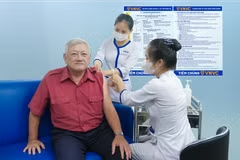
An annual flu vaccination, in line with health authorities’ recommendations, is key to keeping immunity stronger and protecting individuals and families, particularly high-risk groups such as older adults and those with underlying health conditions./.
​

VNA

See more

A speaker delivers presentations at the conference (Photo published by VNA)

Vietnam, Denmark expand cooperation in high-tech healthcare

Ambassador Nguyen Le Thanh called on Vietnamese and Danish partners to identify priority areas and promote research and training programmes, knowledge transfer and technology application in line with Politburo's Resolution No. 57-NQ/TW on breakthroughs in science – technology development, innovation and national digital transformation.

Ho Chi Minh City has favourable conditions for developing the ecosystem, including a large population, diverse healthcare needs and an extensive public and private medical network. (Illustrative photo: VNA)

Ho Chi Minh City develops multi-tier elderly care network amid population ageing

Dr. Huynh Minh Chin, Deputy Director of the department, said rising elderly care needs are putting pressure on traditional family-based care, as older people increasingly face multiple chronic illnesses, mobility problems, malnutrition, dementia and depression, requiring continuous support and closer coordination among hospitals, grassroots healthcare facilities, families and social support institutions.

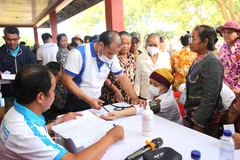
Local residents in Mondulkiri province, Cambodia, receive free medical check-ups and health consultation. (Photo: VNA)

Free medical examinations provided to remote communities in Cambodia

Vietnamese Ambassador Nguyen Minh Vu said the programme has been jointly organised by the embassy and the hospital annually in various Cambodian localities to provide healthcare support to disadvantaged households and contribute to the Cambodian Government’s efforts to improve public health. The initiative also reflects close cooperation in healthcare and the strong bonds between the people of Vietnam and Cambodia.

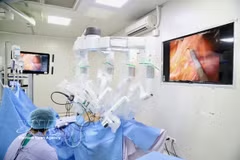
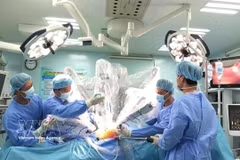
With the assistance of robotic-assisted laparoscopic surgery, doctors successfully perform a complex operation (Photo: VNA)

Vietnam advances towards high-quality, specialised healthcare

Recent developments in Hanoi and other localities highlight efforts to develop specialised treatment, standardise professional practices and apply artificial intelligence (AI) and advanced medical techniques, towards a more modern healthcare system.

A doctor at Trung Nguyen Medical Station in Te Lo commune, Phu Tho province, examines a child patient. (Photo: VNA)

Phu Tho builds hospital culture to improve patient satisfaction

In recent years, alongside efforts to improve the quality of medical examinations and treatment, Phu Tho province’s health sector has focused on creating civilised, friendly hospital environments and strengthening healthcare workers’ sense of responsibility and service-oriented attitudes, with the aim of earning patients’ trust and satisfaction.

An overview of the meeting between Deputy Prime Minister Pham Thi Thanh Tra and César Louis-Philip Marseille, Managing Director of VAMED Engineering GmbH of Austria and member of the Board of Directors of VAMED+WWH Group of Germany,in Hanoi on October 7. (Photo: VNA)

Deputy PM suggests studying long-term development of hospital ship model

Vietnam is one of VAMED’s important partners in Southeast Asia. The group plans to invest 1.2 billion EUR in Vietnam over the next five years, creating jobs for thousands of workers and promoting knowledge and technology transfer. It also wishes to expand cooperation through preferential credit projects, public-private partnerships (PPPs) and partnerships with private enterprises; and supply medical products from Austria and Germany for Vietnamese partners.