Hanoi (VNA) – The French government is providing 200 million EUR (nearly 231 million USD) in financing to help low-income Filipino families gain better access to nutritious food under a new food security and nutrition programme, the Manila Bulletin reported.
The Philippine Department of Finance (DOF) said on August 11 that the loan, provided by the French Development Agency (AFD), will support the implementation of the Reducing Food Insecurity and Undernutrition with Electronic Vouchers (REFUEL) project.
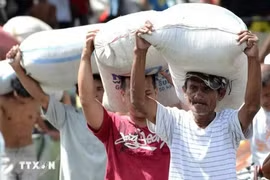
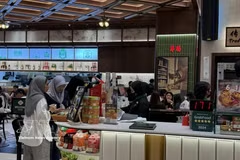
Implemented in coordination with the Philippine Department of Social Welfare and Development (DSWD), the project is expected to benefit around 750,000 low-income households. Eligible families will receive monthly electronic food vouchers that can be used to purchase food from accredited retailers.
Philippine Finance Secretary Frederick Go said the programme will give vulnerable families direct and timely access to nutritious food. Digitising the assistance process will also improve transparency and efficiency in the distribution of resources.
In addition to food assistance, participating households will receive nutrition education and livelihood support, including guidance on maternal and child nutrition, proper hygiene and healthy diets, as well as income-generating opportunities.
The REFUEL project is co-financed by the Asian Development Bank (ADB) as part of broader cooperation between the Philippines and its development partners to strengthen the social protection system and support vulnerable communities.
French Ambassador to the Philippines Marie Fontanel welcomed the Philippine Government’s commitment to integrating climate action, ocean protection and social welfare into its national development agenda.
She said these priorities are important not only for the Philippines’ future but also for strengthening resilience and promoting sustainable development.
Meanwhile, AFD Country Director for the Philippines Benedicte Gazon said REFUEL will add a social dimension to development cooperation between France and the Philippines, helping support vulnerable communities and promote a more inclusive development model in the country./.