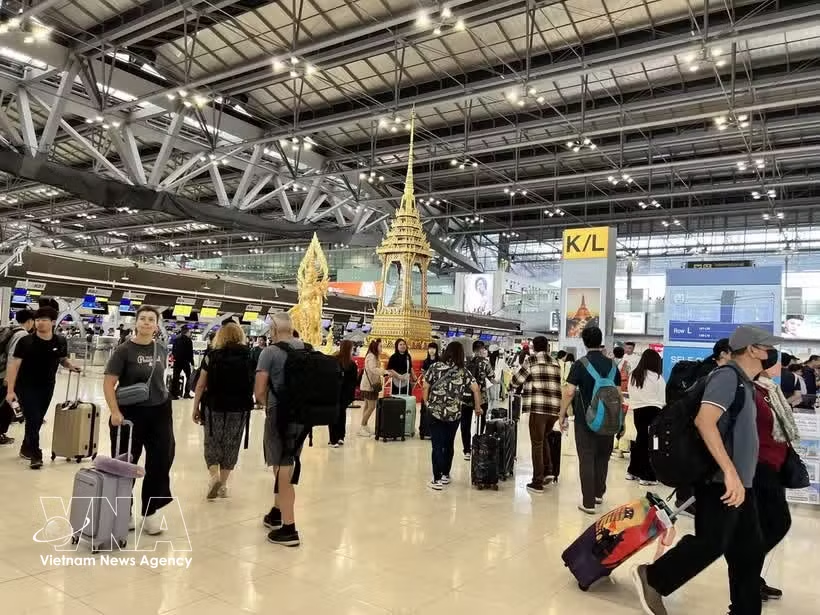
Bangkok (VNA) – Thailand is accelerating infrastructure modernisation and the application of digital technologies in air traffic management to improve safety, reduce flight delays, save fuel and advance its goal of becoming a world-class aviation hub.
According to Deputy Transport Minister Phattharapong Phattharaprasit, the ministry has instructed the Department of Airports, Aeronautical Radio of Thailand (Aerothai) to accelerate a project integrating weather radar data with the Thai Meteorological Department. The system will provide air traffic controllers with accurate, up-to-date weather information, particularly in adverse weather conditions, thereby improving flight safety and operational efficiency.
Thailand is also promoting the development of a System Wide Information Management (SWIM) system in line with standards set by the International Civil Aviation Organisation (ICAO). The country aims to make Aerothai a SWIM service provider by 2030, gradually shifting aviation data exchange to digital platforms and connecting with the global aviation system.
Aerothai Chairman Pichet Kunathamrak said that in fiscal 2026, from October 2025 to September 2026, the total number of flights in Thailand is expected to reach 919,643, averaging 2,520 flights per day, up about 1.64% from fiscal 2025.
To date, 777,456 flights have been recorded, averaging 2,558 flights per day, including 385,991 international flights, 297,234 domestic flights and 94,231 overflights. AEROTHAI aims to handle more than 1 million flights by 2027.
As part of its aviation modernisation programme, AEROTHAI is developing Digital Tower systems at Suvarnabhumi and Don Mueang airports, while studying the deployment of Remote Tower systems at Narathiwat and Betong airports. Procurement is expected to begin in October, with the systems scheduled to enter service in 2028.
Aerothai is also developing a System Monitoring and Control (SMC) system to monitor around the clock the operation of technical systems supporting air traffic management. The system is expected to be deployed at the Hat Yai Air Traffic Control Centre in early 2027 and expanded to nine major air traffic control centres nationwide by 2028.
Meanwhile, the Bay of Bengal Cooperative Air Traffic Flow Management System (BOBCAT), developed by Aerothai, is being used to manage air traffic flows for flights transiting Afghanistan’s airspace. Amid conflicts in the Middle East, the number of flights using the system has risen from an average of 46 to 77, an increase of 67%./.

Thailand greets 18.5 million foreign tourists during January–July
The top five source markets were China (nearly 3.08 million visitors), Malaysia (2.37 million), India (nearly 1.38 million), Russia (1.1 million), and the Republic of Korea (RoK) (over 679,000).