Jakarta (VNA) – Indonesia is facing multiple natural and environmental hazards at the same time, ranging from volcanic eruptions and ash clouds disrupting air travel to widespread forest fires, highlighting growing pressure on the nation’s transport system and disaster response efforts.
Anak Krakatau volcano in the Sunda Strait has erupted in recent days, forcing several airports on Java and Sumatra islands to temporarily close. The disruption affected nearly 3,000 flights and around 341,000 passengers.
Volcanic ash has affected five Indonesian provinces, prompting authorities to closely monitor air quality and adjust aviation operations. Jakarta and several localities have switched to online classes for students and advised residents to wear masks outdoors to limit exposure to volcanic ash.
As of September 9, air operations at the affected airports had gradually resumed. However, airlines were required to thoroughly inspect aircraft before putting them back into service, as tiny volcanic ash particles can enter engines and pose safety risks.
Besides disrupting transport, Anak Krakatau’s activity has also raised concerns over maritime operations. According to Indonesian news agency ANTARA, search and rescue teams are working to locate a group of journalists who went missing while covering the volcano. The Indonesian search and rescue agency said the missing group comprised five photojournalists, two crew members and a guide. They were travelling on a speedboat that departed from Pagedongan Pier in Carita at 14:00 local time on September 7.
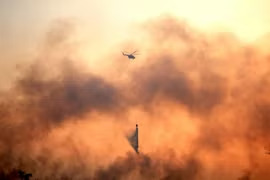
Meanwhile, Indonesia continues to battle prolonged forest and land fires in Sumatra and Borneo. The Indonesian Ministry of Defence said on September 8 that fires in the six worst-affected provinces on the two islands had burned nearly 77,000 hectares. Dry weather since June has further complicated the situation, generating haze and worsening air pollution, raising concerns not only in Indonesia but also in neighbouring countries such as Singapore and Malaysia.
Indonesia has deployed more than 50 aircraft to fight the fires and conduct cloud-seeding operations in affected areas. Thousands of military personnel have also been mobilised for response efforts on the ground and in the air. Japan will additionally send three CH-47 Chinook transport helicopters and around 180 personnel to Indonesia to assist with firefighting. The helicopters are scheduled to operate in West Kalimantan province from September 12-19./.
Indonesia, Malaysia cooperate to tackle transboundary haze
Indonesia has given Malaysian agencies official permission to enter its airspace to conduct cloud seeding operations, as part of both countries' efforts to combat the haze blanketing the region.