Indonesia’s plastic sector faces material shortages amid Middle East tension

Around 70% of the country’s petrochemical raw materials originate from the Middle East, and supply disruptions have made materials increasingly scarce, with some products nearly unavailable in the market.

Jakarta (VNA) – Indonesia’s plastic industry is facing mounting pressure as the Middle East conflict disrupts global supply chains, constraining access to petrochemicals and driving up prices.

As reported by the local online English-language newspaper Jakarta Globe, the disruption is partly linked to restricted traffic in the Strait of Hormuz, a critical artery for global petrochemical shipments. The bottleneck has limited the flow of raw materials from the Middle East, a region that supplies the bulk of Indonesia’s inputs.

Fajar Budiono, secretary general of the Indonesian Olefin, Aromatic and Plastic Industry Association (Inaplas), said around 70% of the country’s petrochemical raw materials originate from the Middle East. Supply disruptions have made materials increasingly scarce, with some products nearly unavailable in the market.

“Raw materials are no longer available. Prices are rising, and the gap between minimum and maximum prices is now extremely wide,” Fajar said as quoted by the newspaper.

The uncertainty has forced manufacturers to scale back operations, with many reluctant to accept new orders due to concerns over raw material availability. Industry players are seeking alternative supplies from Asia and Southeast Asia, but those efforts have also hit obstacles.

While hoping tensions in the Middle East to ease soon, Fajar said the current crisis should serve as a catalyst for Indonesia to fast-track industrial transformation and reduce dependence on a single source of raw materials./.
VNA

See more

Indonesia, RoK seek to expand energy cooperation

Indonesia, RoK seek to expand energy cooperation

The two sides signed 10 memoranda of understanding (MoUs) to strengthen economic ties and expand cooperation in key areas such as critical minerals, advanced technology, AI-based healthcare, and intellectual property, along with other sectors.

Malaysia open to China’s automotive investment

Malaysia open to China’s automotive investment

Investment, Trade and Industry Minister said Chinese automotive brands have a significant presence in Malaysia. As of December 2025, 14 out of 34 foreign brands in the market are from China, including BYD, Chery, Jaecoo, Jetour, Haval, Wey, MG, and Volvo.

Indonesia summons Meta, Google over violations of child protection rules

Indonesia summons Meta, Google over violations of child protection rules

Indonesian Minister of Communication and Digital Affairs Meutya Hafid said the two tech giants violated Ministerial Regulation No. 9/2026 issued by the ministry, which classifies certain digital platforms as high-risk and requires the implementation of access restrictions for children.

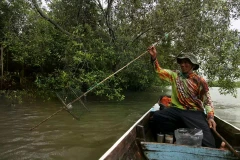
A fisherman crosses the mangrove forest in Deli Serdang, North Sumatera, on October 20, 2025. (Photo: Antara)

Indonesia accelerates green growth drive

President Prabowo Subianto’s environmental mandate is clear: initiate large-scale reforestation, empower local communities through high-quality green jobs, and accelerate energy transition.

Illustrative photo (Photo: pna.gov.ph)

Philippines’ fertility rate falls to record low

The figure marks a sharp fall from 4.1 children per woman recorded in 1993, underscoring significant demographic shifts in the Southeast Asian nation. The decline is more pronounced in urban areas, where fertility stands at 1.5, compared to 2.0 in rural regions.

Illustrative photo: Internet

Cambodia reports child infected with H5N1 avian influenza

According to a press release issued by the ministry, the child tested positive for the H5N1 bird flu virus on March 29, after laboratory testing conducted by the National Institute of Public Health. The patient lives in Thnob Thmei village, Beng commune, Banteay Ampil district. Authorities reported that chickens and ducks in the village had been sick and dying prior to the case being detected.

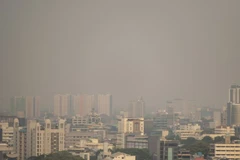
Skyscrapers are seen shrouded by polluted air in Jakarta (Photo: AFP)

Air quality in Indonesia’s capital worsens sharply

The city recorded an Air Quality Index (AQI) of 127, with PM2.5 concentration reaching 46 micrograms per cubic metre. This pollution level poses potential health risks to people, sensitive animal groups and may also negatively affect plants.