Indonesia, Japan agree to boost economic, security cooperation

The Japanese PM said her country will support Indonesia in developing human resources in artificial intelligence (AI) and strengthening maritime security capabilities.

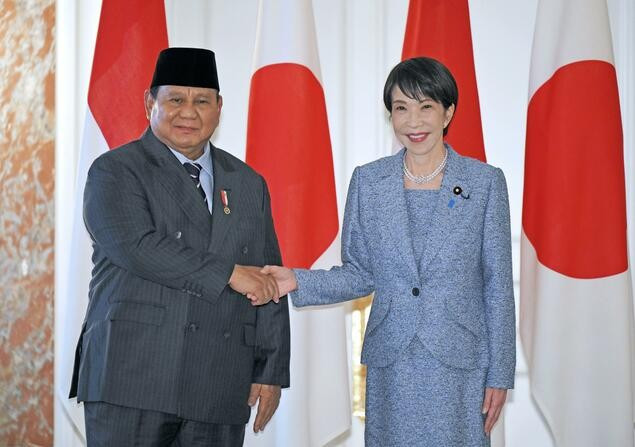
Indonesian President Prabowo Subianto (left) and Japanese Prime Minister Sanae Takaichi at their meeting in Tokyo on March 31, 2026 (Photo: Kyodo/VNA)

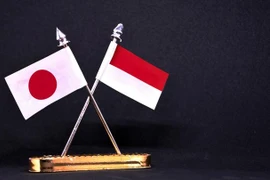
Hanoi (VNA) – Indonesian President Prabowo Subianto and Japanese Prime Minister Sanae Takaichi agreed on March 31 to strengthen concrete cooperation in economic and security fields to reinforce the two countries’ strategic partnership.

The meeting in Tokyo marked the first face-to-face meeting between the two leaders since Takaichi took office in October last year, reflecting a new step forward in the long-standing friendship between Japan and Indonesia.

Speaking at a joint press conference after the talks, the Japanese PM said her country will support Indonesia in developing human resources in artificial intelligence (AI) and strengthening maritime security capabilities. Tokyo considers cooperation with Jakarta as essential for realising the vision of a free and open Indo-Pacific.
In recent years, the two sides have stepped up defence cooperation through Japan’s Official Security Assistance (OSA) framework, including the provision of military equipment and joint exercises.

Amid increasingly complex geopolitical developments, the two leaders also expressed deep concern over conflicts in the Middle East. Rising crude oil prices and potential risks to energy supply chains have become shared concerns, as Japan relies on the Middle East for more than 90% of its crude oil imports while Indonesia depends on the region for around 20 to 25% of its oil procurement.

President Subianto stressed that the two countries should "walk together" in the current international situation. He also showed his eagerness to contribute to "deescalation".

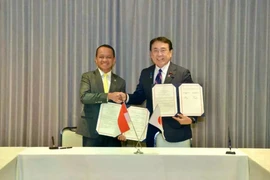
On the same day, Indonesia’s Presidential Office announced that the two countries had signed at least 10 memoranda of understanding and strategic cooperation agreements at the Indonesia – Japan Business Forum in Tokyo.

The deals cover a wide range of areas including energy, investment, technology and financial services. Notable projects include a methanol production project using CO₂ emissions in Bontang, East Kalimantan; upstream oil and gas cooperation projects in Indonesia and across Southeast Asia; financial initiatives supporting the gold ecosystem and financial inclusion; and stronger investment connectivity between the Japan External Trade Organisation (JETRO) and Danantara, Indonesia’s sovereign investment management company.

Indonesian Cabinet Secretary Teddy Indra Wijaya said the total value of commitments amounts to about 380 trillion IDR (20 billion USD) as part of broader bilateral cooperation. The figure highlights Indonesia’s growing attractiveness as a destination for global capital and investors’ confidence in the country’s long-term growth prospects.

President Subianto’s visit to Japan from March 29 to 31 takes place as Asian countries seek solutions to ensure energy security amid potential supply disruptions in the Strait of Hormuz linked to escalating tensions in the Middle East./.
VNA

See more

Indonesia summons Meta, Google over violations of child protection rules

Indonesia summons Meta, Google over violations of child protection rules

Indonesian Minister of Communication and Digital Affairs Meutya Hafid said the two tech giants violated Ministerial Regulation No. 9/2026 issued by the ministry, which classifies certain digital platforms as high-risk and requires the implementation of access restrictions for children.

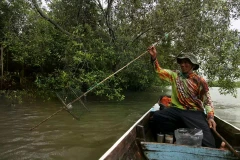
A fisherman crosses the mangrove forest in Deli Serdang, North Sumatera, on October 20, 2025. (Photo: Antara)

Indonesia accelerates green growth drive

President Prabowo Subianto’s environmental mandate is clear: initiate large-scale reforestation, empower local communities through high-quality green jobs, and accelerate energy transition.

Illustrative photo (Photo: pna.gov.ph)

Philippines’ fertility rate falls to record low

The figure marks a sharp fall from 4.1 children per woman recorded in 1993, underscoring significant demographic shifts in the Southeast Asian nation. The decline is more pronounced in urban areas, where fertility stands at 1.5, compared to 2.0 in rural regions.

Illustrative photo: Internet

Cambodia reports child infected with H5N1 avian influenza

According to a press release issued by the ministry, the child tested positive for the H5N1 bird flu virus on March 29, after laboratory testing conducted by the National Institute of Public Health. The patient lives in Thnob Thmei village, Beng commune, Banteay Ampil district. Authorities reported that chickens and ducks in the village had been sick and dying prior to the case being detected.

Skyscrapers are seen shrouded by polluted air in Jakarta (Photo: AFP)

Air quality in Indonesia’s capital worsens sharply

The city recorded an Air Quality Index (AQI) of 127, with PM2.5 concentration reaching 46 micrograms per cubic metre. This pollution level poses potential health risks to people, sensitive animal groups and may also negatively affect plants.

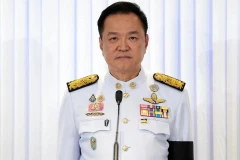
Thai PM Anutin Charnvirakul (Photo: Bangkok Post)

Thai PM submits cabinet lineup for royal approval

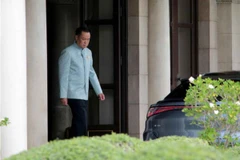
Thai PM Anutin Charnvirakul said the cabinet is expected to comprise 36 positions, including the PM, and that the transition will be seamless, with several incumbent ministers likely to retain key roles to ensure continuity.

Singaporean Health Minister Ong Ye Kung touring exhibition booths at the NHG Health Musculoskeletal Day at Woodlands Hospital on March 28. (Photo: straitstimes.com)

Singapore leverages technology to enhance elderly healthcare

The initiative, known as Future Health Technologies 2 (FHT2), was launched on March 28 with support from the National Research Foundation Singapore (NRF). It focuses on translating cutting-edge research into practical healthcare solutions by 2030.

Cambodian legislature approves law on combating online scams

Cambodian legislature approves law on combating online scams

Organisers of online scam operations will face between 15 - 30 years in prison, or life imprisonment, if their activities lead to one or more deaths. Ringleaders of online scam centres will face between 5 - 10 years in prison and a fine of up to 1 billion KHR (250,000 USD). The penalties will increase to between 10 - 20 years in jail and a fine of up to 2 billion KHR if their operations involve violence, torture, illegal confinement, human trafficking, or forced labour.