Philippines’ fertility rate falls to record low

The figure marks a sharp fall from 4.1 children per woman recorded in 1993, underscoring significant demographic shifts in the Southeast Asian nation. The decline is more pronounced in urban areas, where fertility stands at 1.5, compared to 2.0 in rural regions.

Hanoi (VNA) – The Philippines’ total fertility rate (TFR) has dropped to a historic low of 1.7 children per woman, reflecting a sustained long-term decline, according to data released by the Philippine Statistics Authority (PSA).

The figure marks a sharp fall from 4.1 children per woman recorded in 1993, underscoring significant demographic shifts in the Southeast Asian nation. The decline is more pronounced in urban areas, where fertility stands at 1.5, compared to 2.0 in rural regions.

The data come from the 2025 National Demographic and Health Survey (NDHS), the 13th nationwide survey conducted since 1968. The survey interviewed nearly 30,000 women aged 15–49, offering a comprehensive snapshot of population trends and development indicators.

The report highlights a strong link between fertility rates and socio-economic conditions. Women in the poorest group have an average of 2.8 children, while those in the wealthiest group have just 1.1.

Similarly, fertility rates are significantly higher among women with lower educational attainment compared to those with higher education.

Teenage pregnancy has also declined to its lowest level on record. Only 4.8% of women aged 15–19 have begun childbearing, down markedly from a peak of 10.1% in 2013. However, the rate remains higher in rural areas (5.8%) than in urban centres (4.2%).

Meanwhile, maternal and child health indicators continue to improve. The proportion of births taking place at healthcare facilities rose to 93.7% in 2025, while 93.6% of deliveries were attended by skilled health personnel. Under-five mortality declined to 22 deaths per 1,000 live births.

According to the NDHS, the findings will support policymakers and relevant agencies in assessing and refining programmes aimed at improving living standards and promoting sustainable development in the Philippines./.


VNA

See more

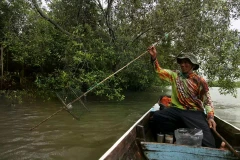
A fisherman crosses the mangrove forest in Deli Serdang, North Sumatera, on October 20, 2025. (Photo: Antara)

Indonesia accelerates green growth drive

President Prabowo Subianto’s environmental mandate is clear: initiate large-scale reforestation, empower local communities through high-quality green jobs, and accelerate energy transition.

Illustrative photo: Internet

Cambodia reports child infected with H5N1 avian influenza

According to a press release issued by the ministry, the child tested positive for the H5N1 bird flu virus on March 29, after laboratory testing conducted by the National Institute of Public Health. The patient lives in Thnob Thmei village, Beng commune, Banteay Ampil district. Authorities reported that chickens and ducks in the village had been sick and dying prior to the case being detected.

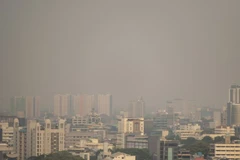
Skyscrapers are seen shrouded by polluted air in Jakarta (Photo: AFP)

Air quality in Indonesia’s capital worsens sharply

The city recorded an Air Quality Index (AQI) of 127, with PM2.5 concentration reaching 46 micrograms per cubic metre. This pollution level poses potential health risks to people, sensitive animal groups and may also negatively affect plants.

Thai PM Anutin Charnvirakul (Photo: Bangkok Post)

Thai PM submits cabinet lineup for royal approval

Thai PM Anutin Charnvirakul said the cabinet is expected to comprise 36 positions, including the PM, and that the transition will be seamless, with several incumbent ministers likely to retain key roles to ensure continuity.

Singaporean Health Minister Ong Ye Kung touring exhibition booths at the NHG Health Musculoskeletal Day at Woodlands Hospital on March 28. (Photo: straitstimes.com)

Singapore leverages technology to enhance elderly healthcare

The initiative, known as Future Health Technologies 2 (FHT2), was launched on March 28 with support from the National Research Foundation Singapore (NRF). It focuses on translating cutting-edge research into practical healthcare solutions by 2030.

Cambodian legislature approves law on combating online scams

Cambodian legislature approves law on combating online scams

Organisers of online scam operations will face between 15 - 30 years in prison, or life imprisonment, if their activities lead to one or more deaths. Ringleaders of online scam centres will face between 5 - 10 years in prison and a fine of up to 1 billion KHR (250,000 USD). The penalties will increase to between 10 - 20 years in jail and a fine of up to 2 billion KHR if their operations involve violence, torture, illegal confinement, human trafficking, or forced labour.

Ahmed Albayrak, Research Associate at the Indo-Pacific Development Centre under Australia’s Lowy Institute (Photo published by VNA)

Expert urges integrated approach to energy security

An expert at the Indo-Pacific Development Centre under Australia’s Lowy Institute said focus should be placed on upgrading transmission systems, expanding energy storage, developing flexible gas capacity and promoting demand response, rather than setting additional capacity targets.