Cambodia reports child infected with H5N1 avian influenza

According to a press release issued by the ministry, the child tested positive for the H5N1 bird flu virus on March 29, after laboratory testing conducted by the National Institute of Public Health. The patient lives in Thnob Thmei village, Beng commune, Banteay Ampil district. Authorities reported that chickens and ducks in the village had been sick and dying prior to the case being detected.

Phnom Penh (VNA) - Cambodia’s Ministry of Health on March 31 confirmed that a three-year-old boy in Banteay Ampil district of Oddar Meanchey province had been infected with the H5N1 avian influenza virus.

According to a press release issued by the ministry, the child tested positive for the H5N1 bird flu virus on March 29, after laboratory testing conducted by the National Institute of Public Health. The patient lives in Thnob Thmei village, Beng commune, Banteay Ampil district. Authorities reported that chickens and ducks in the village had been sick and dying prior to the case being detected.

The child is currently being isolated in hospital and receiving close medical care from health professionals.

Preliminary investigations revealed that the family raises chickens and ducks at home, some of which had fallen ill and died. The child was reported to have played around areas where the dead poultry were found.

National and sub-national rapid response teams from the ministry are now working closely with the provincial agriculture department and local authorities to conduct an active investigation into the outbreak. The teams are tracing the source of infection among both animals and humans, identifying suspected cases and close contacts to prevent further community transmissions.

Health authorities have also distributed Tamiflu, to individuals who had close contact with the patient. Public health education campaigns are also being carried out in the affected village./.


VNA

See more

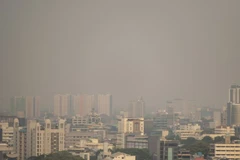
Skyscrapers are seen shrouded by polluted air in Jakarta (Photo: AFP)

Air quality in Indonesia’s capital worsens sharply

The city recorded an Air Quality Index (AQI) of 127, with PM2.5 concentration reaching 46 micrograms per cubic metre. This pollution level poses potential health risks to people, sensitive animal groups and may also negatively affect plants.

Thai PM Anutin Charnvirakul (Photo: Bangkok Post)

Thai PM submits cabinet lineup for royal approval

Thai PM Anutin Charnvirakul said the cabinet is expected to comprise 36 positions, including the PM, and that the transition will be seamless, with several incumbent ministers likely to retain key roles to ensure continuity.

Singaporean Health Minister Ong Ye Kung touring exhibition booths at the NHG Health Musculoskeletal Day at Woodlands Hospital on March 28. (Photo: straitstimes.com)

Singapore leverages technology to enhance elderly healthcare

The initiative, known as Future Health Technologies 2 (FHT2), was launched on March 28 with support from the National Research Foundation Singapore (NRF). It focuses on translating cutting-edge research into practical healthcare solutions by 2030.

Cambodian legislature approves law on combating online scams

Cambodian legislature approves law on combating online scams

Organisers of online scam operations will face between 15 - 30 years in prison, or life imprisonment, if their activities lead to one or more deaths. Ringleaders of online scam centres will face between 5 - 10 years in prison and a fine of up to 1 billion KHR (250,000 USD). The penalties will increase to between 10 - 20 years in jail and a fine of up to 2 billion KHR if their operations involve violence, torture, illegal confinement, human trafficking, or forced labour.

Ahmed Albayrak, Research Associate at the Indo-Pacific Development Centre under Australia’s Lowy Institute (Photo published by VNA)

Expert urges integrated approach to energy security

An expert at the Indo-Pacific Development Centre under Australia’s Lowy Institute said focus should be placed on upgrading transmission systems, expanding energy storage, developing flexible gas capacity and promoting demand response, rather than setting additional capacity targets.