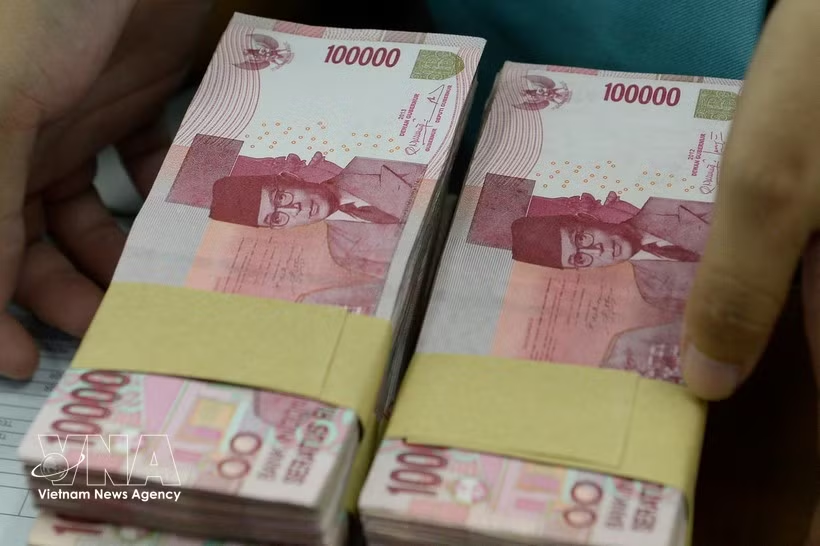
Jakarta (VNA) – Indonesia’s rupiad (IDR) fell to a record low on May 18 as rising oil prices, global geopolitical tensions and concerns over the health of Southeast Asia’s largest economy.
The IDR at one point dropped more than 1% to around 17,668 IDR per USD, its weakest level on record. Indonesia’s benchmark stock index also plunged more than 4% after a long holiday, reflecting growing investor concerns.
President Prabowo Subianto sought to reassure the public, saying the weakening rupiah would not significantly affect the daily lives of rural residents. During a visit to East Java, he said the Indonesian economy remains strong with secure food and energy supplies.
However, economists warned that despite limited direct use of USD among the public, Indonesia remains heavily dependent on imports of fuel, industrial materials and foreign capital, meaning the rupiah’s depreciation could fuel inflation and higher domestic prices.
Pressure on the rupiah has mounted as global oil prices surge amid Middle East tensions and developments involving Iran, increasing Indonesia’s energy import costs. At the same time, the USD has strengthened as investors seek safe-haven assets.
Bank Indonesia has repeatedly intervened in foreign exchange markets to support the IDR, while the government has expanded fuel subsidies to ease the impact of rising oil prices. Investors are closely watching the central bank’s upcoming policy meeting, amid expectations of a possible interest rate hike to stem capital outflows.
Some analysts warned the IDR could weaken beyond 18,000 per USD if pressure from oil prices, a strong USD and geopolitical instability persists.
The IDR has been under sustained pressure for months and is now among Asia’s weakest-performing currencies, reflecting not only global market shocks but also deeper concerns over Indonesia’s current account deficit, energy import dependence, fiscal pressures and investor confidence./.