Seoul (VNA) – The Republic of Korea (RoK)’s food company Daesang said on May 13 that it will step up its localisation strategy in Southeast Asia, targeting combined revenue of 1 trillion KRW (around 730 million USD) from its regional subsidiaries by 2030.
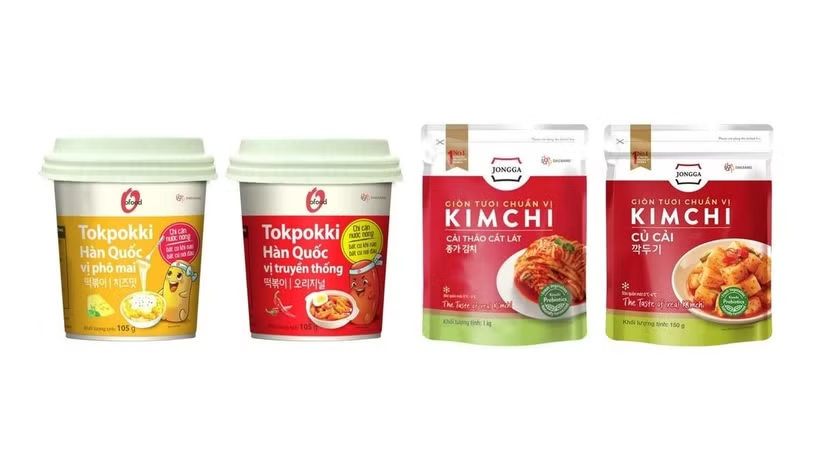
The company currently operates in ten Southeast Asian countries, including Vietnam, Indonesia, Thailand, Malaysia, the Philippines and Singapore, focusing on products such as seaweed, kimchi, ready-to-eat meals and seasonings.
Combined revenue from Daesang’s Southeast Asian subsidiaries reached about 790 billion KRW in 2025, up 29% compared to 2021. The result was seen as a positive sign in the company’s global expansion strategy amid the growing popularity of Korean cuisine across the region.
In Vietnam, Daesang is expanding its distribution network through cooperation with WinCommerce. It is also strengthening local production capacity by establishing a kimchi production facility at its Hung Yen plant.
In addition, the company has invested around 30 billion KRW in factories in the former province of Hai Duong (now Hai Phong city) and Hung Yen to expand production capacity. The Hai Duong facility has added manufacturing lines for seaweed and shelf-stable ready-to-eat meals, while the Hung Yen plant focuses on products tailored to local tastes, including spring rolls and dumplings.
As part of its brand promotion strategy, the firm plans to participate in the THAIFEX-Anuga Asia food exhibition in Thailand later this month. At the event, it will showcase flagship products including kimchi, seaweed and tteokbokki.
THAIFEX-Anuga Asia is considered one of Asia’s largest food exhibitions. The event is jointly organised by Germany’s Koelnmesse and Thailand’s Department of International Trade Promotion. Last year’s edition attracted more than 3,000 businesses from around 50 countries and territories.
Daesang CEO Yim Jung-bae said the company’s achievements in Southeast Asia stem from its deep understanding of local food culture and consumer demand.
"Based on differentiated products and localisation strategies, we will continue to expand our business beyond Southeast Asia into the global market," he said./.