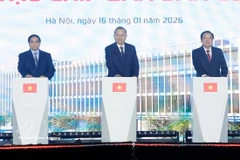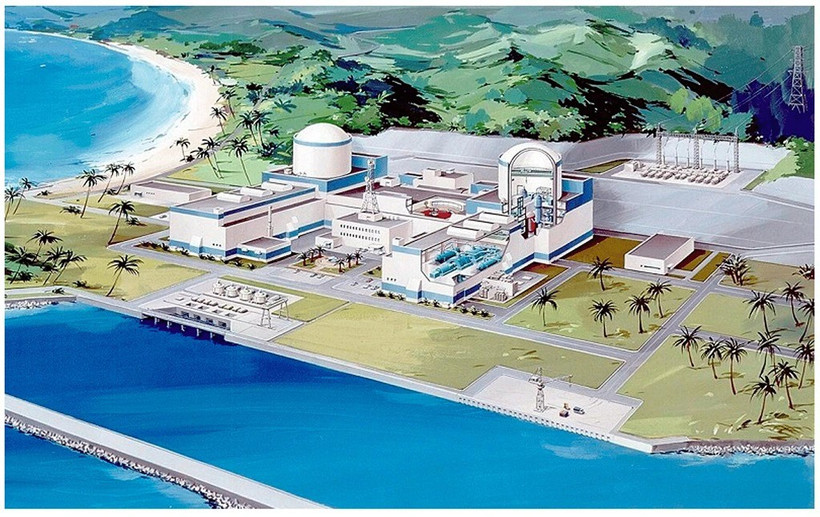
Hanoi (VNA) – Vietnam’s decision to restart its nuclear power programme has received applause from both international experts and the overseas Vietnamese community as it is estimated a timely and strategic step that helps meet the country’s growing energy demands and ensure sustainable economic development.
In a recent interview with the Vietnam News Agency, Associate Professor Kei Koga from the Nanyang Technological University (Singapore) said that the decision reflects Vietnam’s strategic orientation toward economic development amid the increasingly urgent need for a stable and long-term energy supply.
“With such a rapid economic growth, Vietnam must diversify energy sources and nuclear power is a rational choice to ensure the national energy security,” he said.
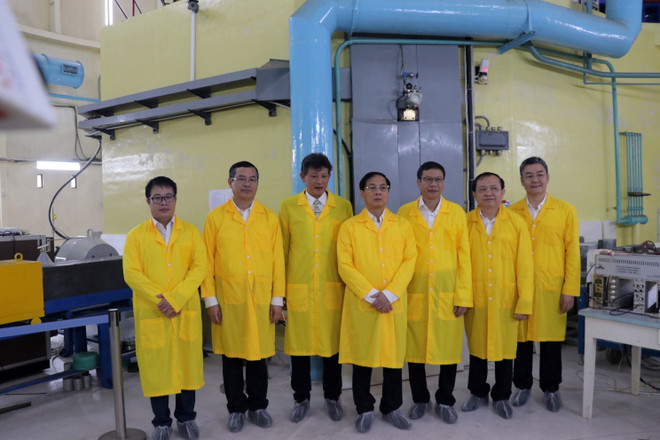
Sharing the same view, Emeritus Professor Carl Thayer from the University of New South Wales (Australia) described the nuclear power move as “a correct decision” by Vietnam.
According to him, to achieve the development goals set by the 13th National Party Congress, including the transformation of Vietnam into a developing country with a modern industry sector and upper-middle income level by 2030 and a developed country with high income by 2045, Vietnam needs to maintain a double-digit economic growth rate.
“This requires the country to have a strong and long-term energy strategy, in which nuclear power is a feasible and effective option,” Thayer added.
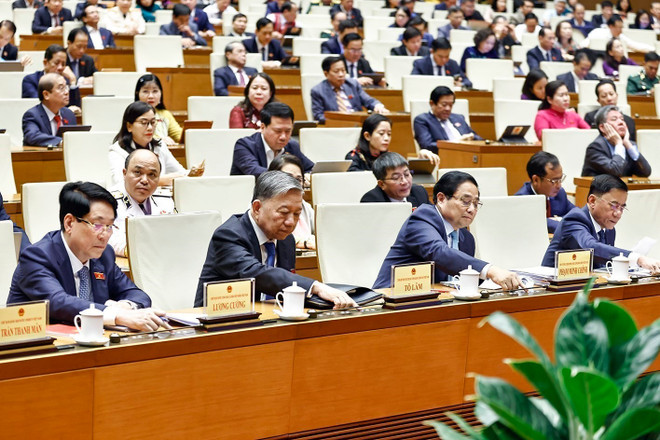
Christian Ngo, former Scientific Director of the French Atomic Energy and Alternative Energies Commission (CEA), described Vietnam’s decision to restart its nuclear power programme as “a very good idea.”

“This is a favourable time for Vietnam to take advantage of new technological advancements and learn from the experiences of countries that have successfully developed nuclear energy to support its green and sustainable economic development,” Ngo said.
Experts held that although Vietnam has been actively developing renewable energy sources such as solar, wind, and hydropower, these sources alone are still insufficient to ensure a continuous and stable supply for a rapidly growing economy.
According to Vietnam’s Power Development Plan VIII, the country will need approximately 150,000 MW of installed power capacity by 2030, and this figure is projected to be tripled by 2050.
With electricity demand growing at an annual rate of about 10%, Vietnam is facing an urgent need to secure stable and reliable energy sources, given that the current installed capacity totals around 85,000 MW.
The latest statistics from the Vietnam Electricity (EVN) show that coal-fired power still accounts for the largest share of total electricity generation, at 54.3%, followed by hydropower (23.4%) and renewable energy (13.5%). In this context, experts believe that restarting nuclear power projects will help Vietnam diversify its energy sources, ensure energy security, and achieve its goals of double-digit growth and net-zero emissions by 2050.
Nuclear power comeback
Nuclear power, with its advantages of low carbon emissions and continuous supply, has emerged as an optimal choice for many countries. According to the International Atomic Energy Agency (IAEA), there are currently 417 nuclear reactors operating in 31 countries, contributing nearly 10% of global electricity production and around 25% of low-carbon energy supply. The IAEA forecasts that global nuclear power capacity could increase by 2.5 times by 2050.

According to Vo Van Son, a nuclear geotechnical expert at Edvance (France), a company that specialises in designing and building new reactors worldwide, after the Fukushima disaster in Japan in 2011, nuclear power projects around the world were either suspended or shut down. However, this trend is now reversing, as many countries, including France, the UK, Sweden, the Netherlands, Finland, Hungary, the Czech Republic, and the US are restarting or expanding their nuclear power programmes.
“This shift highlights the growing recognition of nuclear energy as an optimal solution amid energy crises and increasing demands for net-zero emissions,” Son said.
In addition, factors such as geopolitics, energy security and commitments to reduce greenhouse gas emissions are also pushing countries to consider including this form of energy in their power structure. “Vietnam is no exception,” Son said, adding that some countries such as Kazakhstan and Indonesia have also started planning to build their first nuclear power plants.
According to the overseas Vietnamese expert, the robust development of science and technology today is opening up new prospects for nuclear power development, prompting many to view it as a viable solution for long-term energy challenges. Emerging technologies such as small modular reactors (SMRs), fast neutron reactors, and fusion reactors are receiving significant investment from countries and attracting global attention.
Son explained that fusion reactors remain in the research phase due to their technological complexity, though they hold significant potential thanks to their use of an almost limitless fuel source – hydrogen. Fast neutron reactors offer a promising approach to optimising fuel use and enhancing efficiency, but their adoption has been limited due to high technological requirements. Meanwhile, SMRs offer several advantages, including compact size, flexibility to adapt to various terrains, and lower risks associated with their reduced capacity.
Some countries have chosen to develop SMRs but the number of SMRs put into actual operation so far remains very limited. “Therefore, Vietnam must carefully assess its technological choices and implementation strategy, particularly for the very first reactors,” Son stressed.

Meanwhile, Thayer suggested that Vietnam learn from the experiences of those in the Indo-Pacific region that are operating nuclear power plants such as Japan, the Republic of Korea China and India on how to establish international cooperation frameworks and to build governance strategies, project management, and risk assessment and mitigation.
“Besides, Vietnam can also refer to the way these countries organise project finance, as well as regulations related to nuclear waste treatment,” he recommended.
Twenty-year preparations
Vietnam has made early preparations for nuclear power development, in line with the global trend toward clean and sustainable energy. Many experts agreed that the country has strategic advantages to pursue this path, including its geographic location, political stability, young population, and ability to absorb new technologies.
Vietnam’s active but cautious preparation to complete the Ninh Thuan nuclear power project in the 2030-2031 period is seen as appropriate, given the priority placed on ensuring absolute safety.
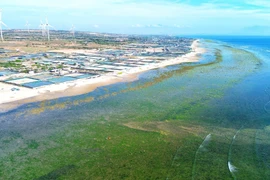
In addition, Vietnam has favourable natural conditions for developing various forms of energy, including nuclear power, thanks to its coastline stretching over 3,000 kilometres.
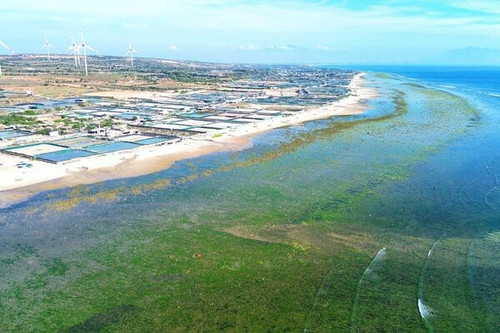
Christian Ngo noted that this feature is especially well-suited for building coastal nuclear power plants, where seawater can be used efficiently for cooling systems.
Vietnam’s selection of sites for first nuclear power plants has been carefully assessed for a long time. Dr. Tran Chi Thanh, Director of the Vietnam Atomic Energy Institute under the Ministry of Science and Technology, said it was “a meticulous and costly process that spanned two decades, from 1996 to 2016.”
With support and investment from Russia and Japan, Vietnam allocated a significant amount of funding in over 20 years to identify, classify, assess, and select suitable sites that meet the stringent criteria for nuclear power plant construction.
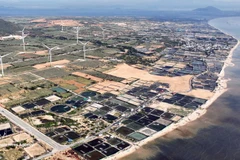
“This extensive effort ultimately led to the selection of Phuoc Dinh (for Ninh Thuan 1) and Vinh Hai (for Ninh Thuan 2),” he said.
According to Thanh, the decision to select these sites was based on their fulfillment of all critical prerequisites for nuclear power development, particularly in terms of topography and isolation zones, which are essential to ensure safety throughout the project’s lifecycle. These sites are located near the coast, providing favourable conditions for building cooling water systems. In addition, they offer convenient infrastructure for moving fuel and oversized equipment, as well as for connectivity to the national power grid.
In addition to natural advantages, experts also highlighted other factors that enable Vietnam’s nuclear power development. Among them, political stability and a young population are considered “significant pluses.”

Koga said: “Vietnam’s stable political structure is a key condition that can help accelerate the effective implementation of nuclear power, thereby facilitating technology transfer and the development of related infrastructure.”
Christian Ngo spoke highly of the Vietnamese people’s ability to learn and adapt quickly to technology, especially in highly technical and complex fields such as nuclear energy.
He noted that the establishment of the Vietnam Nuclear Professional Network (VietNuc) in Paris in May 2025, is a meaningful initiative to connect, gather, and leverage the intelligence and experience of the global Vietnamese scientific community working in the field.
A highly skilled workforce, according to the experts, is not only essential for a nuclear power programme but also a strategic asset for Vietnam’s transition to a more advanced and sustainable energy system in the future./.