Mekong Delta partners with Hanoi to develop sustainable tourism value chain

The Mekong Delta will work with Hanoi and other localities to build a sustainable tourism value chain, improve product quality for the community, and provide better experiences for tourists.

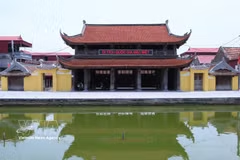
Som Rom Pagoda in formerly Soc Trang province, now part of Can Tho city (Photo: VietnamPlus)

Hanoi (VNA) – As Vietnam’s tourism industry undergoes a strong transformation, the Mekong Delta is facing a major opportunity to turn its rich tourism resources into competitive advantages. To achieve this, regional connectivity has been identified as a crucial factor, insiders said.

​“Developing integrated tourism routes linking floating markets, cajuput forests, traditional craft villages and cultural heritage sites will help create diverse visitor experiences and gradually position the Mekong Delta as an internationally recognised tourism destination,” said Duong Hoang Sum, Director of the Department of Culture, Sports and Tourism of Tra Vinh province.​

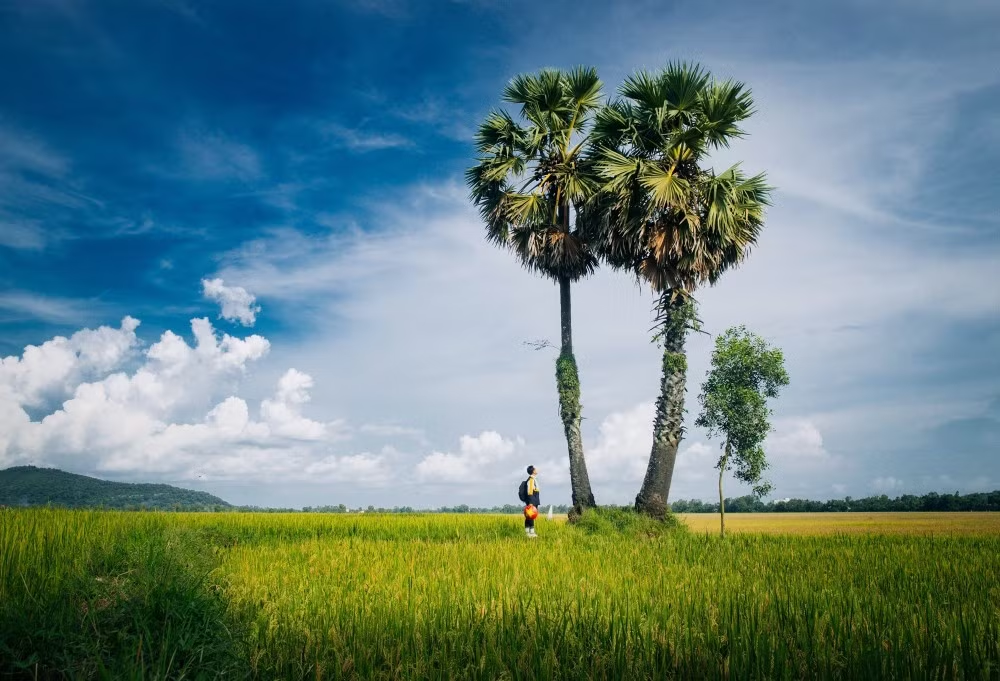
mekong2.jpg
Palm trees – a specialty of An Giang province (Photo: VietnamPlus)

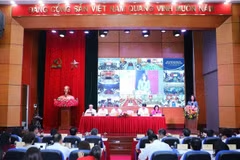
He made the remarks at the conference on tourism promotion in the Mekong Delta 2026, held in Hanoi on April 10, as part of the Vietnam International Travel Mart -VITM Hanoi 2026.

According to the official, the event provided an important platform for localities in the Mekong Delta to showcase their tourism potential and strengths to the Hanoi market and northern provinces while strengthening cooperation and tourism linkages among regions.

​The Mekong Delta boasts abundant tourism resources, supporting a wide range of products, including orchard and river-based ecotourism, nature conservation, research and wellness tourism, cultural and festival tourism, traditional craft villages, and high-end island and coastal tourism. The region also has strong potential for inter-regional tourism connectivity and international cooperation with countries in the Greater Mekong Subregion.

​Experts said that developing distinctive tourism products based on ecological and cultural characteristics is key to organising tourism and maximising its strengths.

​Based on natural conditions and local characteristics, the Mekong Delta can be divided into four tourism clusters. The central cluster, comprising Can Tho, An Giang, Kien Giang, and Hau Giang, focuses on river tourism, commercial tourism, festival tourism, and high-end coastal resorts.

mekong3.jpg
An aerial view of Mang Thit brick-making village in Vinh Long province (Photo: VietnamPlus)

​The Ca Mau Peninsula cluster, including Ca Mau, Bac Lieu, and Soc Trang, highlights visits to the country’s southernmost point, mangrove ecotourism, and cultural experiences associated with the Khmer ethnic community.

​The eastern coastal cluster, consisting of Tien Giang, Ben Tre, Vinh Long, and Tra Vinh, is known for orchard and river tourism, homestays, traditional craft villages, and revolutionary historical sites. Meanwhile, the Dong Thap Muoi cluster, covering Long An and Dong Thap provinces, specialises in inland wetland ecotourism.

​The development of shared tourism products based on each locality’s unique characteristics has helped create a distinctive tourism identity for the entire region.​

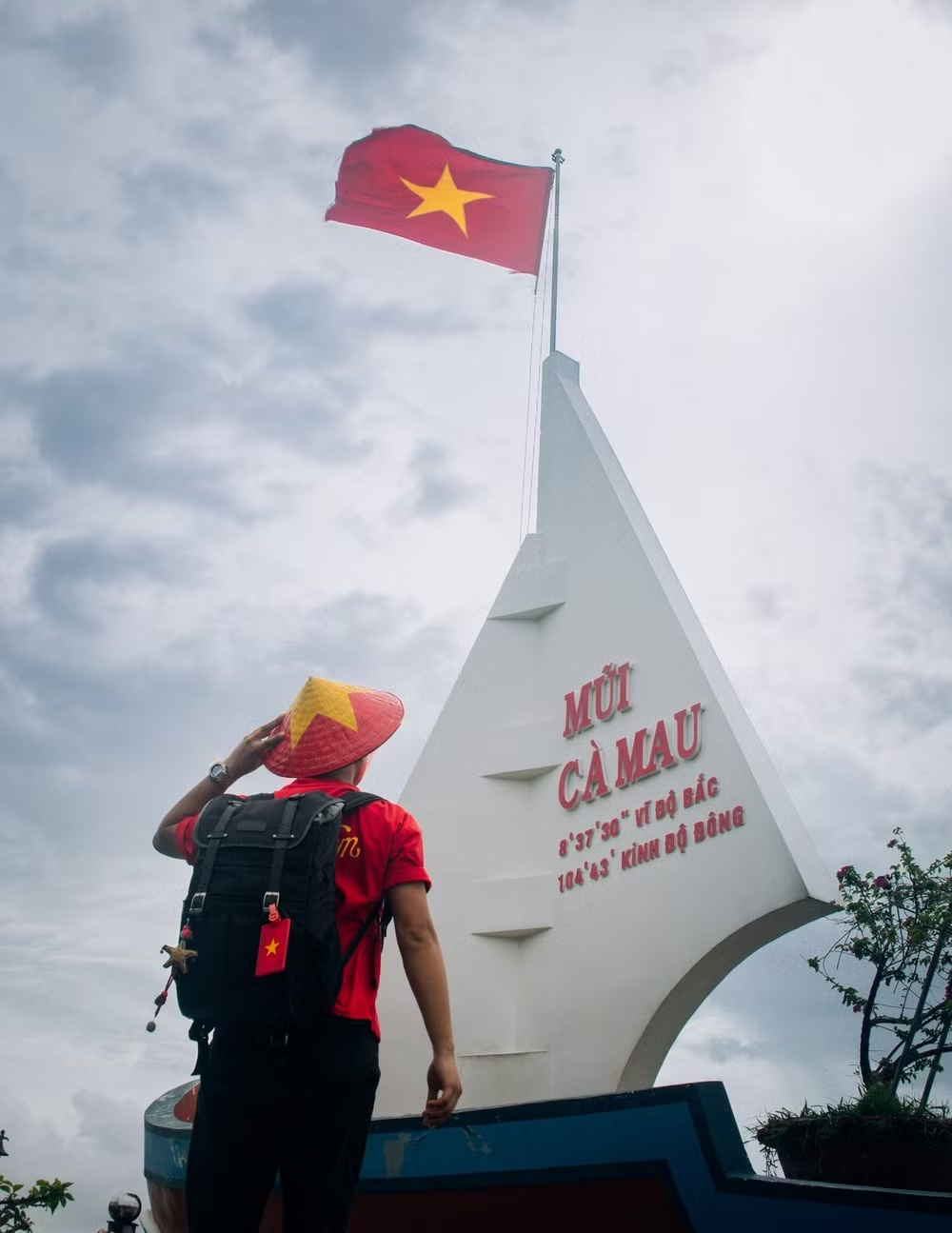
mekong4.jpg
Ca Mau Cape, a special check-in point at the southernmost point of Vietnam (Photo: VietnamPlus)

Within this broader picture, Vinh Long has emerged as a key destination, aiming to improve service quality and competitiveness while promoting its unique cultural values in line with green, smart, and sustainable tourism trends and the Politburo’s Resolution No. 80-NQ/TW on cultural development.

​In particular, the combination of Ben Tre’s “green coconut landscape”, Khmer cultural heritage, and the region’s red brick-and-pottery legacy is expected to create distinctive tourism products that vividly showcase the land and people of the Mekong Delta.

Building sustainable tourism value chain

​Addressing the conference, Deputy Director of the Hanoi Department of Tourism Tran Trung Hieu said that as one of the country’s leading tourism hubs, Hanoi continues to strengthen its role as a gateway for international visitors and a premier cultural destination. The capital aims to welcome 12 million international arrivals in the 2026–2030 period, while expanding cultural, culinary, night-time, agricultural, and smart tourism products.

​Hieu said Hanoi has strengthened tourism cooperation with Mekong Delta localities through promotion programmes, surveys, and partnership agreements. The development of two-way tourism routes connecting the Red River Delta and the Mekong Delta diversifies tourism products and extends visitor stays.

​Participants at the conference also exchanged experience and explored opportunities to work together. The goal is to build a sustainable tourism value chain, improve service quality, and deliver greater benefits to local communities and visitors alike./.


VNA

See more

Located about 200 km from Hanoi, Ta Xua in Son La province is widely regarded as one of the most spectacular cloud-hunting destinations in northern Vietnam. (Photo: VNA)

Ta Xua sets sights on sustainable tourism

Ta Xua is rolling out a campaign titled “Bringing Ta Xua to the world” and aims to establish the image of “Ta Xua - a sea of clouds, majestic nature and Mong cultural identity” during the 2028-2030 period.

The fireworks display by the Portuguese team at the final night of the Da Nang International Fireworks Festival (DIFF) 2026 on July 11, 2026. The Portuguese team claims the championship title. (Photo: VNA)

Da Nang greets over 2.72 million visitors during DIFF 2026

On July 11, the day of the DIFF 2026 finale, accommodation establishments in the city served about 131,000 visitors, an increase of 16% from a year earlier. International visitors totalled 52,400, up 27% year-on-year, while domestic visitors reached 78,600, an increase of nearly 10%.

Under the proposal prepared by the VRC, the tourist train will travel approximately 190 km, connecting Hue, Dong Ha, My Trach, Dong Hoi and Tho Loc stations. (Illustrative photo: VNA)

Hue–Phong Nha tourist train to be launched on September 1

The central province of Quang Tri is working with the Vietnam Railways Corporation (VRC) to complete the project, which is expected to create a distinctive railway tourism product linking major heritage sites and scenic destinations across Vietnam's north-central region while strengthening regional tourism connectivity.

At a working session with the Vietnamese Embassy in Moscow (Photo: VNA)

Quang Ninh targets Russian travellers as arrivals surge

Quang Ninh is looking to build partnerships to steer more Russian visitors to Ha Long Bay and other local attractions. Beyond the UNESCO World Heritage Site of Ha Long Bay, the province holds diverse advantages in marine tourism, cultural attractions, luxury resorts and wellness services.

A ferry boat is carrying passengers in Phu Quoc (Photo: VNA)

Ministry orders tighter ferry safety after Phu Quoc boat capsize

The Vietnam Maritime and Waterway Administration, Vietnam Register, and provincial construction department were instructed to coordinate with the Border Guard, Coast Guard, public security and local authorities to determine the cause of the accident, deal with its aftermath, identify and fix any state management lapses, offer support to victims and their families, and report regularly on the investigation’s progress.

Bac Ninh's tourist attractions draws large crowds after the release of the hit music video Bac Bling. (Photo: VNA)

Beyond the trend: From viral hits to lasting tourism appeal

Across Vietnam and around the world, travel inspired by music and film has become an increasingly influential trend. Cultural blockbusters can provide destinations with extraordinary visibility and a level of publicity that money alone often cannot buy. But attracting visitors is only the beginning.

Vietnamese Ambassador to Bulgaria Nguyen Thi Minh Nguyet (L) and Bulgarian Minister of Tourism Ilin Dimitrov. (Photo: VNA)

Vietnam, Bulgaria seek more substantive, sustainable tourism cooperation

Both sides considered tourism as one of the most promising areas of bilateral cooperation, noting its role not only in promoting economic growth but also in enhancing people-to-people exchanges, mutual understanding and broader collaboration in trade, investment, education and culture.

Russian tourists experience the glass bridge at the TTC World – Valley of Love tourist site in Da Lat, Lam Dong province. (Photo: VNA)

Russian tourist arrivals to Vietnam nearly triple in first half

The Association of Tour Operators of Russia (ATOR) reported that Vietnam ranked fourth among the best-selling package tour destinations in the Russian market in July, capturing a 7.8% market share, up 3.2 percentage points year-on-year. The country overtook Thailand (4.7%) and China (4.3%).

At the award ceremony (Photo: VNA)

VITA Awards 2026 honour 106 winners

The winners were recognised for breakthrough and innovative tourism policies in 2025, best tourism villages, leading destinations, top attractions and parks, standout new tourism products, top travel companies, and best-in-class lodging and dining, among others.

A visitor enjoys hands-on farming activities, including preparing the soil, planting vegetables and watering crops, in Tra Que Vegetable Village in Hoi An Tay ward, Da Nang city. (Photo: VNA)

Vietnam invites travellers on multi-sensory journey

Vietnam's appeal lies not in a single attraction but in the seamless combination of authentic experiences rooted in local culture. From colourful highland markets and traditional festivals to centuries-old craft villages, all remain an integral part of everyday life.

UAE Ambassador to Vietnam Bader Almatrooshi speaks at the conference, themed "Vietnam: A New Destination of Halal Tourism", held in Khanh Hoa province on July 8, 2026. (Photo: VNA)

Vietnam emerging as new destination for Halal tourism

Vietnam will continue to improve institutional frameworks and standards, develop human resources, expand Halal-certified services, strengthen international cooperation, promote business partnerships, and build the country's brand as a new destination for Halal tourism.

Thung Nham Ecotourism Area adopts green tourism practices. (Photo: VNA)

Vietnam pushes circular tourism to drive green growth

Unlike conventional sustainable tourism, circular tourism goes beyond reducing environmental impacts. It embraces a regenerative approach in which every journey contributes to restoring ecosystems, preserving cultural heritage and strengthening the resilience of local communities.