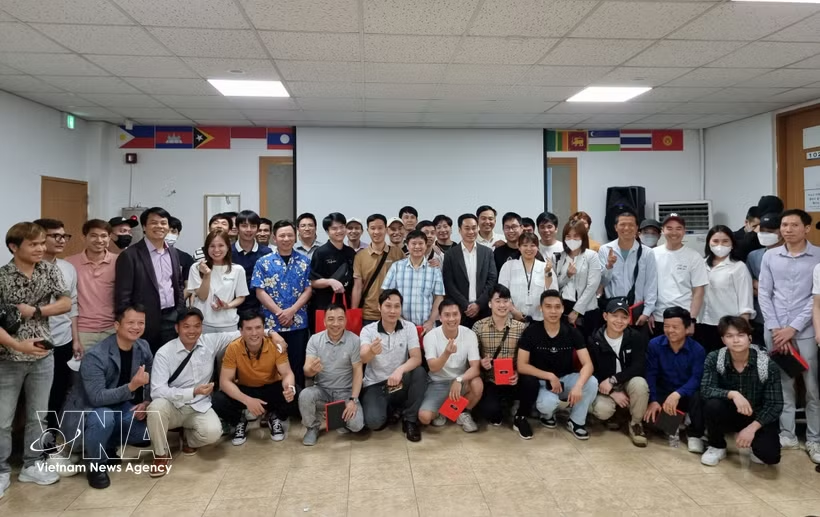
Hanoi (VNA) – Sending Vietnamese workers abroad should be viewed not merely as a means of creating jobs and raising incomes, but also as a channel for developing human resources for the country, Deputy Minister of Home Affairs Vu Chien Thang has said.
In an interview with the Vietnam News Agency on the revised Law on Vietnamese Guest Workers under Contract, recently passed by the 16th National Assembly, Thang said the new law reflected a shift in policy thinking. While overseas employment was traditionally associated mainly with jobs, income generation and poverty reduction, the revised one places greater emphasis on training, skills accumulation and national human resources development.
Under the revised law, priority is given to sending trained workers with professional and technical qualifications abroad so that they can improve their incomes, gain access to advanced technology and modern governance practices, and develop vocational skills, foreign languages, labour discipline and industrial working styles.
This approach is particularly important as Vietnam is accelerating science and technology development, innovation, digital transformation and productivity growth, Thang said, noting that workers exposed to advanced production environments abroad could acquire knowledge, skills and experience that domestic training alone might not provide. When they return, these assets could become an important resource for the domestic economy.
He stressed that the focus should therefore not simply be on how many workers are sent abroad, but on the value they can bring back.
To prevent overseas employment from becoming a one-way flow of human resources, the revised law also strengthens connections between returning workers and the domestic labour market. The Ministry of Home Affairs is studying a strategy on sending Vietnamese workers abroad that will be aligned with the national human resources development strategy and economic diplomacy orientations. It is also researching mechanisms to recognise workers’ qualifications, occupational skills and skills profiles in line with national occupational skills standards.
The official said the greater concern was not a “brain drain” but a waste of human resources. Workers who return with improved technical skills, foreign languages and experience can strengthen the country’s human resources in the medium and long term, provided that their skills are properly recognised and used.
He said the number, structure and destination markets of Vietnamese workers abroad must be balanced with domestic labour demand and the needs of strategic industries in each period. At the same time, Vietnam needs to create sufficient opportunities at home to encourage skilled workers to return. According to Thang, the revised law also marks a shift from responding to existing market advantages to proactively preparing human resources for sectors identified as national development priorities. Depending on development requirements, these could include manufacturing, digital technology, semiconductors, logistics and high-tech agriculture.
He said this “proactive commissioning” of human resources should be closely linked with economic diplomacy, including negotiations and labour cooperation agreements with other countries, as well as programmes combining training, overseas employment and recognition of qualifications.

To ensure that overseas employment truly serves as a training channel, the deputy minister stressed the need to manage the entire process from preparation and training before departure to skills recognition and employment after workers return. Workers’ employment histories, occupations, positions, duration of employment and destination markets should be recorded in specialised databases, enabling their skills to be matched with suitable jobs at home.
He stressed that workers returning from abroad should bring home not only savings but also a recognised “skills asset” that can be effectively used in the domestic labour market. Greater connectivity among employment service centres, local authorities and businesses will help translate overseas experience into value, particularly for foreign-invested enterprises and supporting industries.
Thang also emphasised that prioritising trained workers should not become a barrier for low-skilled ones. Instead, it should encourage Vietnamese workers to improve their skills and qualifications while strengthening the overall quality of the national workforce.
Ultimately, he said the success of the policy should not be measured by the number of workers sent abroad alone, but by the quality of the labour flow, their protection and safety, and, most importantly, what they achieve after returning home. The most important goal would be whether Vietnamese workers are respected abroad and valued when they return, and whether they can contribute their skills, experience and resources to the country’s development./.