Russian President Vladimir Putin (Photo: AFP/VNA)
VNA
Russian President Vladimir Putin (Photo: AFP/VNA) 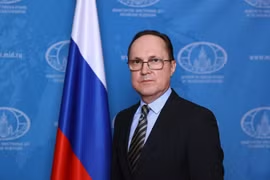
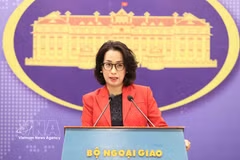
Vietnam's view is that cybersecurity efforts should shift strongly from passive response to proactive prevention, forecasting and preparedness, ensuring cybersecurity in tandem with protecting the essential activities of the economy and people's daily lives.
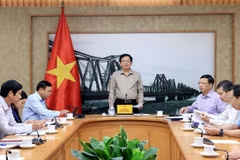
Under the medium-term public investment plan for 2026-2030, the Prime Minister has allocated 70 trillion VND (2.72 billion USD) from the central budget for the national target programmes on new-style rural development, sustainable poverty reduction, and socio-economic development in ethnic minority and mountainous areas before the merger.
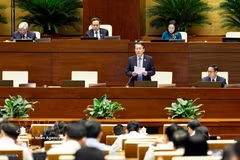
The draft law on protection of infrastructure related to national security should spell out core conditions, including the level of impact on national security, the risk of disrupting essential operations and the need for special protection. He said the Government should set detailed technical criteria, said a deputy from Lam Dong province.
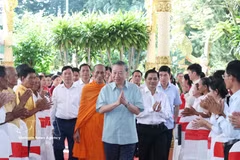
General Secretary of the Communist Party of Vietnam Central Committee and President To Lam attended a ceremony in the southern province of Vinh Long on November 5 to mark the National Great Unity Day (November 18) and Vietnam Culture Day 2026 (November 24).
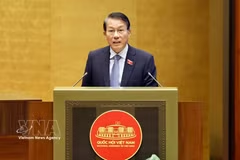
The national target programme on crime prevention and control for 2026–2035 aims to mobilise the combined strength of the political system and society in combating crimes, particularly drug-related offences, with people placed at the centre and the commune level serving as the foundation.
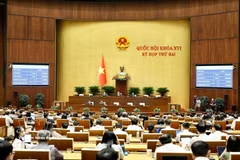
They include the consideration and approval, under simplified procedures, of an NA resolution on special mechanisms and policies for tourism development; and the consideration of investment policy decisions for three expressway projects
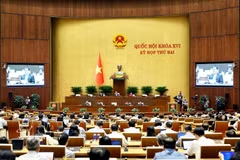
Legislators will debate the consolidated State Budget Law, a bill designed to institutionalise the Party policy on perfecting financial and budgetary institutions, sharpen the allocation and use of public resources, and clear public investment bottlenecks.

Party General Secretary and President To Lam's reception for Lao NA President Sonexay Siphandone, Vietnam attending the 11th Lancang–Mekong Cooperation Foreign Ministers’ Meeting, and the Vietnam-EU Economic and Trade Cooperation Forum 2026 are among news highlights on November 4 evening.
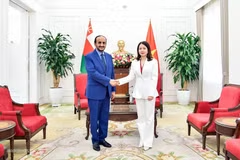
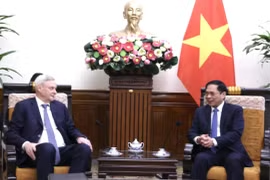
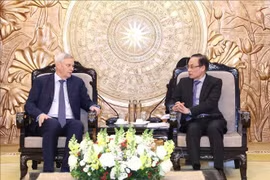
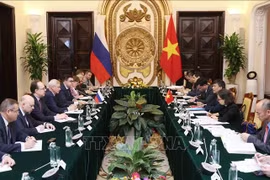
The officials agreed to use the 35th anniversary of diplomatic ties in 2027 as an important milestone to further deepen bilateral relations, enhance economic resilience and diversify partners amid global uncertainties.
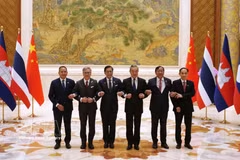
Minister of Foreign Affairs Le Hoai Trung suggested a resilient and innovative Mekong–Lancang region be built, regional connectivity strengthened, coordination between the MLC and other regional and Mekong cooperation mechanisms boosted, cooperation in addressing non-traditional security challenges fostered, and people placed at the centre of the MLC.
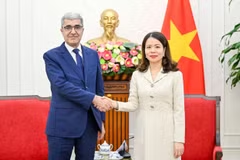
Officials agreed that their foreign ministries should continue working together to promote high-level and other-level mutual visits and meetings; strengthen their role as focal points in supporting the countries' ministries, agencies and localities to step up economic, trade and investment partnerships; and make better use of the potential and complementary strengths of the two economies.
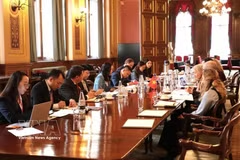
The 11th Vietnam-UK Strategic Dialogue was co-chaired by Vietnamese Deputy Minister of Foreign Affairs Le Thi Thu Hang and UK Parliamentary Under-Secretary of State for Indo-Pacific at the Foreign, Commonwealth and Development Office Rosalie Winterton in London on November 3.
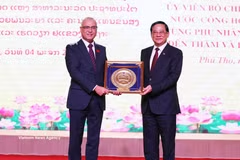
Phu Tho hopes to step up delegation exchanges and share experience in Party building, local governance, and socio-economic management and development with Lao localities.
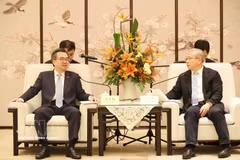
The CPV official encouraged reputable and capable Zhejiang-based enterprises to increase investment in Vietnam, particularly in areas they are strong at, including infrastructure development, the digital economy and the green economy.
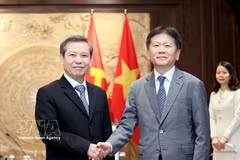
Speaking highly of the RoK's achievements in combating corruption, Chairman of the Commission for Internal Affairs Le Minh Tri stressed that as Vietnam pursues its target of double-digit economic growth in 2026 and subsequent years, anti-corruption efforts must not only focus on detecting and handling violations but also contribute to development.
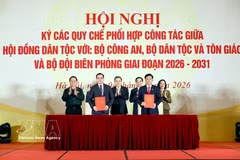
National Assembly (NA) President Tran Thanh Man said the coordination programme aims to link legislative work, appraisal and supervision with State management, improve the legal and policy framework, and address obstacles to policy implementation in ethnic minority, mountainous and border areas. It also seeks to strengthen information sharing and inter-agency coordination, improve living conditions for ethnic minority communities and reinforce public trust in the Party and State.
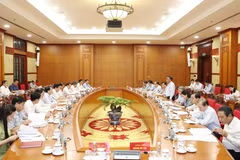
To ensure that the projects are completed on schedule and meet quality standards, Standing Member of the Party Central Committee’s Secretariat Tran Cam Tu requested relevant agencies continue enhancing their sense of responsibility and coordination throughout implementation.
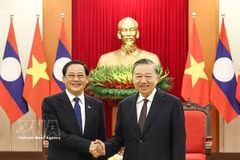
The two leaders expressed satisfaction with the strong development of the great friendship, special solidarity, comprehensive cooperation and strategic cohesion, which have grown increasingly substantive across Party, State, local and people-to-people channels.

The following is a brief review of the day’s events as reported by the Vietnam News Agency.
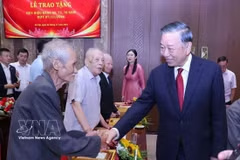
Top leader To Lam said the Party Central Committee expects much from the capital and has granted it breakthrough mechanisms, meaning greater responsibility and higher determination. Hanoi must lead not only in economic growth but also act as a standard-bearer in Party building and rectification, a model in renewing thinking and administrative reform, a leader in preserving and spreading Thang Long-Hanoi cultural values, and a driver of better living standards.