Hanoi (VNA) -- The 14th National Party Congress reaffirmed that culture is not only the spiritual foundation of society but also an endogenous resource and soft power for national development.
The Politburo’s Resolution No. 80-NQ/TW sets a target for cultural industries to contribute 7% of GDP and calls for the development of 5–10 national brands in the sector, with performing arts identified as one of the key pillars.
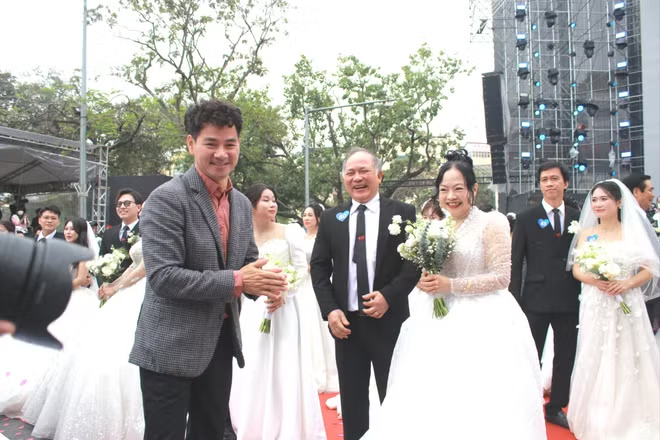
People’s Artist Nguyen Xuan Bac, Director of the Performing Arts Department under the Ministry of Culture, Sports and Tourism, spoke with VietnamPlus about the role of performing arts in economic development, from the perspective of sustainable growth and cultural industries.
‘Awakening’ economic value of performing arts
Reporter: Performing arts are increasingly seen as a driver of economic growth. What is your view on this issue?
People’s Artist Nguyen Xuan Bac: For a long time, performing arts were primarily viewed as a spiritual domain serving socio-cultural life, requiring State support to survive and develop.
This perspective has historical grounding. However, the new era calls for a broader and deeper approach, aligned with the changes of the creative economy.
As Vietnam enters a new development phase in which the country seeks sustainable growth amid global creative economy trends, performing arts should no longer be seen merely as a “budget-consuming” sector. Instead, it should be recognised as a distinctive economic resource and a soft yet powerful development driver.
Approaching performing arts as an economic force does not mean crude commercialisation or losing artistic identity. It means fully recognising the socio-economic and cultural values they generate and adopting appropriate policies for investment and development, while preserving artistic integrity.
This approach stems from the profound understanding of the Party and State's major viewpoints on culture: Culture is not merely the spiritual foundation of society, but must truly become an intrinsic strength and a crucial driving force for national development.
Within this line of thinking, performing arts – a place where creativity, emotion, and identity converge – is a vibrant space where cultural values transform into social values, human values, and economic values.
From this understanding, we can view performing arts not only through a cultural lens but also from a broader perspective – the perspective of creative economy. And when this perspective is broadened, the power of performing arts will become clearer and stronger.
Reporter: More specifically, what kind of value chain can performing arts generate?
People’s Artist Nguyen Xuan Bac: Performing arts are not just about conveying emotions, they are about producing value.
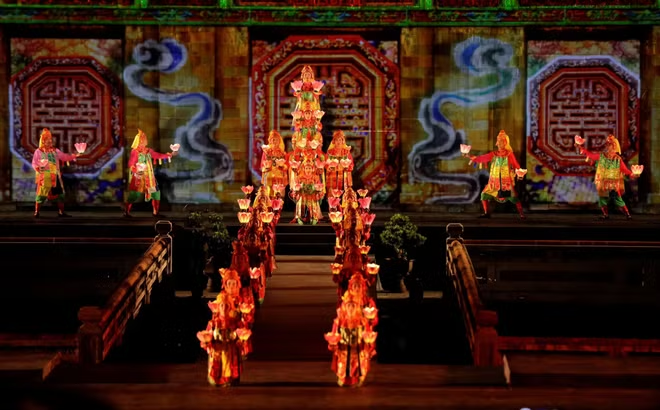
They create intangible yet powerful value through experiences, emotions, memories, and community connections. A performance, festival, or artistic programme not only offers aesthetic value but also activates a chain of services, including tourism, hospitality, transport, and media, while generating jobs and stimulating cultural consumption.
In this sense, performing arts are a vital link in the creative economy. Each performance is a point where culture meets economic activities.
When businesses view the arts as an investment space—supporting creativity and building brand value—both sides benefit. This creates a “win-win” ecosystem where arts gain resources and businesses enhance their identity and reputation.
A new, sustainable resource
Reporter: What is the significance of investing in performing arts within Vietnam’s growth model?
People’s Artist Nguyen Xuan Bac: As natural resources become limited and competition intensifies, growth must shift from resource-based to knowledge- and creativity-based models.
Performing arts, with high creative content and low material consumption, represent a “green,” “clean,” and sustainable resource. Investing in arts is therefore a strategic choice for national development.
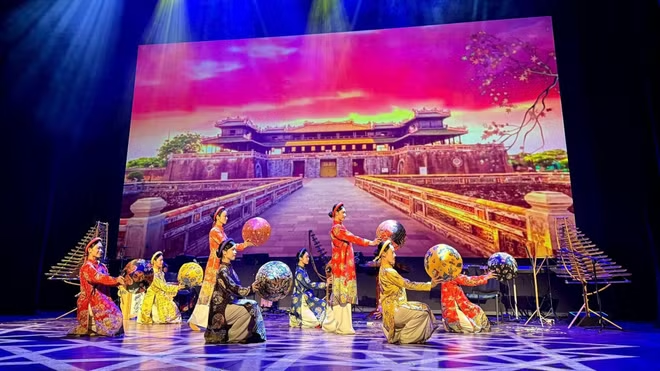
In tourism, the question is no longer just “where to go” but “what to experience.” Performing arts have become central to cultural tourism, extending visitor stays, increasing spending, and differentiating destinations.
Conversely, tourism provides a stable market for arts, forming a mutually beneficial relationship.
Nurturing human capital
Reporter: What role do performing arts play in developing human resources?
People’s Artist Nguyen Xuan Bac: Performing arts nurture creativity, emotional intelligence, and innovation - qualities essential for a modern workforce.
They also help build a creative labour market where knowledge, skills, and identity are core assets. This contributes to a flexible and adaptive workforce, which is critical for long-term competitiveness.
Moreover, arts provide entertainment, relieve stress, and replenish mental energy, fostering a motivated and productive society.
The State’s guiding role
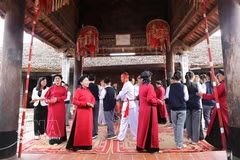
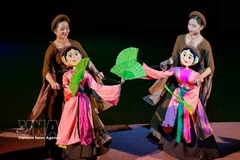
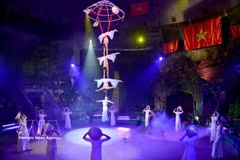
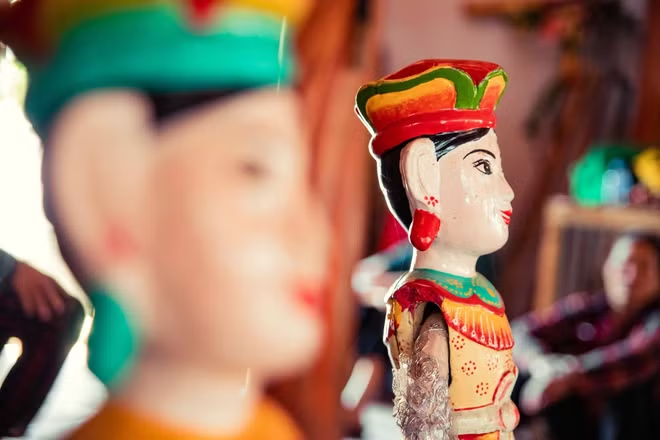
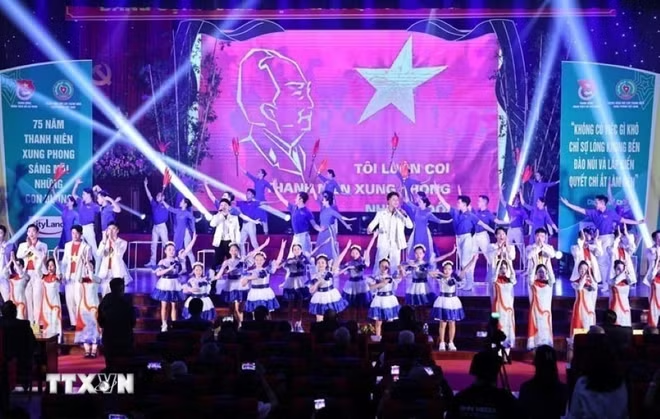
Photo: Performances at the Hanoi Puppetry Festival 2025. (Photo: VNA)
Reporter: What about investment in performing arts?
People’s Artist Nguyen Xuan Bac: Development today is not just about GDP growth but also about quality, identity, and competitiveness. Performing arts are a profound soft driver of that growth.
Proper recognition and investment in this field will enhance public well-being, contribute to economic growth, and strengthen national branding. It is an investment in the country’s long-term future.
Reporter: Could you cite international examples?
People’s Artist Nguyen Xuan Bac: Globally, performing arts are integral to creative economies.
In the US, Broadway is both a cultural icon and a major economic sector. In the UK, performing arts are closely linked with cultural industries and tourism. In the Republic of Korea, they are part of a strategic cultural export model.
These examples show that when properly positioned, performing arts generate not only revenue but also brand value and long-term competitiveness.
Reporter: What role should the State play?
People’s Artist Nguyen Xuan Bac: The State should not replace the market but guide development through strategies.
Performing arts must be integrated into broader cultural industry, tourism, and creative city development strategies. Only when properly placed within the overall development framework can performing arts fully realise their role as an economic driving force, and only then will art truly become a "national resource."/.
Reporter: Thank you very much!