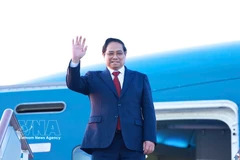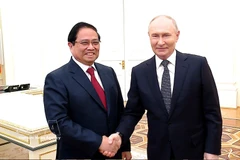
Hanoi (VNA) - With nearly 40 productive engagements on the sidelines of the Expanded BRICS Summit 2025 and meetings with senior leaders of countries and international organisations, Prime Minister Pham Minh Chinh’s official visit to Brazil has significantly contributed to elevating Vietnam’s global role and status.
It also deepened the country's ties with traditional partners and friends while mobilising resources, especially in science and technology, to diversify markets and boost exports to promising destinations, said Deputy Foreign Minister Nguyen Minh Hang.
Speaking to the Vietnam News Agency (VNA), Hang said the PM’s July 4–8 trip aimed to further implement Vietnam’s foreign policy of independence, self-reliance, and diversification and multilateralisation of external relations. It conveyed Vietnam’s image as a trusted partner in the international community, adding new dimensions to strategic partnerships and opening a new chapter of cooperation that meets the needs and interests of both countries, especially in a time of complex global developments.
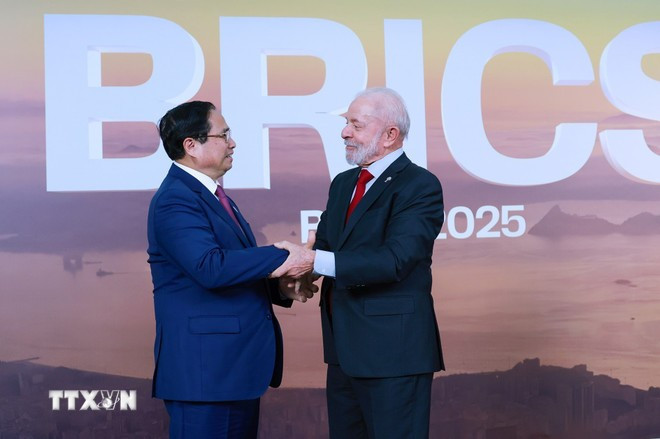
On the bilateral front, the PM held important talks with President Lula da Silva and other Brazilian leaders and met with leading Brazilian business groups. These engagements resulted in tangible outcomes aligned with the aspirations of both countries, contributing to peace, stability, cooperation, and development both regionally and globally.
According to Deputy FM Hang, the visit further deepened political ties and multifaceted cooperation between the two nations, particularly as Brazil assumes an increasingly important role in regional and global affairs. The two sides agreed on major directions for future cooperation, particularly in the areas of economy, trade, and investment. Trade turnover, which stood at just 1.5 billion USD in 2011, has now reached nearly 8 billion USD, accounting for almost 35% of Vietnam’s total trade with Latin America. Brazil is currently Vietnam’s largest trading partner in the region. This growth underscores the strategic complementarity between the two economies and the need for strategic-level collaboration to maintain and enhance growth momentum.
On this occasion, President Lula da Silva expressed support for Vietnam in concluding negotiations for a Free Trade Agreement (FTA) with MERCOSUR as well as a bilateral FTA between Vietnam and Brazil by 2025.
One of the key highlights of the visit was agricultural cooperation. With concrete progress in opening agricultural markets, the two sides agreed to further facilitate access to high-quality agricultural products from both nations for their people and the wider region. The two countries also committed to strengthening cooperation in the coffee sector, advancing the establishment of a coffee production and export alliance, and building a joint coffee brand that promotes the coffee cultures of both nations.
In line with the principle of “optimising cost and harmonising benefits,” investment in local agricultural production and processing is emerging as a new direction for bilateral cooperation, serving both domestic consumption and exports to third markets. On this occasion, Vietnam and Brazil announced the first shipments of Vietnamese tra-basa (pangasius) and tilapia to Brazil, and the first batch of Brazilian beef to Vietnam. These products mark a starting point for broader agricultural and aquaculture market access and export cooperation in the near future.
Other potential areas of cooperation, including national defence and security, science and technology, high-quality human resource development, mineral exploration and trade, digital transformation, semiconductors, and artificial intelligence (AI), are also expected to see positive progress aligned with each country’s development priorities.
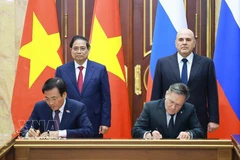
During the visit, the two countries signed numerous cooperation agreements. Notably, several memoranda of understanding were signed on science and technology, innovation, and digital transformation, along with business deals between leading corporations from both countries valued at hundreds of millions of USD.
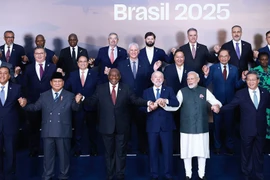
At the Expanded BRICS Summit, PM Pham Minh Chinh delivered a strong message in support of multilateral cooperation and reaffirmed the role of developing countries in global governance. He proposed several practical and impactful initiatives aligned with the interests of developing nations, including cooperation in health care, environmental protection, climate change response, pandemic resilience, and global financial reform. He also advocated for enhanced South-South economic connectivity and the application of AI and technology for sustainable development, while promoting equitable access to finance, technology, and health care for developing countries.
Leaders from participating countries and international organisations praised Vietnam’s proposals and lauded the country’s proactive and responsible contributions to strengthening solidarity, cooperation, and dialogue to address global challenges.
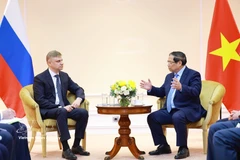
On this occasion, Hang said, the PM held numerous bilateral meetings with leaders of BRICS members and partners, developing countries, and international organisations, paving the way for new cooperation directions in politics, economy, science and technology, and investment. These efforts aim to promote practical, in-depth, and effective partnerships, contributing to peace, stability, and prosperity in the region and the world.
To realise the outcomes of the visit, PM Chinh has instructed relevant ministries, sectors, and localities to prioritise the implementation of the Vietnam–Brazil Joint Statement and the Action Plan for the Strategic Partnership agreed upon by the two countries’ senior leaders in March 2025. Vietnam and Brazil will continue high-level and working-level exchanges to coordinate effective implementation of these agreements, with goodwill, determination, and strong political commitment.
In addition to traditional areas of cooperation, agriculture will remain a focus moving forward. Vietnamese ministries, sectors, localities, and businesses are expected to work proactively with Brazilian partners to review and address existing obstacles to market access. Both sides are also working toward the early signing of a bilateral FTA and an agreement on long-term food security for Brazil, along with agreements on investment protection, double taxation avoidance, and visa facilitation for citizens of both countries. Vietnam will also actively cooperate with other MERCOSUR members to accelerate negotiations and promptly conclude a Vietnam–MERCOSUR FTA.
These efforts are aligned with the continued effective implementation of the Politburo’s Resolution No. 59 on proactive international integration in the new context. As the world undergoes profound changes, Vietnam’s active participation in multilateral mechanisms, most recently the BRICS, serves to harness international resources for national development, diversify partnerships, and enhance the country’s overall strength, she said.
On that basis, the Deputy Foreign Minister noted, Vietnam will continue to elevate its voice and role in global affairs, contribute to strengthening solidarity among developing countries, and promote inclusive, comprehensive multilateralism grounded in the UN Charter and international law./.
Vietnam–Brazil strategic partnership
Prime Minister Pham Minh Chinh and his spouse will lead a high-ranking delegation of Vietnam to attend the expanded BRICS summit and engage in bilateral activities in Brazil from July 4 – 8. Vietnam and Brazil officially established diplomatic relations on May 8, 1989. Over 35 years since the establishment of diplomatic ties, Vietnam-Brazil relations have been continuously strengthened and developed.