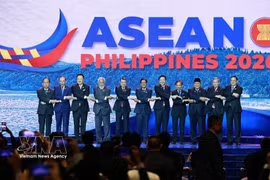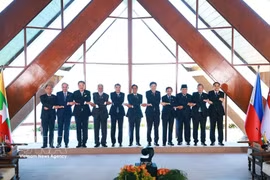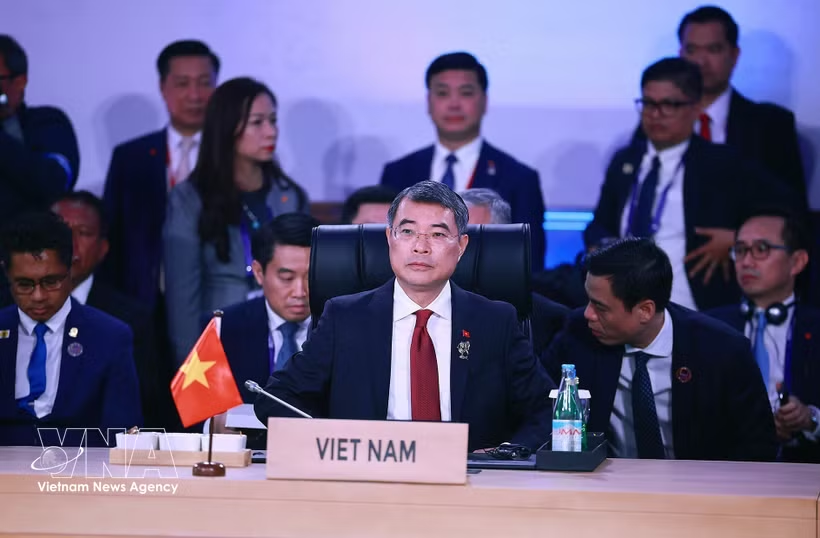
Hanoi (VNA) — Prime Minister Le Minh Hung and a high-level Vietnamese delegation returned to Hanoi late on May 8, concluding their trip to attend the 48th ASEAN Summit in Cebu, Philippines from May 7 to 8.
Speaking to the press following the visit, Deputy Foreign Minister Dang Hoang Giang said that the Vietnamese delegation made important contributions to the summit’s success, reflecting the foreign policy orientation set out by the 14th National Congress of the Communist Party of Vietnam, which continues to place ASEAN at the centre of Vietnam’s regional engagement, as well as its commitment to proactive, positive and responsible contributions to ASEAN Community-building process.
Making his first appearance at an ASEAN Summit as Prime Minister, Hung put forward a number of proposals and initiatives aimed at strengthening ASEAN solidarity and resilience in both the current context and the longer term. Vietnam’s proposals focused on safeguarding peace and stability as the foundation for sustainable development and improving the well-being of ASEAN citizens.
The deputy minister noted that Vietnam advocated a comprehensive approach, including peace, security and stability, stronger intra-bloc unity, enhanced regional trade and economic connectivity, the removal of trade barriers within the bloc, expanded external partnerships and greater cooperation in energy security, food security and human security. Vietnam’s proposals received strong support and positive assessments from ASEAN member states for both their substance and timeliness.
Based on contributions from Vietnam and other member countries, ASEAN adopted the Leaders’ Statement on the Response to the Middle East Crisis.
Giang said that the statement emphasised strengthening ASEAN solidarity and mutual support among member states, enhancing inter-sectoral coordination, early warning systems and emergency communication mechanisms, and accelerating cooperation in energy connectivity, food security and consular assistance, particularly for migrant workers in affected areas.
ASEAN leaders agreed that while addressing immediate difficulties remained an urgent priority, the bloc must also continue implementing its long-term agenda in a serious and consistent manner. Political-security cooperation, he stressed, will remain central to maintaining regional peace, security and stability through stronger unity, greater political trust and the effective promotion of ASEAN-led mechanisms grounded in international law and multilateralism.
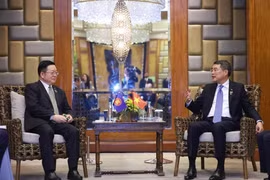
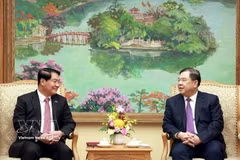
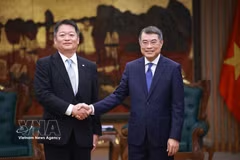
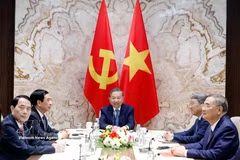
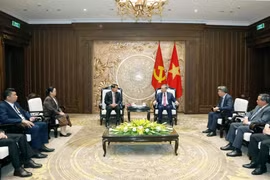
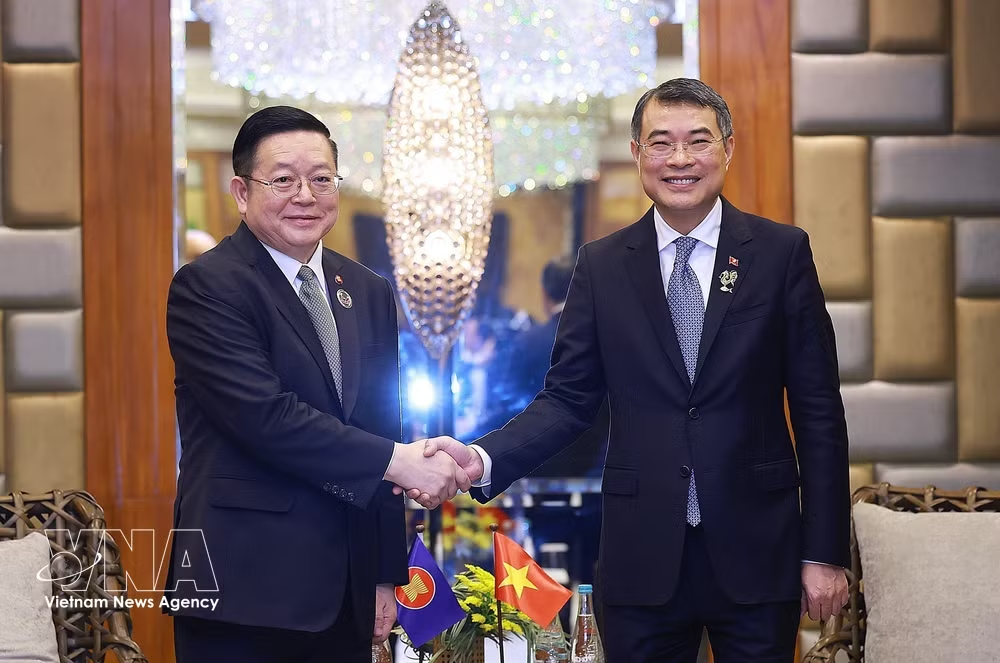
On the sidelines of the summit, PM Hung also held a series of bilateral meetings with ASEAN leaders, ASEAN Secretary-General Kao Kim Hourn and President of the Asian Development Bank (ADB) Masato Kanda. Though brief, the meetings were described as substantive and focused on resolving bottlenecks and advancing practical cooperation.
Giang highlighted three notable outcomes from these engagements. First, the meetings helped establish personal ties between PM Hung and regional leaders, thereby strengthening political trust between Vietnam and ASEAN partners. They expressed their desire to work closely with Vietnam, which they described as an important and trusted partner amid a rapidly changing regional and international landscape.
Second, the meetings reaffirmed a shared determination to deepen bilateral cooperation through concrete measures. Discussions focused on strengthening political trust and expanding collaboration in trade, investment, defence-security, education, tourism and culture, while also prioritising cooperation in emerging areas such as infrastructure connectivity, green transition, circular economy, semiconductors and artificial intelligence.
In a trilateral exchange with Laos and Cambodia, the three Prime Ministers agreed to direct relevant agencies to effectively implement the outcomes of the February 2026 meeting among the leaders of the three ruling parties, with the goal of creating new development space and elevating trilateral cooperation to a more substantive level.
The ADB, for its part, reaffirmed its commitment to remaining a trusted development partner of Vietnam and supporting the country’s resource needs in its new phase of development.
Third, the official said ASEAN partners highly valued Vietnam’s growing role within the bloc and the broader international community. During discussions on regional and global developments, particularly the Middle East crisis, leaders agreed on the need for closer coordination within ASEAN and the United Nations framework to uphold ASEAN centrality in addressing regional and international challenges.
ASEAN Secretary-General Kao Kim Hourn affirmed that after more than 30 years of membership, Vietnam has become one of ASEAN’s key members, adding that a strong and prosperous Vietnam would make important contributions to the ASEAN Community-building process.
Giang noted that in just over 30 hours, PM Hung participated in nearly 20 bilateral and multilateral activities, producing substantive and practical outcomes while conveying the image of a dynamic, innovative and strongly integrating and rising Vietnam - a proactive and responsible member of the ASEAN Community. The visit also helps create favourable foundations and fresh momentum for deepening and expanding Vietnam’s relations with its partners in both breadth and depth in the period ahead, he added./.