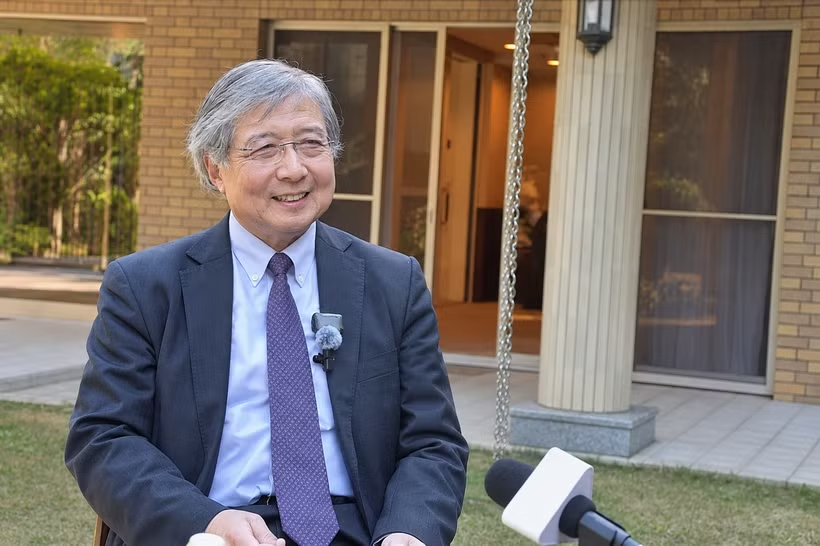
Tokyo (VNA) – High political trust and a substantive cooperation model are a solid foundation for Vietnam-Japan ties to keep growing and contribute positively to the region, Toshiro Nishizawa, senior fellow at the University of Tokyo and fellow at the Asian Development Bank Institute, told the Vietnam News Agency.
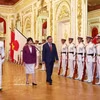
Nishizawa said the most important outcome of General Secretary of the Communist Party of Vietnam Central Committee and President To Lam’s recent official visit to Japan was the Vietnam–Japan Joint Vision Statement, a document that signals deep political trust as both leaders cast the two countries as top-tier, long-term partners that share interests and support each other’s growth.
He said bilateral ties are at their closest ever. Regular dialogue between high-ranking leaders since 2023 has built the basis for that intensity.
Beyond political trust, Nishizawa lauded a results-oriented cooperation model. The two countries focus on areas where they can work together while respecting differences in their stances. The memoranda of understanding and documents exchanged during the visit also signal a drive toward concrete results.
On diplomacy, he noted that Vietnam backed Japan’s efforts to realise its updated Free and Open Indo-Pacific Vision within limits consistent with ASEAN Outlook on the Indo-Pacific. The statement also underscored international law, including the United Nations Charter and global and regional peace, stability and cooperation. It is a restatement of the core principles underpinning the bilateral Comprehensive Strategic Partnership for Peace and Prosperity in Asia and the World, he said.
Nishizawa argued that mutual respect and political trust let both sides scale substantive cooperation in areas of overlapping interest while maintaining their own foreign policy views and orientations.
On Vietnam’s place in Japan’s foreign policy, he said Vietnam is now one of Japan’s most important Asian partners. The Joint Vision Statement sharpens that position as Japan names Vietnam a priority partner in both its foreign policy and new growth strategy.
In his view, Vietnam’s role is driven by economic and strategic factors alike. Deeper ties with Vietnam fit Japan’s push to deepen and diversify its Asian partner network.
Regionally, he expects the visit to push Japan to do more on shared economic and diplomatic priorities. Science, technology, innovation and skilled workforce cooperation could extend to neighbouring countries via frameworks such as the ASEAN-Japan Co-Creation Initiative for Artificial Intelligence.
He welcomed both leaders’ reaffirmation of ASEAN solidarity and centrality, and pointed to the Mekong sub-region, especially the Vietnam-Laos-Cambodia triangle, as a promising launchpad for broader cooperation. That, he said, will support connectivity, narrow development gaps and deliver shared gains in economic security and resilience.
The expert applauded the leaders’ pledge to keep pushing regional financial cooperation under the ASEAN+3 process, adding the visit shows that momentum for concrete outcomes will hold despite domestic and external shifts in Japan. The Joint Vision Statement sets direction, while rollout will be the real test of whether it is comprehensive.
According to him, converging interests will let existing projects proceed alongside new ones. A review and selection process, under which some projects may be dropped, will help both sides concentrate on suitable cooperation areas that can deliver practical outcomes./.