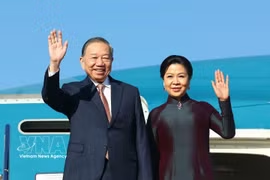
Hanoi (VNA) – The official visit to Japan by General Secretary of the Communist Party of Vietnam Central Committee and President To Lam, his spouse and a high-ranking Vietnamese delegation from November 8 to 11 has delivered substantive results and opened a new chapter in bilateral relations, with both sides pledging to create fresh momentum for cooperation and growth.
During the visit, the two countries reached broad consensus on important issues aimed at deepening their Comprehensive Strategic Partnership.
Turning commitments, agreements into new momentum
After more than half a century of diplomatic relations, Vietnam-Japan ties are enjoying their strongest period of development, marked by growing substance and trust. At meetings and exchanges during the visit, the two sides expressed satisfaction with the comprehensive and effective progress made since the relationship was upgraded to a Comprehensive Strategic Partnership in 2023, with nearly 80% of commitments and agreements implemented or making significant progress.
A key outcome was the adoption of the Vietnam-Japan Joint Vision Statement entitled “Partners Advancing Together and Co-creating for Mutual Benefit, High-quality Growth, Strategic Autonomy and Resilience,” driving the implementation of existing commitments and expanding effective cooperation, supporting both countries’ development and strategic autonomy goals.
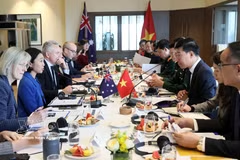
Japanese Prime Minister Takaichi Sanae affirmed that Vietnam is a priority partner in Japan's foreign policy and in implementing its new growth strategy. Japan will facilitate deeper participation by Vietnamese enterprises in Japanese supply chains, while ensuring energy security and reserves, and accelerating LNG-fired power projects in Vietnam.
General Secretary and President Lam affirmed that Vietnam consistently regards Japan as one of its leading strategic partners and a sincere and trusted friend in pursuing sustainable development goals, and that Vietnam supports Japan in playing an active role in the region and the world and successfully implementing its new growth strategy.
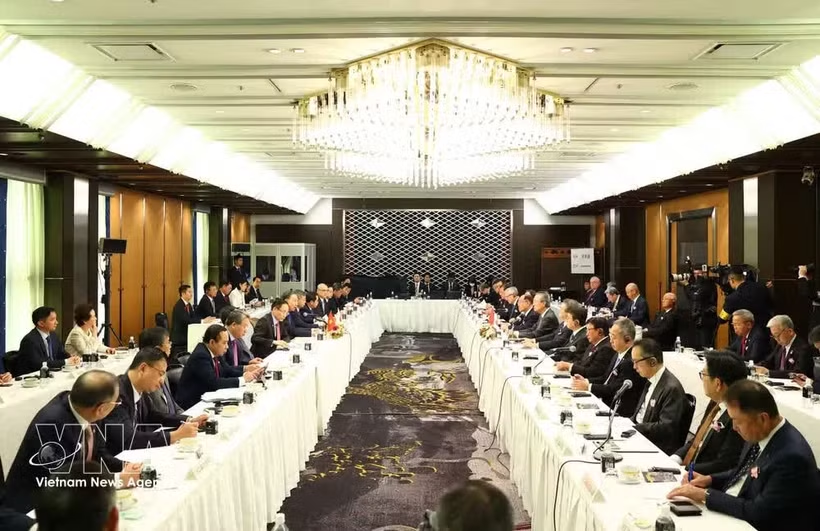
Addressing the Vietnam-Japan Public-Private Forum on Economic, Science and Technology Cooperation, themed “Co-creating technologies, co-building future value chains”, the top Vietnamese leader affirmed Vietnam's commitment to building an independent and self-reliant economy with deep international integration.
Vietnam is committed to improving its institutions, developing infrastructure, and enhancing the quality of its workforce. The country aims to maintain a stable, transparent, and favourable investment and business environment while protecting the legitimate rights and interests of investors. Additionally, Vietnam seeks to create favourable conditions for Japanese enterprises, scientists, and partners to cooperate, invest, innovate, and pursue long-term development in the country.
“The success of Vietnam-Japan cooperation in the coming period should be measured by the technologies developed, products created, businesses growing together and generations of highly qualified human resources trained,” he stressed.
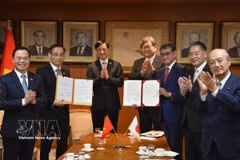
Economic cooperation remained a major driving force during the visit, with agreements signed between ministries and businesses, translating broad cooperation orientations into concrete outcomes.
The forum also saw the exchange of several cooperation documents, including a MoU between FPT Group and the Vietnam Low-Level Economic Alliance (LAEP), and the Kaga National Strategic Special Zone Promotion Association, to develop low-altitude economy initiatives; a MoU between Sun Group and Japan’s SBI Holdings on long-term, multi-sector cooperation; and another MoU between the Vietnam National Tea Corporation (Vinatea) and Marubeni Foods Corporation to develop a tea value chain in Moc Chau.
During a visit to Meiko Group in Kanagawa prefecture, a leading global printed circuit board manufacturer with 9,000 employees that has operated in Vietnam since 2006, the top Vietnamese leader called on the company to support Vietnamese universities in training semiconductor engineers and helping Vietnamese enterprises join global supply chains.
On this occasion, Meiko Group and Vietnam National University, Hanoi discussed cooperation in developing practical training programmes and supporting internships and scientific research. Phu Tho province also presented Meiko with an investment registration certificate for a printed circuit board manufacturing project at the Da River Left Bank Industrial Park.
General Secretary and President Lam also held high-level discussions with the Japan Business Federation (Keidanren), major corporations and enterprises, opening up new opportunities for cooperation in technology, infrastructure and long-term investment. These engagements reflect the scale of bilateral economic ties and indicate a shift towards sectors that can generate new growth drivers and enhance Vietnam's long-term development capacity.
Strengthening foundations of lasting friendship
In his policy speech at the National Diet of Japan, the top Vietnamese leader expressed gratitude for the valuable support extended by the Japanese Government, parliament and people to Vietnam over the years, from official development assistance for post-war recovery and major infrastructure projects such as Nhat Tan bridge, Noi Bai International Airport's Terminal 2 and the Ben Thanh-Suoi Tien urban railway to assistance during the COVID-19 pandemic and in responding to natural disasters.
Outlining major directions for future cooperation, he called on the two countries to build new development capabilities based on knowledge, technology and innovation; strengthen resilience and adaptability; promote green and sustainable growth; and contribute to peace and stability in the region.
President of the House of Councillors Sekiguchi Masakazu described the bilateral relationship as a “silk of friendship” woven across generations. He affirmed that the Japanese parliament will give its strongest support to implementing high-level agreements and weaving new threads of friendship between the two countries.
Upon arriving in Tokyo, General Secretary and President Lam met with representatives of the Vietnamese intellectual and expert community in Japan, which currently includes more than 260 professors and doctors and nearly 1,000 highly qualified experts working at leading Japanese research institutes and universities.
Highlighting the spirit of the conclusion of the fourth plenum of the 14th Party Central Committee on attracting and valuing talent, he called on overseas Vietnamese intellectuals to promote the spirit of Resolution No. 57 on breakthroughs in science and technology development, innovation and national digital transformation, and serve as a bridge between the two countries.
Cooperation between Vietnamese and Japanese localities has also deepened, becoming an important pillar of the Comprehensive Strategic Partnership. During the visit, the two sides agreed to expand cooperation in local development, labour, healthcare, culture and tourism, while promoting human resources development and people-to-people exchanges. They also agreed to speed the groundbreaking of the Vietnam-Japan University, launch the Vietnam-Japan Tourism Year 2027–2028, hold the third Vietnam-Japan Local Cooperation Forum in 2027, and step up healthcare and elderly care cooperation towards an early signing of a bilateral social insurance agreement.
At meetings with former chairman of the Japan-Vietnam Parliamentary Friendship Alliance Nikai Toshihiro, and governors of Tokyo, Niigata, Yamanashi, Mie, Wakayama and Kanagawa, among other localities, General Secretary and President Lam called for stronger cultural exchanges, tourism cooperation and engagement among younger generations to reinforce the friendship between the two peoples.
He affirmed that Vietnam will create favourable conditions for Japanese local businesses to cooperate, invest and operate successfully in the country.
Nikai Toshihiro and the Japanese governors pledged continued support for local-level cooperation, particularly in areas with considerable potential such as tourism, agricultural technology, labour, energy and exchanges between localities.
The top Vietnamese leader’s visit represented an active step in implementing the foreign policy set out by the 14th National Party Congress. Its outcomes would promote mutual trust, sincerity and shared benefits, deepen political confidence, strengthen economic cooperation, advance breakthroughs in science and technology, and bring the peoples of Vietnam and Japan closer together./.