Reform, political will - key for Vietnam to overcome challenges: Singaporean researcher

The key for Vietnam to overcome the upcoming challenges lies in a clear understanding of the need for reforms, paired with strong political will, according to Professor Bilveer Singh, deputy head of the Department of Political Science at the National University of Singapore.

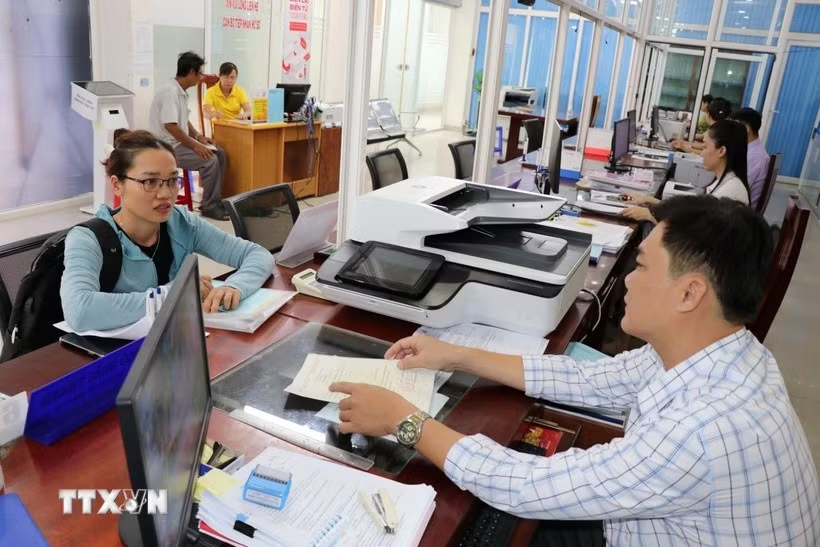
Administrative procedure processing at the Public Service Centre of Tra Vinh commune, Vinh Long province. (Photo: VNA)

Singapore (VNA) – The key for Vietnam to overcome the upcoming challenges lies in a clear understanding of the need for reforms, paired with strong political will, according to Professor Bilveer Singh, deputy head of the Department of Political Science at the National University of Singapore.

Speaking to a Vietnam News Agency correspondent in Singapore, the researcher emphasised that Vietnam is in a favourable position, as it can learn from the development experiences of other countries in the region.

Prof. Singh held that to some extent, Vietnam’s reforms, including those at the two levels of government, are not entirely new. Singapore has successfully implemented them, and countries such as Malaysia, Thailand, and Indonesia have also done so.

Therefore, one of the essential steps for Vietnam is to learn from the experiences of its neighbouring countries - avoiding past mistakes, addressing shortcomings, and embracing the positive elements to move forward, he said.

Prof. Singh observed that there are several challenges Vietnam will face in the implementation of its policies. Domestically, Vietnam must ensure income distribution is equitable, minimise discrimination, and maintain national unity.

Regionally, Vietnam must keep pace and compete effectively in the increasingly competitive global landscape. Given the importance of its geopolitical and geo-economic position, Vietnam needs to enhance its global competitiveness while managing its relations with major powers. In an environment of rising competition, for continued success, Vietnam must maintain political stability, a solid economic foundation, high competitiveness, an upgraded education system, a young and diligent workforce, and a legal framework aligned with international standards.

To achieve these objectives, Prof. Singh stated that Vietnam requires capable, fair, and impartial leaders who enjoy the support of the people. The key, he stressed, is that both the leadership and the people must understand why reforms are necessary and pursue these goals with strong political will, ensuring that reforms are not in vain./.

VNA
See more

Deputy Prime Minister Le Tien Chau (R) receives Dr. Marcin Czepelak, Secretary-General of the Permanent Court of Arbitration (PCA), in Hanoi on November 18, 2026. (Photo: VNA)

Deputy PM receives PCA Secretary General in Hanoi

Speaking highly of the achievements of the PCA’s Hanoi Office over its four years of operation, Deputy Prime Minister Le Tien Chau expressed his hope that the first international hearing will soon be held in Vietnam, paving the way for the country to become a trusted venue for dispute settlement, chosen by countries in the region and around the world.

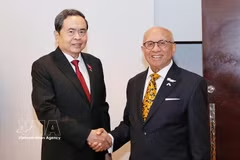
NA President Tran Thanh Man concludes the working visit to the Philippines to attend AIPA-47 on November 18 evening. (Photo: VNA)

NA President concludes successful visit to attend AIPA-47

NA President Tran Thanh Man’s visit to AIPA-47 in the Philippines, along with its agenda and substantive discussions, reflected Vietnam’s determination to further promote the NA’s legislative, supervisory and representative roles in upholding the people’s will and aspirations, while advancing legal harmonisation and creating a favourable institutional framework for inclusive and sustainable development.

The seventh policy dialogue between the Communist Party of Vietnam and the Left Party (Die Linke) of Germany in Hanoi on November 18, 2026 (Photo: VNA)

Communist Party of Vietnam, Germany's Left Party hold seventh policy dialogue

A Vietnamese official noted that although the two parties operate in different historical, political, economic and social contexts, they share common concerns over peace, social progress, the protection of workers’ legitimate rights and interests, inequality reduction and sustainable development promotion.

An overview of a NA Standing Committee’s discussion on November 18 (Photo: VNA)

Tightening regulations on new tobacco products, organ and tissue donation, transplantation

Regarding the draft law amending and supplementing a number of articles of the Law on Prevention and Control of Tobacco Harms, Minister of Health Dao Hong Lan said the Government incorporated deputies’ opinions, clarifying the definitions of e-cigarettes, heated tobacco products and other new tobacco products, including products that do not use nicotine-containing materials.

At the meeting between General Secretary of the Communist Party of Vietnam Central Committee and President To Lam and Mexican President Claudia Sheinbaum in Shenzhen, China, on November 18 (Photo: VNA)

Top Vietnamese leader meets with Mexican President in China

General Secretary of the Communist Party of Vietnam (CPV) Central Committee and President To Lam suggested Vietnam and Mexico step up cooperation in politics, economy, trade, investment, culture, education, tourism and traditional medicine, while enhancing coordination at inter-regional forums.

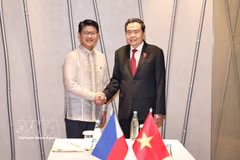
NA President Tran Thanh Man (R) and Speaker of the House of Representatives of the Philippines Faustino “Bojie” G. Dy III (Photo: VNA)

Vietnam, Philippines push parliamentary cooperation via bilateral, multilateral channels

Vietnam and the Philippines agreed to boost bilateral parliamentary cooperation as well as coordination in multilateral inter-parliamentary forums. On global and regional issues of shared concern, they pledged to maintain ASEAN’s common stance on the East Sea issue and make active, responsible contributions to developing an effective and substantive Code of Conduct in the East Sea (COC).