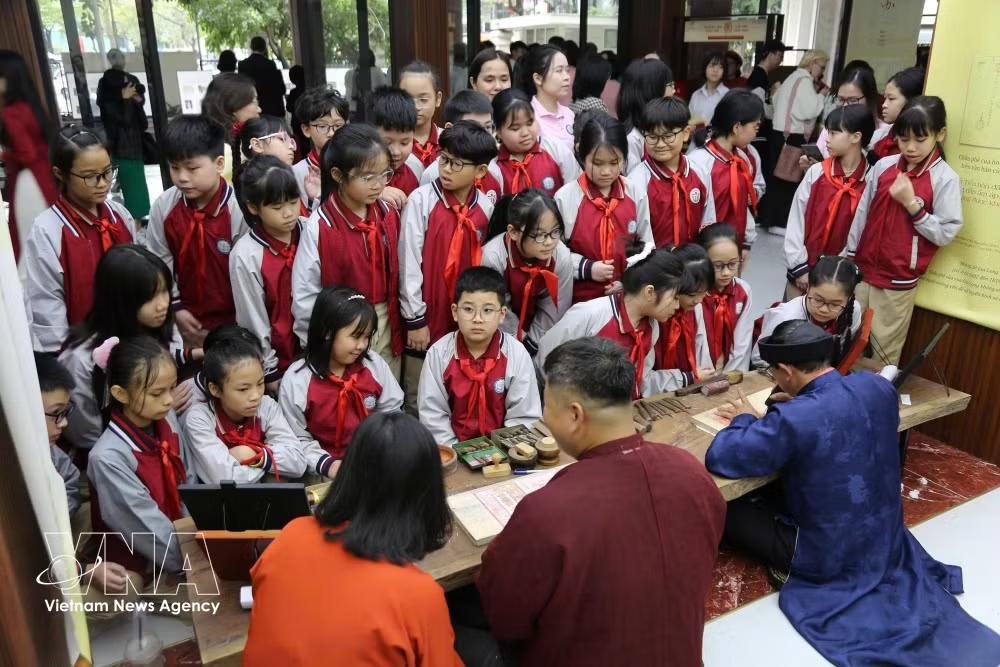
Hanoi (VNA) - Under Vietnam’s cultural development strategy, the archival sector is set to gain renewed momentum, with a mission to bring the nation’s traditional culture closer to the public, particularly younger generations.
Culture is regarded as the spiritual foundation of society, a vital endogenous resource, and a key driver of the country’s sustainable development. In the era of digital transformation, strategies to promote the value of archival materials must be integrated into the broader national cultural development agenda, with the development of data infrastructure, digital services, and content-based cultural industries.
These priorities are highlighted in Resolution No. 80-NQ/TW of the Politburo on the development of Vietnamese culture, a landmark policy document expected to open up new opportunities for the country’s archival sector.
In this context, how can valuable documentary heritage, long preserved in archival repositories, be transformed into a resource that enriches culture and serves society? Dang Thanh Tung, Director of the State Records and Archives Department, shared his views in an interview.
Archival sector set to gain fresh momentum
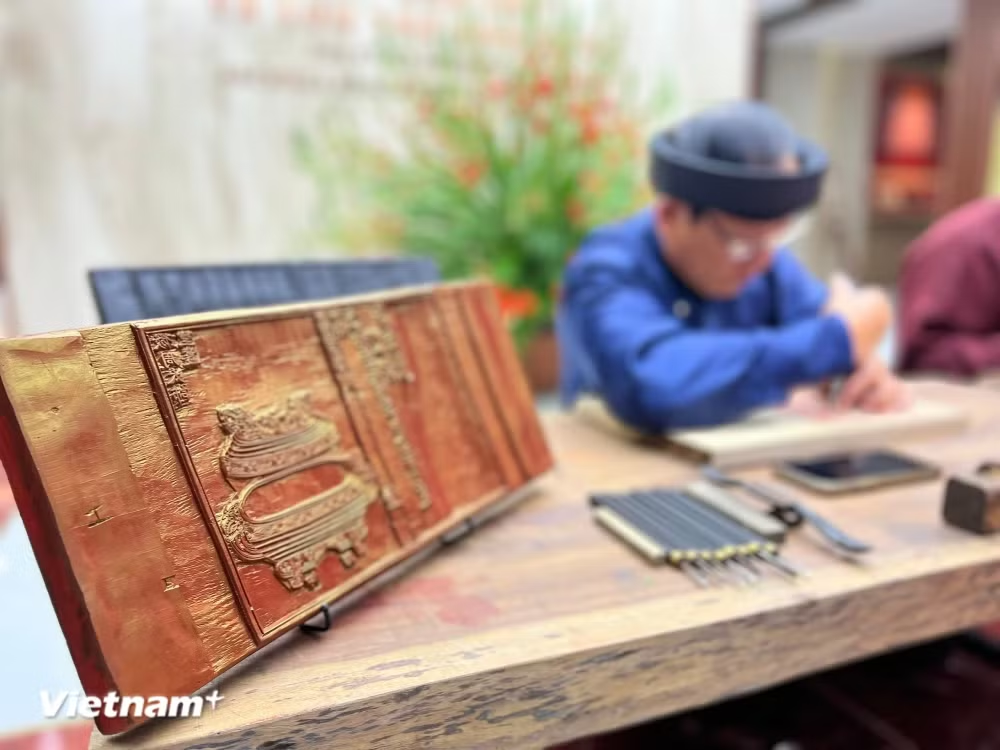
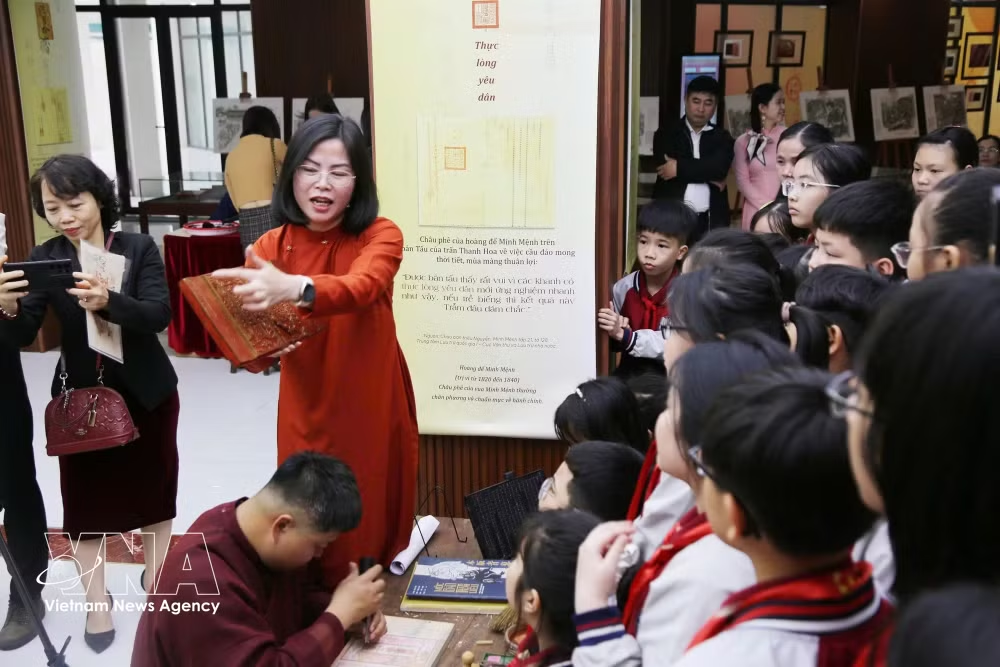
– Resolution No. 80-NQ/TW has been described as a guiding light for Vietnam’s archival sector. The exhibition space titled “Admiring Imperial Annotations – Preserving Woodblock Imprints”, recently launched in Hanoi, is seen as a tangible example of translating the Resolution into action. Could you tell us more about this initiative?
Dang Thanh Tung: Resolution No. 80 serves as a strategic guide for cultural activities in general, including efforts to promote the value of archival materials. Like many other sectors, archival institutions hope not only to showcase these materials but also, together with the media and relevant organisations, to help spread the essence of Vietnamese culture and strengthen the country’s soft power.
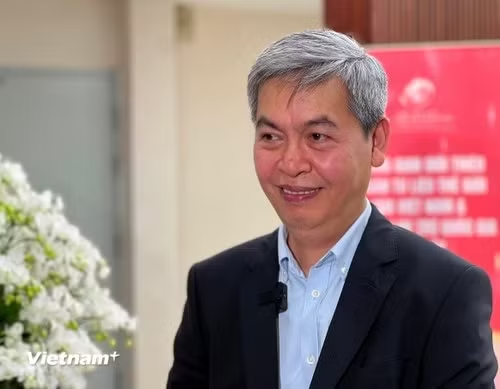
I hope that, under the cultural development orientation set out in Resolution No. 80, archival agencies will receive greater attention and support from both the State and society. This will enable us to fulfil our mission of preserving cultural heritage, passing it on to Vietnamese youth and the children of diplomats and foreign representatives living in Vietnam.
Moreover, when combined with Resolution No. 57-NQ/TW on digital transformation, the archival sector will be able to make even greater strides forward. The digitisation of records and the conversion of paper documents into electronic formats will significantly enhance access to and use of archival resources.
Our responsibility is to bring traditional cultural values to the public by every possible means, especially to young people, thereby helping to realise the major policies and orientations of the Party and the State outlined in Resolution No. 80.
The launch of this exhibition also carries a broader message. In many countries around the world, documentary heritage preserved in archives is given a prominent and dignified space that reflects its cultural significance.
Although our headquarters at 12 Dao Tan Street in Hanoi was designed as an administrative office rather than an exhibition venue, we have chosen not to wait for ideal conditions before taking action. Instead, we are making the best possible use of existing resources to contribute to cultural revitalisation and to implement the Party’s vision for the development of national culture.
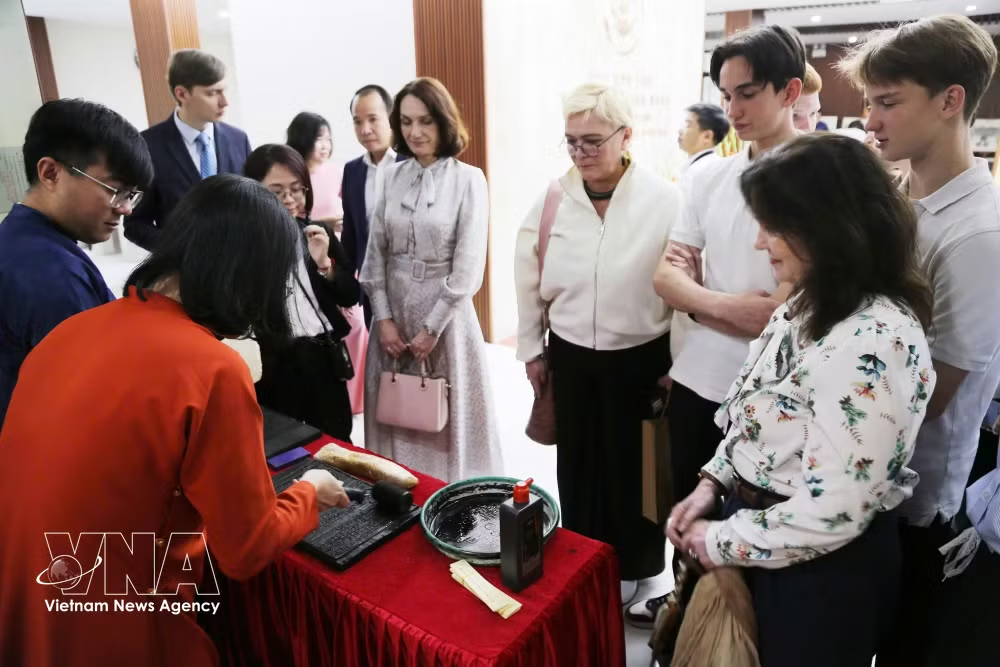
– The exhibition attracted many international visitors, including Russian schoolchildren. Could you share your vision for promoting Vietnamese cultural values to international audiences through the Department’s activities?
Dang Thanh Tung: The State Records and Archives Department has a long history of international cooperation with archival institutions in countries such as Russia, France, China, the United States, Japan and the Republic of Korea.
One principle we often emphasise is that archives are not simply about preservation; they pass on cultural values.
Young people are naturally our primary audience. They are eager to learn and discover. By providing them with authentic accounts of Vietnam’s heritage, we hope to foster a deeper appreciation among Vietnamese students and international students.
In the long term, this effort will become a valuable resource. I believe there are future diplomats, policymakers and leaders among the international students, who will have positive memories and an accurate understanding of Vietnam’s cultural traditions.
This, in turn, will help strengthen Vietnam’s international partnerships and attract greater goodwill and support from friends around the world, in line with the Party and State’s policy of being a friend to all nations.
Passing on traditional cultural values
– Looking ahead, how does the Department plan to transform national archival materials into a resource that promotes culture and serves society?
Dang Thanh Tung: When engaging with younger generations, we must present traditional cultural values in formats and through channels that are relevant and accessible to them. Meeting this challenge is one of the key responsibilities entrusted to archival institutions.
Digital transformation is not simply about scanning documents and converting them into electronic files. More importantly, we need to develop practical and engaging ways of bringing archival content to the public, especially school pupils and university students.
To that end, the Department will work closely with educational institutions in Hanoi and across the country, as well as with the Ministry of Education and Training. We aim to integrate archival resources into history education through documentaries, short videos and online platforms that provide accessible information about key historical events and national traditions.
In doing so, we will also contribute to a task highlighted in Resolution No. 80: using authoritative and verified information, alongside other sectors and agencies, to counter misinformation, distorted narratives and unverified content circulating online.
This responsibility is also stipulated in the 2024 Archives Law, which authorises archival agencies to publish official information derived from archival materials when necessary.
– What are the Department’s plans for developing cultural products based on archival materials?
Dang Thanh Tung: Under a task recently assigned to the Ministry of Home Affairs by the Central Steering Committee for Science, Technology, Innovation, and Digital Transformation, the State Records and Archives Department will work with the Ministry of Public Security, particularly Department C06, to develop and operate a national digital platform for records and archives by September 2026.
The platform will bring together both historical archival materials and records generated through the activities of state agencies, ensuring that data management follows the core principles of being accurate, complete, clean, up to date, consistent, and shared.
It will become an important source of authoritative information serving a wide range of sectors and supporting Vietnam’s development in the digital era.
– Thank you for your insights./.