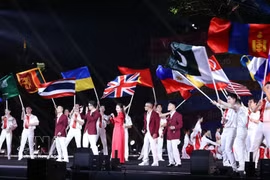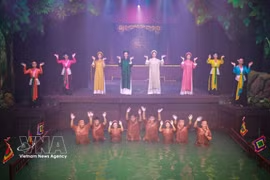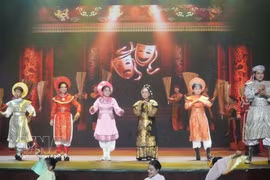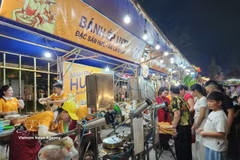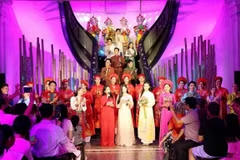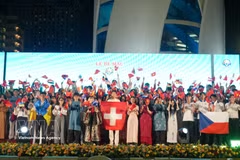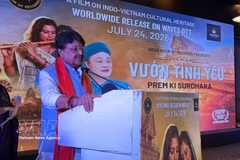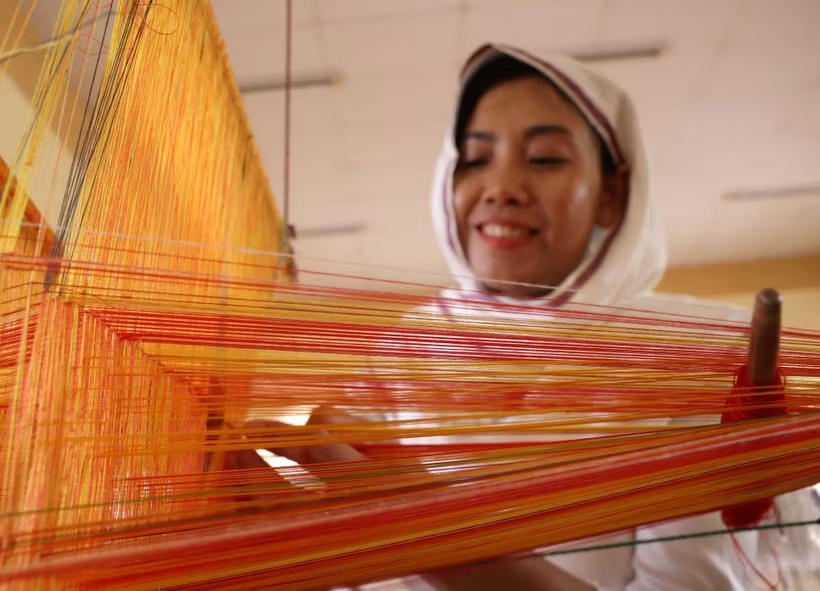
Hanoi (VNA) – Resolution No. 06-NQ/TW, issued by the Politburo on May 19, 2026, assigns a broader role to Vietnam's diplomacy and cultural diplomacy in particular. Beyond safeguarding national interests, they are expected to reflect Vietnam's mettle, identity, and standing, helping build trust, respect and influence in the international community.
To turn that vision into reality, Deputy Prime Minister Pham Thi Thanh Tra signed Decision No. 1306/QD-TTg on July 17, approving the Strategy for Cultural Diplomacy through 2030, with a vision to 2045. The strategy implements Resolution No. 06 alongside other key Party resolutions on cultural development and international integration, positioning culture as a driving force for Vietnam's deeper global engagement and sustainable development.
Former Deputy Minister of Foreign Affairs Ambassador Pham Quang Vinh said the Party's recent foreign policy resolutions form a unified strategic framework that is closely linked with the country's broader development agenda. They provide the foundation for shifting Vietnam's external engagement from a mindset of "participation, adaptation and reception" to one of "proactive creation, development and contribution."
According to the ambassador, Vietnam should tell the story of a modern nation with confidence, presenting itself as an active contributor to global development by sharing its rich cultural heritage, the tradition of peace-loving and respect for international law.
That vision reflects the guidance of Party General Secretary and State President To Lam, who has repeatedly stressed that culture should be integrated into every aspect of diplomacy. Cultural diplomacy, he said, should serve not only as a tool of foreign relations but also as a guiding principle.
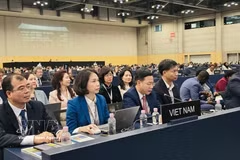
Speaking at the national conference on disseminating Resolution No. 06-NQ/TW on materialising the foreign policy of the 14th Party Congress, held June 11, the top leader called for efforts to transform soft power into greater consensus and support from the international community, while proactively absorbing the finest achievements of human culture to enrich and further develop the nation's cultural heritage.
The new strategy also sets specific targets. Vietnam currently has more than 70 UNESCO-recognised heritage titles, the highest number among ASEAN countries, providing a strong foundation for developing a sustainable "heritage economy."
By 2030, the country aims to secure at least five additional international recognitions, establish at least 10 nationally branded cultural and heritage tourism destinations with global appeal, and open one to three new Vietnamese cultural centres overseas.
Looking further ahead to 2045, Vietnam aims to become one of the region's leading centres for culture and creativity, gain at least 15 more global titles, rank among ASEAN's top three countries and enter the world's top 30 in the Soft Power Index.
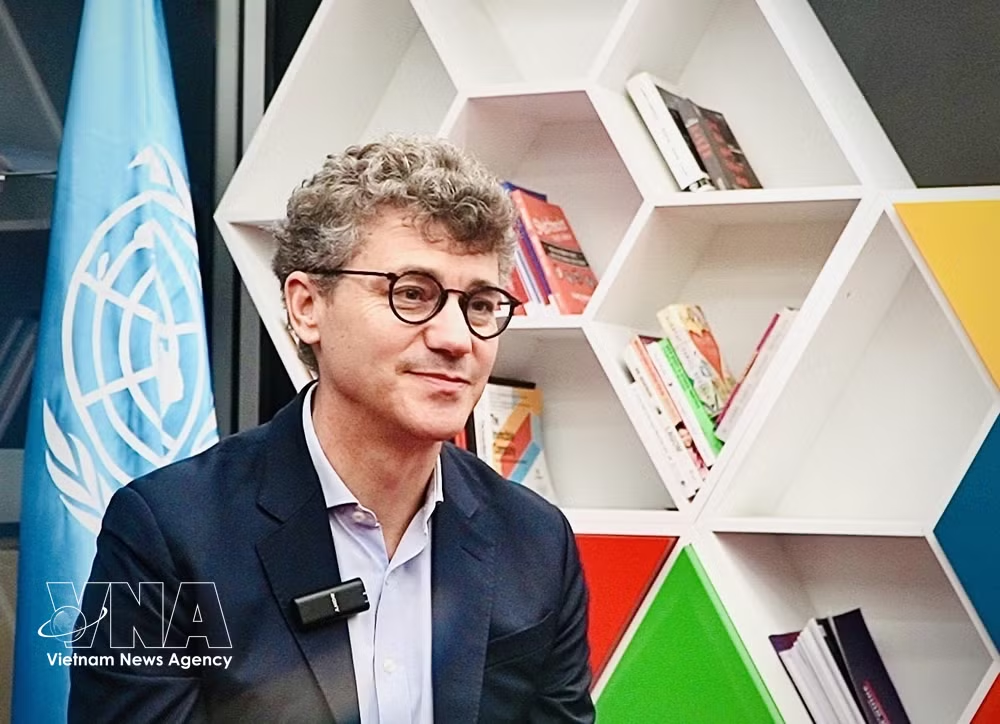
Jonathan Wallace Baker, UNESCO Representative to Vietnam, praised the country's vibrant living heritage and its growing international contributions. He highlighted Vietnam's proposal for an International Decade of Culture for Sustainable Development, adopted at the 43rd session of the UNESCO General Conference with co-sponsorship and support from 71 countries.
However, the ambitious goals also present significant challenges. As Vietnam seeks to transform heritage into a driver of economic growth, it must balance conservation with commercial development.
Baker said Vietnam should focus on developing creative ecosystems rather than isolated projects, linking creativity with skills development, market access and sustainable employment. He also called for greater investment in education, training and creative spaces, and stronger public-private-community partnerships.
Cultural diplomacy must increasingly extend into the digital sphere.
Nguyen Van Thuat, Deputy Director of the Department of Grassroots Information and External Information under the Ministry of Culture, Sports and Tourism, noted that although Vietnam has nearly 80 million internet users, 76 million social media accounts and 127 million mobile connections, the country remains largely a consumer rather than a creator of digital platforms. This leaves it vulnerable to misinformation, artificial intelligence-generated content and deepfake technologies.
He said Vietnam therefore needs a new generation of cultural diplomacy professionals who combine knowledge, diplomatic expertise and digital skills, including the ability to use AI and big data effectively.
Former Deputy Foreign Minister Ambassador Nguyen Phuong Nga also stressed that the boundary between domestic and external affairs should be narrowed, with strong public consensus at home serving as the foundation for promoting Vietnam's image abroad.
The implementation of Resolution No. 06 alongside the cultural diplomacy strategy sends a clear message: by combining its rich cultural heritage with proactive diplomacy, innovation and digital transformation, Vietnam would strengthen its competitiveness on the global stage./.