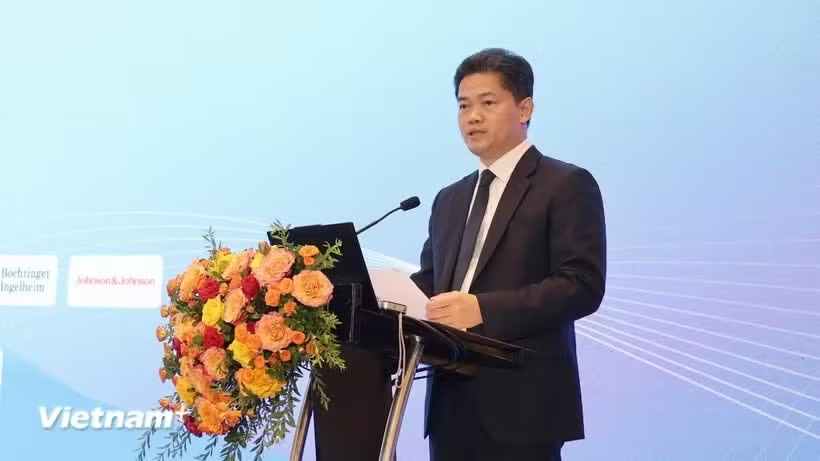
Hanoi (VNA) – Scientific research must become one of the most important drivers of innovation and development in Vietnam’s health sector, with research outcomes ultimately serving patients and the people, Standing Deputy Minister of Health Vu Manh Ha has said.
Speaking at a national scientific conference on research and applications in medicine in Hanoi on August 28, Ha said rapid advances in artificial intelligence, big data, biotechnology, precision medicine and genetic technology are profoundly changing modern medicine.
Meanwhile, growing healthcare needs, changing disease patterns, non-communicable diseases, population ageing, mental health issues and emerging health risks are placing new requirements on the sector.
“We should not only ask what research can achieve, but more importantly whether its results can be applied, where they can be applied, how many patients can benefit and what changes they can bring to the health system,” Ha said.
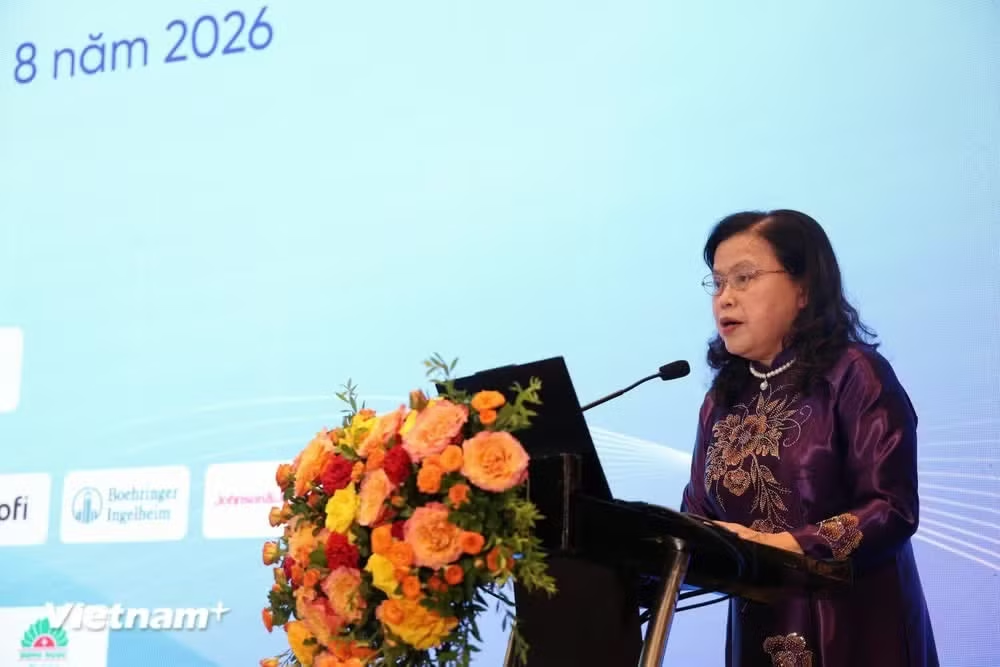
Assoc. Prof. Nguyen Thi Xuyen, President of the Vietnam Medical Association (VMA), said scientific research, technological development and innovation in healthcare and medicine have made significant contributions in recent years, helping Vietnam’s health sector move closer to global standards and delivering substantial social benefits.
Sci-tech research, transfer and applications in several fields are also gradually enabling Vietnam to join global clinical development programmes, she said.
The conference, jointly organised by the Ministry of Health and the VMA, aimed to advance the implementation of the Political Bureau’s Resolution No. 57-NQ/TW on making breakthroughs in science – technology development, innovation and national digital transformation, and Resolution No. 72-NQ/TW on breakthrough measures to strengthen the protection, care and improvement of public health, Xuyen said.
It featured five sessions and 25 scientific presentations on health policy, medical advances, disease prevention, non-communicable diseases and community healthcare. Discussions focused on connecting research, training and medical practice, applying research outcomes to health management, improving healthcare quality, and reforming financial policies.
Participants also discussed how to mobilise resources for reaching targets of Resolution No. 72-NQ/TW, including universal healthcare coverage, stronger preventive care, reduced out-of-pocket payments, regular health check-ups and screening, stronger grassroots healthcare, and the goal of free basic medical examination and treatment by 2030.

Ha called for solutions to shorten the gap between research and practical application, stressing that a research result should not stop at publication in a scientific journal but move through a full cycle of evidence assessment, technology transfer, application, evaluation and continued refinement.
The deputy minister also stressed that patients must remain at the centre of scientific and technological innovation. New technologies should improve diagnostic accuracy and treatment effectiveness, reduce complications and hospital stays, and ultimately improve patients’ quality of life. Research must also address priority issues of the health sector and the country.
A modern health system cannot develop sustainably without a strong scientific foundation, Ha stressed, affirming that the Ministry of Health will continue promoting scientific research, innovation and the application of science and technology.
He called on hospitals, research institutes, universities and other health-sector units to regard scientific research not as an additional task but as an integral part of their professional activities and the whole sector’s development./.