Skilled workforce key to advancing Vietnam’s marine economy: insiders

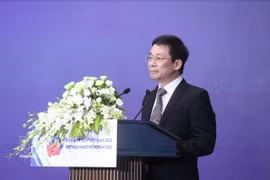
According to Nguyen Tien Thao, Director General of the Higher Education Department under the Ministry of Education and Training, said 13 institutions in Vietnam offer training related to marine resources and the marine economy. In 2026, 44 disciplines enrolled students, up 18.9% from 2025, while successful applicants increased 16.1% to 5,153. However, training remains limited in scale.

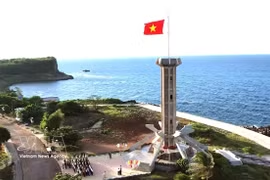
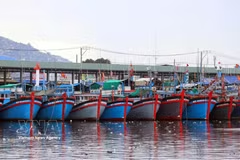
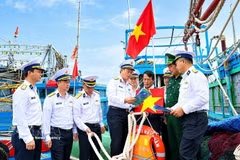
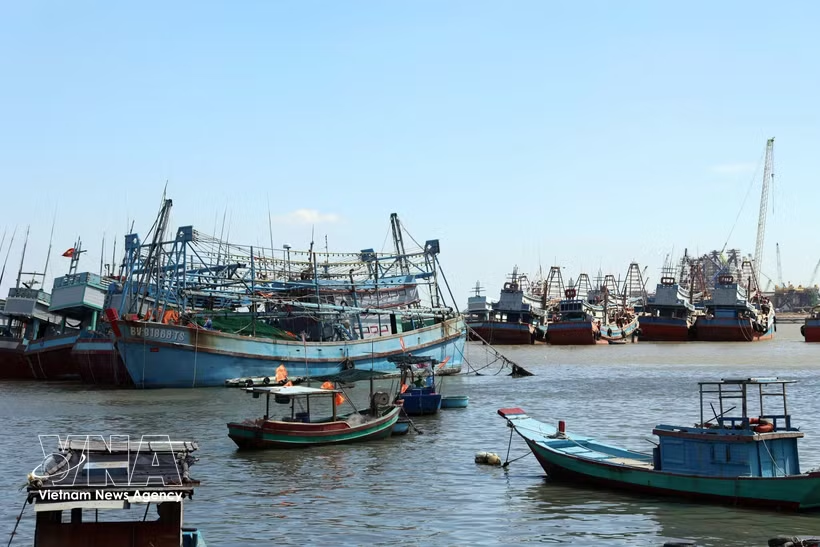
Illustrative image (Photo: VNA)

Hanoi (VNA) – Developing a highly skilled workforce through training reform, stronger industry-education partnerships and greater technological capacity is essential to addressing labour shortages and advancing Vietnam’s goal of becoming a strong maritime nation with a green, modern and sustainable marine economy, said insiders.

Workforce falls short of requirements

According to Nguyen Tien Thao, Director General of the Higher Education Department under the Ministry of Education and Training, said 13 institutions in Vietnam offer training related to marine resources and the marine economy. In 2026, 44 disciplines enrolled students, up 18.9% from 2025, while successful applicants increased 16.1% to 5,153. However, training remains limited in scale.

Programmes integrating marine science with data, automation, economics and law remain scarce. Research vessels, laboratories and simulation systems require substantial investment, while expert teams are limited. Training is also insufficiently aligned with workforce demand in ports, energy projects, and fisheries and tourism sectors.

At Hanoi University of Natural Resources and Environment, a pilot programme in marine resource management launched in 2013, enrolling around 50–62 students per cohort. However, discrepancies between the official list of training disciplines and the specialisations and codes required for recruitment have hindered graduates seeking jobs at state agencies responsible for seas and islands.

According to Vu Nam Phong, deputy head of the Sub-department of Seas, Islands, Fisheries and Fisheries Surveillance under the Department of Agriculture and Environment of Quang Ninh city, the locality faces similar challenges. By the end of 2025, it had around 695,200 workers, 87.5% of whom had received training and 42.8% held degrees or certificates. However, shortages persist in artificial intelligence, marine digital technology, data management and logistics.

In tourism, Quang Ninh faces a shortage of senior managers, foreign-language-proficient workers and personnel skilled in organising and operating night-time economic activities. In maritime services, specialised technical workers in ship machinery repair and maintenance and underwater hull inspections are in short supply.

The key challenge is matching training with employers’ needs. Workforce forecasting remains fragmented; some technical, mechanical, equipment operation and logistics courses struggle to attract students, while local training capacity and business participation remain limited.

In Ca Mau province, the shift from traditional marine activities to technology-intensive production has exposed further skills gaps. Pham Van Muoi, deputy director of the provincial Department of Agriculture and Environment, said the southernmost locality has a sizeable coastal workforce, particularly in fisheries, but skill levels varied. Many workers rely on practical experience and have limited access to new technologies, digital skills and modern production management.

Reforming training

Resolution No. 20-NQ/TW of the 14th Party Central Committee identifies science and technology, innovation, digital transformation and high-quality human resources as key drivers of Vietnam’s ambition to become a strong maritime nation. Meanwhile, the Government’s Resolution No. 218/NQ-CP, outlines tasks for developing a scheme to train, attract and develop highly skilled personnel for modern maritime industries.

Minister of Science and Technology Vu Hai Quan said Vietnam needs research organisations capable of assembling strong expert teams, operating modern facilities, mastering data and technology, and tackling major national challenges. He said establishing two to three marine science, technology and innovation research organisations on a par with ASEAN’s leading institutions should be seen as a measure of national capability, not merely a numerical target.

The Ministry of Education and Training has proposed developing marine workforce training in four areas: marine and ocean sciences; engineering and energy; marine biology and food; and marine economics and governance. It also advocates interdisciplinary programmes incorporating data, artificial intelligence, foreign languages and international law, alongside shared access to research vessels, laboratories, simulation systems and practical training facilities.

Training must be driven by market demand rather than institutional capacity, with professional competence and graduates’ employment prospects serving as key measures of effectiveness, the minister said.

Assoc. Prof. Dr. Pham Van Thuan, Vice Rector of Vietnam Maritime University, called for tailored policies for specialised maritime training institutions, including tuition support for priority disciplines, more scholarships for talented students, and more investment in practical training and research facilities. He also stressed the need for stronger business partnerships, recruitment-oriented training and international standards for graduate outcomes, particularly foreign-language proficiency and professional skills.

Drawing on local experience, Phong proposed closer cooperation among the State, educational institutions and employers, with businesses involved directly in identifying workforce needs, developing curricula, organising practical training and recruitment.

Muoi underlined the need to have more short-term courses, on-site training, retraining and vocational transition programmes for coastal labourers to increase the value of marine economic activities while safeguarding jobs, incomes and sustainable livelihoods in coastal communities./.

VNA
See more

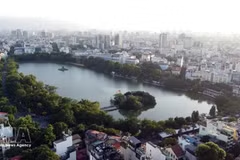
A panorama of Hoan Kiem lake (Photo: VNA)

Hanoi proposes 859-million-USD project to revamp Hoan Kiem Lake area

Implemented in Hoan Kiem and Cua Nam wards, the project aims to create a large square directly connecting Hoan Kiem Lake with Cach mang thang tam (August Revolution) Square, the Hanoi Opera House, the Vietnam National Museum of History, and nearby areas. It also seeks to expand public spaces, reorganise the traffic system and underground spaces, preserve and promote heritage values, and introduce appropriate cultural and service facilities.

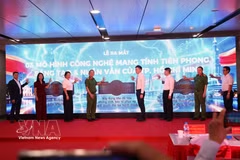
Ho Chi Minh City launches three innovative and people-centred digital transformation models. (Photo: VNA)

Ho Chi Minh City launches three digital transformation models to improve public services

The three models comprise integrating the city’s public transport system into the centralised transport platform on the VNeID electronic identification application; establishing and connecting a database of birth and death records to facilitate administrative procedures; and deploying community rapid-response teams linked to the 1022 hotline to help residents register deaths at home.

At the construction site of Long Thanh International Airport in late September 2026 (Photo: VNA)

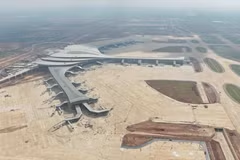
ACV proposes traffic priority for Long Thanh airport links

Preparations for Long Thanh International Airport’s commercial launch in late 2026 are being accelerated. ACV said construction of Component Project 3, which covers essential airport facilities, is about 86% complete. Four of the 16 main bidding packages have been completed, while the remaining 12 are being fast-tracked for completion in this December. Most are expected to meet the deadline.

An overview of the conference (Photo: daibieunhandan.vn)

Hanoi completes sampling of all planned martyrs’ graves

In 2026, the search and recovery of martyrs’ remains and the implementation of the 500-day campaign were identified as particularly important political tasks, reflecting the traditions of gratitude and remembrance, as well as the responsibility of the Party organisation, authorities, armed forces and people towards fallen heroes. Hanoi has now completed the campaign’s first phase.

A representative of the Quang Ngai Border Guard Command speaks at the meeting. (Photo: VNA)

Quang Ngai sets deadline for eCDT installation

At a meeting on October 27 to review the province’s IUU fishing prevention plan implementation, Vice Chairman of the provincial People’s Committee Do Tam Hien called on local departments and authorities to meet the deadline and strengthen round-the-clock monitoring of fishing vessels at high risk of IUU violations.

Illustrative image (Photo: VNA)

Former Ho Chi Minh City planning official expelled from Party

The Communist Party of Vietnam Central Committee’s Secretariat has decided to expel Su Ngọc Anh, former member of the Ho Chi Minh City Party Committee, and former Deputy Secretary of the Party Committee of of the municipal Department of Planning and Investment and former Deputy Director of the department from the Party as a disciplinary measure.

Hoang Dinh Thang, Chairman of the Union of Vietnamese Associations in Europe and member of the Presidium of the Vietnam Fatherland Front Central Committee (Photo: VNA)

Great National Unity Day in Europe: Youth build stronger, more united community

There are many untapped assets in the Vietnamese community in Europe, including knowledge, management experience, science-technology, economic resources and international connections. Linked effectively, they could contribute more directly to Vietnam’s development, and the community can keep serving as a friendship bridge between Vietnam and European countries.

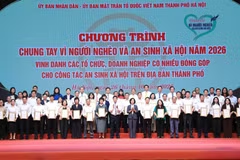
President of the Vietnam Fatherland Front Committee of Hanoi Bui Huyen Mai and Standing Vice Chairman of the municipal People's Committee Duong Duc Tuan receive the donations and present letters of appreciation to the participating organisations (Photo: thanhuyhanoi.vn)

Hanoi mobilises over 9.3 million USD to support the poor

At the event, 12 organisations received certificates of merit from the Hanoi Party Committee and 14 others were commended by the Chairperson of the municipal People’s Committee for contributions to the “For Vietnam’s Seas and Islands” Fund. Another 19 organisations were recognised for fundraising and relief efforts for people affected by natural disasters in 2025, while 20 organisations and businesses were honoured for their social welfare contributions.

The Canada-Vietnam Cultural and Educational Council officially launches the Viet Youth Readiness Hub and opens a community Vietnamese language class for children (Photo: VNA)

Vietnamese language education network expanded across Canada

In line with the Political Bureau’s Resolution No. 23-NQ/TW on overseas Vietnamese affairs, CVCEC’s initiative combines technology and educational cooperation to connect previously independent classes, expand access to Vietnamese language learning and help young people maintain their ties with the homeland.

Phuoc An Minh Bridge is 3 metres wide and 33 metres long, meeting the design standards for new rural bridges. (Photo: VNA)

An Giang mobilises resources to improve social welfare

Local authorities have stepped up efforts to mobilise donations from businesses, organisations and philanthropists to build bridges, roads and houses, supporting poverty reduction and new-style rural development.

Collecting samples for DNA testing (Photo: VNA)

Dien Bien province collects 81 DNA samples to identify war martyrs

Dien Bien has 7,398 graves of martyrs and youth volunteers across 11 cemeteries, 6,894 of which contain remains. In the first phase of the 500-day campaign, authorities exhumed and sampled 4,607 graves in seven cemeteries, meeting 100% of the plan, and handed 4,343 eligible samples to the Military Forensic Institute for testing.