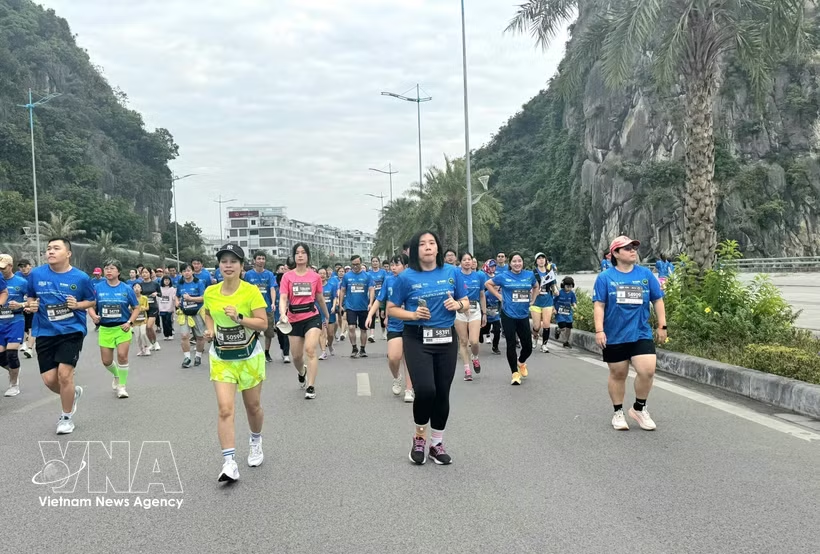
Hanoi (VNA) – From marathons winding along Ha Long Bay to trail races in the northern mountains and water sports on the central coast, Vietnam is increasingly harnessing sports to draw visitors, extend stays and unlock new sources of tourism revenue.
The Halong Bay Heritage Marathon, launched in 2014, is a leading example. The race attracts tens of thousands of domestic and international runners to Quang Ninh province, combining competition with opportunities to experience local spectacular landscapes, cultural heritage and tourism offerings.
In 2025, the event became the first Vietnamese marathon to earn a World Athletics Label Road Race designation. It was also named by Runner's World UK among the world’s 50 most beautiful marathon courses.
Assoc. Prof. Dr Nguyen Tri, General Director of DHA Vietnam – the event organiser, said the Halong Bay Heritage Marathon series was conceived to showcase Vietnam’s natural, cultural and historical heritage through sports.
The idea is to turn the race itself into a journey of discovery, with routes passing through places of outstanding heritage value. By experiencing and appreciating a destination firsthand, participants may be encouraged to return as tourists, he said.
Quang Ninh is taking the concept further, hosting a growing range of national and international sporting events, from golf, cycling and chess to beach volleyball, football, badminton and pickleball tournaments. These events have brought tens of thousands of athletes and visitors to the province.
Nguyen Thanh Tung, Deputy Director of the Quang Ninh Department of Culture, Sports and Tourism, said sporting events not only promote Ha Long Bay and other local attractions but also generate substantial spillover benefits for accommodation, transport, restaurant, retail and other services, reinforcing Quang Ninh’s image as a dynamic and modern destination.
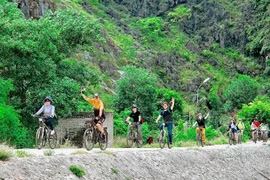
The model is gaining traction nationwide. Northern mountainous localities are capitalising on forests, terraced rice fields and ethnic villages through trail running, trekking and mountain-climbing events. Meanwhile, central and south-central coastal destinations are developing surfing, stand-up paddleboarding, diving and other marine sports.
Nguyen Cong Hoan, Chairman of the Board of Directors of Flamingo Redtours and head of communications and digital transformation at the Vietnam Tourism Association, said sports tourism offers a particularly promising market because it extends beyond athletes to spectators, accompanying family members and corporate groups.
These visitors generally have relatively high spending power, tend to stay longer and seek a wide range of experiences, generating revenue across multiple service sectors. This presents a great opportunity for destinations to develop distinctive new products rather than rely solely on traditional tourism resources, he added.
However, the sector still faces major challenges. Vietnam lacks a national strategy for sports tourism, while events are largely organised independently by local authorities and businesses. The absence of an overall plan for products, target markets and event scheduling has led to overlapping events, similar formats and limited differentiation.
A shortage of specialised personnel is another constraint, Hoan noted, adding that sports tourism requires professionals who understand both tourism operations and specific sports, as well as event organisation, safety and medical services.
Tung said localities should build products around their distinctive landscapes, cultural assets and infrastructure while linking sporting events with tourism promotion and cultural programmes. Quang Ninh is pursuing this approach by developing a year-round event calendar and expanding sports activities suited to different parts of the province.
Drawing on experience in organising heritage marathons, Tri stressed that building a successful sports event brand requires sustained investment and substantial resources. He called for stronger government support and policies to encourage investment in large-scale events capable of competing at regional and international levels.
With strategic investment and stronger coordination, sports events could evolve from one-off competitions into powerful tourism magnets, creating new experiences for visitors while giving destinations a fresh engine for sustainable growth./.